
The Trials of Oscar Wilde
c.1895

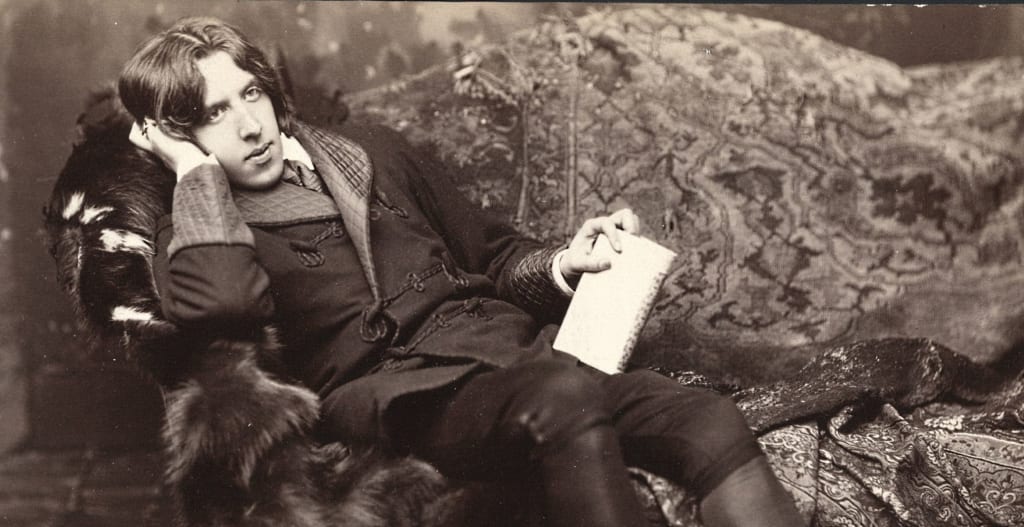
It is well documented that the Victorian Era's mistakes were many but by far, one of the worst was the rampant homophobia which was written into law as the "Labouchere Amendment". This notorious Section 11 of The Criminal Law Amendment Act of 1885 stated that it was "gross indecency" for a man to commit love to another man, criminalising homosexuality and seeing one of the greatest writers and minds of the time go to prison and later on, die of the after-effects. Oscar Wilde lay dying in France in November of 1900 after suffering poor health due to prison treatment. He was pronounced dead of meningitis by the end of the same month. Maurice Gilbert would take the final photograph of Wilde on his deathbed.
Many students of literature may learn the plays of Oscar Wilde and even my own favourite novel: The Picture of Dorian Gray. But even I, as an amateur 12-year-old reading the novel for the first time, was not aware of the history of the author until perhaps a decade or so ago. It would have been then at least five or six years since I had been regularly re-reading the book in which I would find out the truth. The shocking treatment of one of my all-time favourite authors was deeply saddening to read on.
In 2017, Oscar Wilde received a posthumous pardon. Imagine being pardoned when you did nothing wrong. To this day, it is proven therefore that he is treated like a criminal. Normally history leaves it out because he lost the trial and it is a dark stain on the history of the British Judicial System. But I think we all need to know more about what happened in 1895...
Wilde was a Threat

Victorian England was a façade of human decency for the middle and upper classes, a performance of structure and decorum. With his wit, celebrity and intellect, the mask is, of course, threatened. Wilde's visible association with the aesthetes of the time and his reference to the work of Aubrey Beardsley in The Picture of Dorian Gray by way of the 'Yellow Book' made him a key target for these brutal and unjust laws.
His outward personality was not that of a quiet middle class, or even upper class man of his time. An eccentric being, he dressed in a flamboyant style, often spoke with a generous amount of verboseness, wit and insult that it was perhaps difficult for the uneducated aristocracy to keep up (I'm not going to lie, he was probably the most articulate man in the room). His trials were about to become a spectacle - it was the Victorian's way of suppressing the true identity of a man who was far too good and far too smart for them.
Lord Alfred Douglas

Nicknamed 'Bosie', Lord Alfred Douglas was one of the men whom Wilde was accused of having intimate relations with. He was the temperamental son of the Marquess of Queensberry and introduced Wilde to many things, one of them being male sex workers. He was spoilt and definitely broodish, also relatively unpleasant, and yet Wilde saw something in him. Wilde's love letters to Bosie would become evidence in the trials of 1895 in which the writer is definitely blinded to the fact Bosie antagonised his father.
Wilde more than often attended a gentlemen's club and finding out his son was being seduced by a public figure, Queensberry left a note stating that Wilde was a “posing somdomite” and Wilde would in retaliation, sue for criminal libel. This was essentially Wilde writing his own death sentence. In order to sue, he would have to produce evidence against the fact and he simply couldn't do it. Not with the strict laws of the land about, all of which criminalised what Wilde stated was "the love that dare not speak its name." It would cost Wilde everything: his liberty, his career and of course, his public reputation.
March 1895: Wilde vs the Marquess of Queensberry
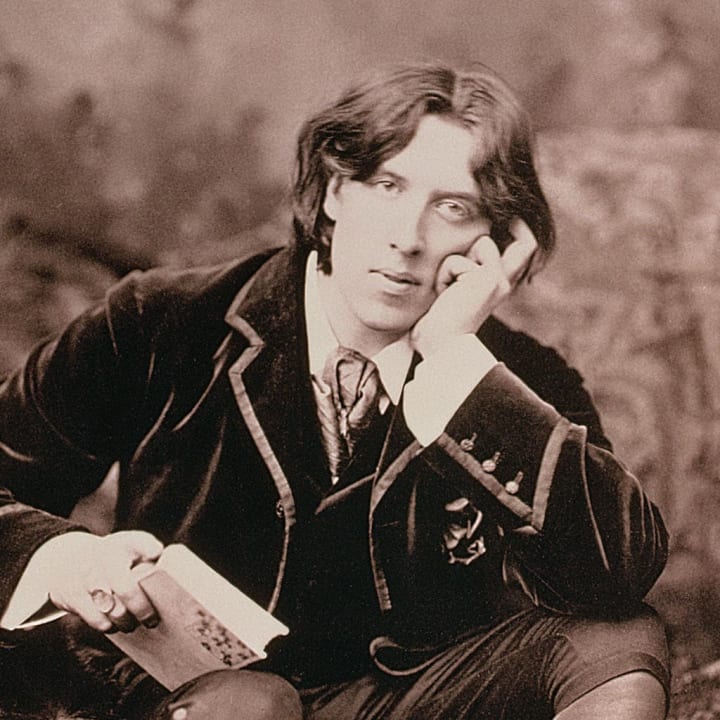
As we know, Wilde's want to sue Queensberry would backfire dramatically on to his career and his reputation. Queensberry's defence team was led by a man named Edward Carson who was once a classmate and fellow of Oscar Wilde. He mounted a horrific case against the writer and not only aimed to prove that the term “posing somdomite” was de facto true in its statement - but that it was entirely being done within the public interest to rid this man from his own status and therefore, his access to men.
Wilde's history with men was brought to the forefront, many ex-lovers were called to the stands and testified against Wilde. The prosecution included Wilde’s own writing, especially The Picture of Dorian Gray, as evidence of his immorality. Wilde's wit came back to repremand the man himself under a heavy cross-examination that wore the writer out. When asked whether he had ever kissed Walter Grainger, Wilde commented in his usual witty style that he was "far too ugly" in a means of coping with the intense scrutiny of his character and love-life. This was used by the defence to paint the writer as callous, deceptive and most of all, as a predator. Wilde was about to go under criminal prosecution after bringing to the court a case of libel committed against him.
April 1895: R v Wilde and Taylor
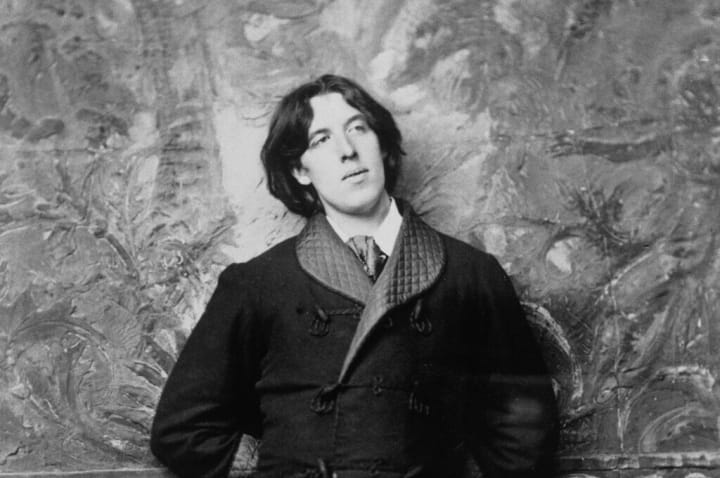
Oscar Wilde was tried for "gross indecency" alongside a man named Alfred Taylor who dealt in male sex work and often procured these men for Wilde. Many of the boys who were found to testify had sketchy backgrounds and criminal records. But combined with the letters to Bosie, they would paint a picture of Wilde that horrified the half-witted Victorian Public. But, the defence basically stated that none of the letters or the men proved that "indecency" had actually happened - they instead stated that perhaps it was right to consider Wilde as a victim of blackmail. With this, the trial would end on a hung jury and nothing was agreed upon.
The prosecution were adamant to retry Wilde and so, the hung jury was only a slight delay in the fate of one of the world's greatest writers. As the trial went on, newspapers and other media filled their pieces with salacious headlines, scandal and terror - a frenzy that was not seen since the murders of Jack the Ripper.
April 1895: The Retrial - R v Wilde and Taylor

Oscar Wilde had now been a figure of public ridicule for the last two months, with many of the docile middle class Victorian Public siding with the media madness that had spewed out of hungry capitalist instincts. The prosecution honed the knife that was the new case and the courtroom became immediately a hostile and unforgiving place. The same witnesses appeared, the same letters were judged, and passionate sections were picked out and apart in the room. On the 25th of May, 1895 - both Oscar Wilde and Alfred Taylor were sentenced to two years of hard labour.
Justice Wills had called it the worst case he had ever tried due to the horrid morale of the two men. He was disgusted (and was therefore not a great judge at the time where brutal murder was becoming more of a problem). It was said that Wilde remained calm but his stoic attitude definitely would not save him from the horrors he was about to be subjected to.
The Media Circus
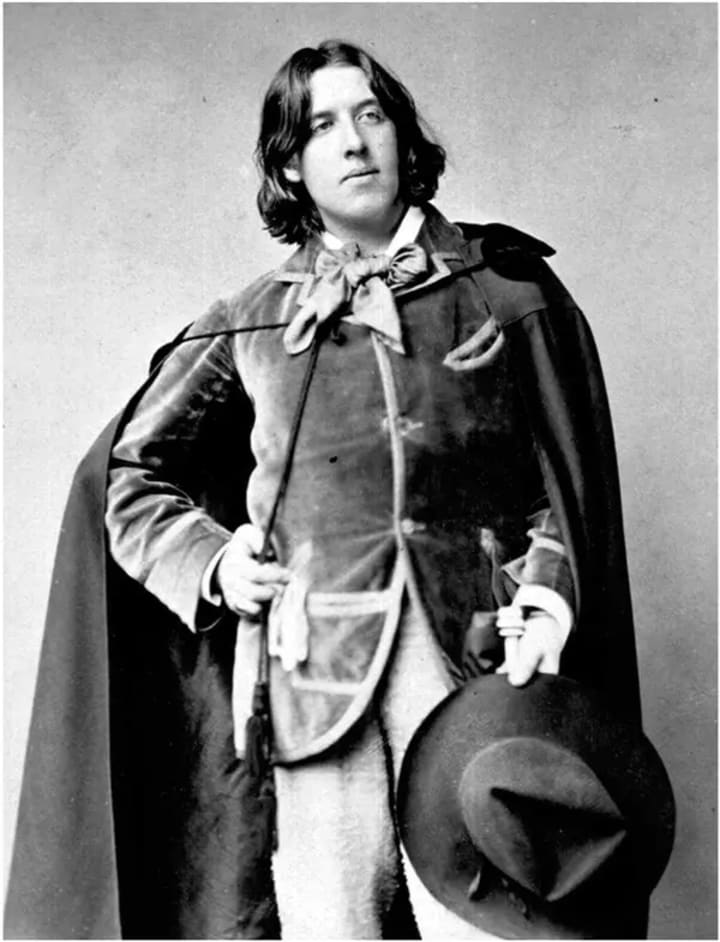
Everyone would turn against him. The media depicted him as a monster - a man of low morale. The very personality traits that had made Wilde a celebrity had now made him the subject of ridicule for being 'dangerous' and 'decadent'. Satire was created of him, almost mercilessly around each and every newspaper widely bought in the country. London was a ill place nonetheless and as Wilde was led away to prison, the crowd of Londoners would jeer at him. It was clear Wilde had become the scapegoat for anxieties about sexuality and the new artisitic rebellion. His books and plays were withdrawn from circulation and theatre and Wilde's name quickly became a bad word.
Honestly, I don't know about you but I can never forgive them for basically killing one of the greatest minds of western literature. If he had lived longer, we could've seen so much more.
Oscar Wilde in Prison

Reading Gaol was perhaps the most notorious of all of the places Oscar Wilde would serve his sentence because of his fantastic poem The Ballad of Reading Gaol. He had to walk a treadmill for hours, the food was terrible and the nutritional value of it was worse. Silence was enforced often and communication was limited. Oscar Wilde had lost his formative physique and began suffering with serious health problems that would kill him only a few years after he was released from prison. After collapsing in his cell, Wilde would also permanently damage his ear.
He would lose custody of his children from his now estranged wife, Constance and worst of all for the man of written and spoken wit, would be denied a pen and paper for longer and longer periods of time. However, this would not stop him from composing the dark, and brilliant De Profundis whilst suffering horribly in jail. This work is a long letter in which he reflects on his life, his suffering and a sort of spiritual awakening that he was having at the time. When this spiritual awakening was realised, Wilde called for a priest to let him become a Catholic, but the request was unfortunately denied. It was said that Wilde wept at the reply only weeks before his death.
Aftermath & Conclusion
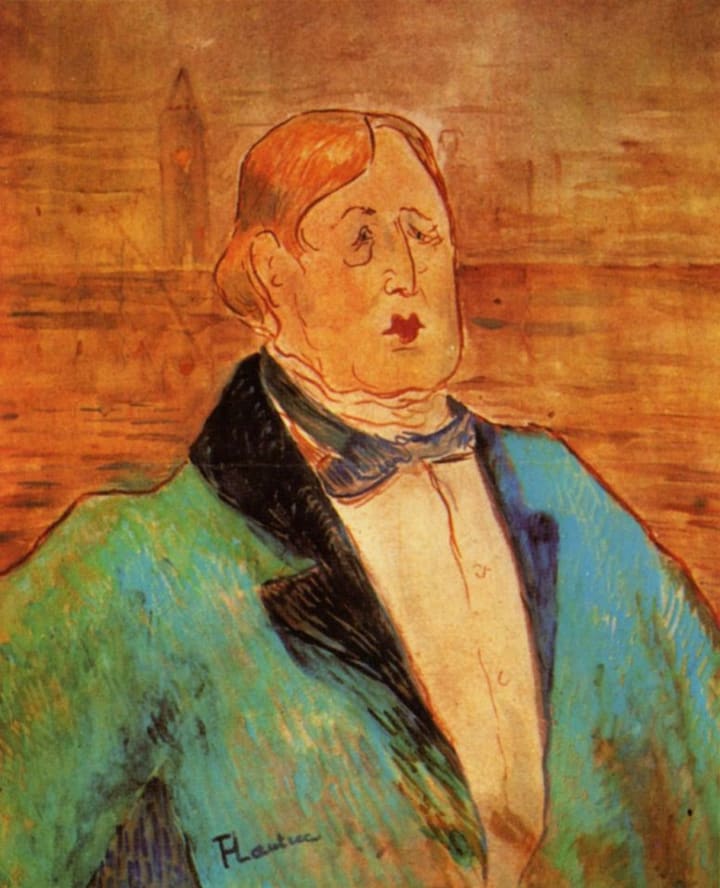
More than 70 years later, Section 11 of the Criminal Law Amendment Act - the same law that convincted Oscar Wilde, was removed. In 1967, the law in England could no longer convict two consenting men of intimate relations. I know, it shouldn't have existed as a law in the first place and it also took them a bloody long time to see what was wrong with it. Wilde himself would be pardoned under the 'Alan Turing Law' in 2017 which sought to amend the vilification of homosexuality in the past. But I personally still have a problem with it since they use the word 'pardon' which still essentially means you're treating him like a criminal.
Though he died impoverished and disgraced in 1900 in a hotel room in Paris, France - Oscar Wilde has since become a symbol of resistance and intellect. He was a man far too smart for his time, his wit was at a level most could not comprehend and his legacy has been cemented as one of the greatest minds of his time (and anyone else's for that matter). So, if you haven't today - I say you pick up any of the works of Oscar Wilde and have a read of them. His literary brilliance definitely pours from the pages.
About the Creator
Annie Kapur
I am:
🙋🏽♀️ Annie
📚 Avid Reader
📝 Reviewer and Commentator
🎓 Post-Grad Millennial (M.A)
***
I have:
📖 280K+ reads on Vocal
🫶🏼 Love for reading & research
🦋/X @AnnieWithBooks
***
🏡 UK
Keep reading
More stories from Annie Kapur and writers in History and other communities.
3 True Stories That Sound Like Urban Legends but Aren’t
Urban legends usually follow a familiar pattern. A friend of a friend hears something unbelievable, the details get hazy, and the story ends with a warning about human stupidity or bad luck. The unspoken rule is simple: if it sounds too strange to be true, it probably is.
By Enoch Sagini7 days ago in History
Why August Wilson’s Joe Turner’s Come and Gone Feels Urgent on Today’s Broadway Stage by NWO Sparrow
Why August Wilson’s vision of identity and movement resonates in today’s political climate by NWO Sparrow Joe Turner’s Come and Gone returns with urgency, reflection, and cultural weight
By NWO SPARROW6 days ago in History



Comments (4)
Oscar Wilde was a genius, it's a shame that they let him for this fate.
Well-wrought! What they did to Turing was doubly disgusting, seeing how instrumental he was in saving the world from Nazis. However, I think we should also recognize an all-too-flippant attitude towards child prostitution. They were less concerned with the fact that these were boys being prostituted than they were with the fact that it was homosexual in nature. Going back to the ancient world, children of the lower classes who did not have families to protect them were more or less sex puppets to the elite, and the Epstein charade and the recent Diddy debacle proves that not much has changed but the channels that such have to go through to procure their sick desires.
Thank you for sharing this. It’s heartbreaking how society treated Oscar Wilde — not just for who he loved, but for daring to live honestly and brilliantly in a time that punished both. We lost him far too early. You could have entered this in Pride or History challenges. Well written.
It is such that the greatest artists (Van Gogh for art, and Wilde) suffer much misunderstanding and callous hurt. To one of the literature's greatest.