
The Tramp Who Changed the World
The Tramp Who Changed the World

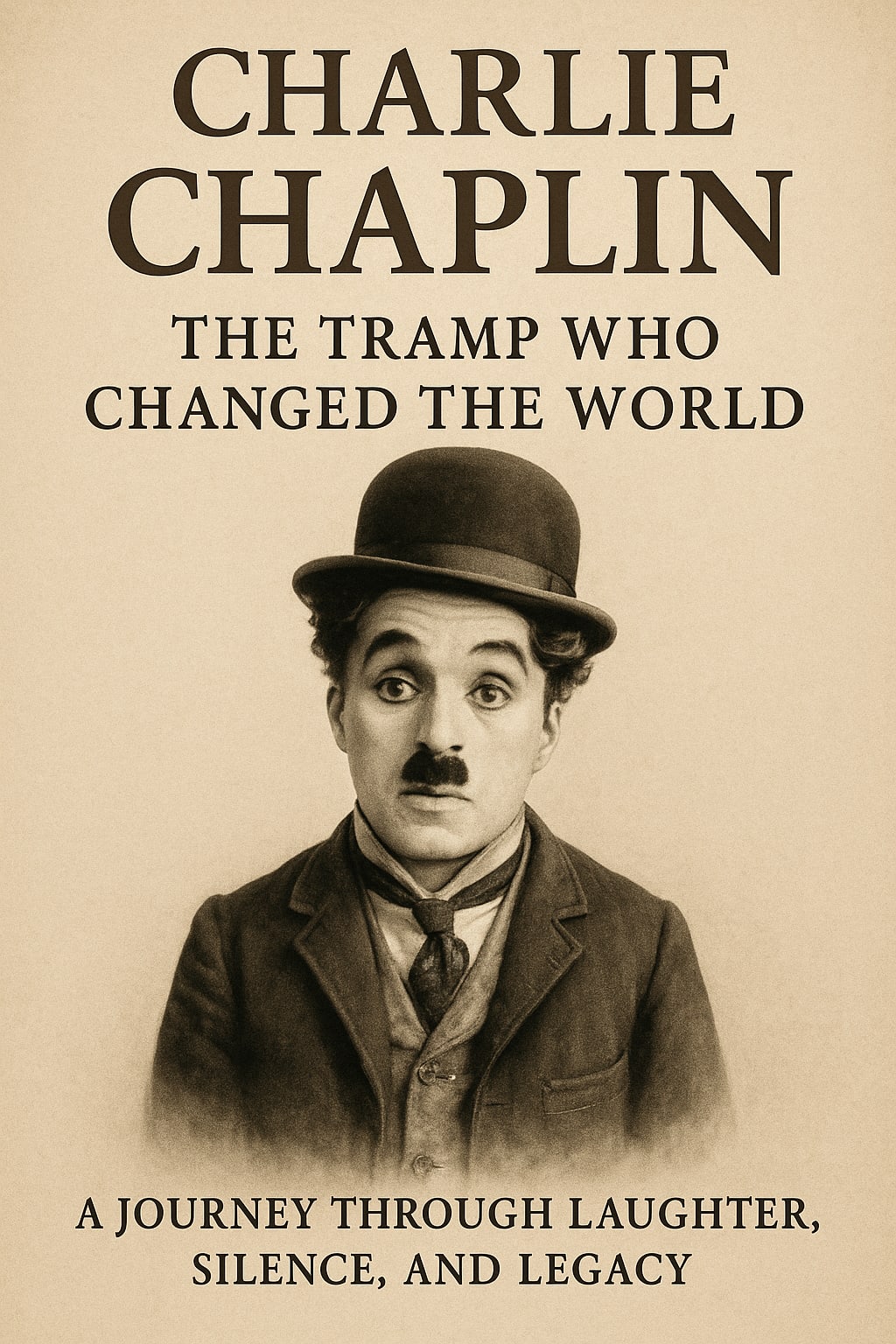
Few figures in the history of cinema have left as deep and enduring a mark as Charlie Chaplin. Born into poverty, Chaplin rose to become one of the most recognizable and beloved icons in the world, creating not only laughter but also commentary on the very nature of humanity. With his iconic bowler hat, toothbrush mustache, and cane, Chaplin’s character “The Tramp” transcended language and borders, making him a global symbol of both comedy and compassion.
Early Life: From Shadows to Spotlight
Charles Spencer Chaplin was born on April 16, 1889, in London, England, into a family of performers. His mother, Hannah, was a singer and actress, while his father, Charles Sr., was a vocalist and actor. But despite the artistic background, Chaplin’s childhood was marked by hardship. After his father’s early death and his mother’s mental health struggles, young Charlie found himself in and out of workhouses and orphanages.
Yet from a young age, Chaplin displayed a natural talent for performance. He joined a dance troupe, the Eight Lancashire Lads, at the age of 10, which marked his first step into the world of show business. By his teenage years, he was touring with Fred Karno’s vaudeville troupe, eventually catching the attention of film producer Mack Sennett in America.
The Birth of The Tramp
In 1914, at Keystone Studios, Chaplin made his film debut in Making a Living. That same year, he introduced the world to the character that would define his career: The Tramp. In Kid Auto Races at Venice, Chaplin wore baggy pants, a tight coat, oversized shoes, a bowler hat, and carried a cane—a look he created on the spot. The Tramp was a complex character: humorous, resilient, kind-hearted, and a little mischievous. He was a mirror of society’s downtrodden, reflecting their dignity and struggles with a wink and a wobble.
Chaplin’s rise in silent films was meteoric. He quickly became the world’s most popular entertainer. By 1919, he co-founded United Artists with Douglas Fairbanks, Mary Pickford, and D.W. Griffith, giving him full control over his work.
Masterpieces of the Silent Era
Chaplin’s early films such as The Kid (1921), The Gold Rush (1925), and City Lights (1931) demonstrated his genius for blending slapstick comedy with deep emotional resonance. The Kid, for instance, was a heartwarming yet heartrending story of a tramp caring for an abandoned child—part comedy, part social commentary, and wholly personal.
In City Lights, considered by many to be his magnum opus, Chaplin told the story of a blind flower girl and a tramp who sacrifices everything for her. The film, released during the early years of sound cinema, boldly remained silent—Chaplin believed dialogue would dilute the universality of his character. The gamble paid off. It became one of the most critically acclaimed films in history.
A Voice in a Changing World
Chaplin eventually embraced sound in cinema, but not without making a statement. In Modern Times (1936), his character struggled with the dehumanizing effects of industrialization, still without speaking a word. The film’s final scene—The Tramp walking into the unknown with a hopeful smile—remains one of cinema’s most iconic endings.
Then came The Great Dictator (1940), Chaplin’s boldest political statement. In it, he satirized Adolf Hitler, playing both the tyrannical dictator Adenoid Hynkel and a humble Jewish barber. The film was not only brave—it was prophetic. Its final speech, in which Chaplin breaks character and pleads for humanity, peace, and democracy, still resonates as one of the most stirring moments in cinematic history.
Controversies and Exile
Despite his worldwide fame, Chaplin’s personal life was never far from controversy. He had several relationships with much younger women, some ending in public scandal. In the political climate of post-war America, Chaplin’s outspoken criticism of fascism, capitalism, and war drew the ire of the FBI and the House Un-American Activities Committee. Accused of Communist sympathies, he became a target during the Red Scare.
In 1952, while traveling to Europe for the premiere of his film Limelight, Chaplin was barred from re-entering the United States. He chose self-exile and settled in Switzerland with his fourth wife, Oona O’Neill, with whom he had eight children.
Though exiled from Hollywood, Chaplin continued working. A King in New York (1957) was a sharp critique of American politics and culture, while A Countess from Hong Kong (1967), starring Marlon Brando and Sophia Loren, marked his only film in color and with full sound.
Recognition and Redemption
After decades in exile, the United States offered Chaplin a form of redemption. In 1972, he was invited back to receive an honorary Academy Award. When he appeared on stage, he was greeted with a 12-minute standing ovation—the longest in Oscar history. The moment was a bittersweet acknowledgment of a genius once shunned, now celebrated.
Chaplin spent his final years in quiet comfort in Corsier-sur-Vevey, Switzerland, surrounded by family. He died peacefully on Christmas Day in 1977, at the age of 88.
Legacy: More Than Laughter
Charlie Chaplin’s influence extends far beyond cinema. He taught the world that comedy could be profound, that silence could speak volumes, and that laughter could be a weapon against injustice. His character, The Tramp, symbolized the universal struggle of the common man—poor yet proud, humble yet heroic.
Modern filmmakers from Woody Allen to Roberto Benigni, from Rowan Atkinson to Taika Waititi, owe a debt to Chaplin. His films continue to be studied not just for their technical brilliance, but for their emotional depth and social relevance.
In an age dominated by sound, special effects, and digital storytelling, Chaplin’s work remains timeless. His humor, humanity, and artistic courage remind us that the simplest gestures—a glance, a stumble, a smile—can carry the deepest meaning.
⸻
Charlie Chaplin didn’t just make films. He made people think, cry, laugh, and hope. Through the character of The Tramp, he turned his own hardships into art, and in doing so, changed the world of cinema—and the world itself—forever.
About the Creator
Irshad Abbasi
Ali ibn Abi Talib (RA) said 📚
“Knowledge is better than wealth, because knowledge protects you, while you have to protect wealth.
Keep reading
More stories from Irshad Abbasi and writers in History and other communities.
The Reformist Monarch of a Changing Empire
Sultan Abdul Aziz, the 32nd ruler of the Ottoman Empire, reigned during one of the most turbulent and transformative periods in Ottoman history. Born on February 9, 1830, and ascending to the throne in 1861, Abdul Aziz inherited an empire facing internal strife, external threats, and the overwhelming challenge of modernization. His reign, which lasted until his controversial deposition in 1876, was marked by a complex mix of ambitious reforms, foreign diplomacy, military modernization, and ultimately, political downfall.
By Irshad Abbasi 9 months ago in History
The Night the Sky Turned Red
I never thought I would watch history burn in real time. It was 2:17 a.m. in my small apartment in Chicago when my phone started buzzing nonstop. At first, I ignored it. Group chats are always loud at night. But then my mother called.
By Imran Ali Shah3 days ago in History
Review of 'Man on the Run'
My wife and I saw Man on the Run, a nearly 2-hour documentary on Amazon Prime, about Wings, Paul McCartney's group that flew around the world from shortly after The Beatles broke up in early 1970 to shortly after John Lennon was murdered at the end of 1980, making a Beatles reunion forever impossible.
By Paul Levinson5 days ago in Beat


Comments (1)
Chaplin's story is amazing. I remember watching his films as a kid. His Tramp character was timeless, showing both humor and the human condition.