
The Tragic Car Crash of Princess Diana: A Nation's Loss and the Unanswered Questions
A painful loss

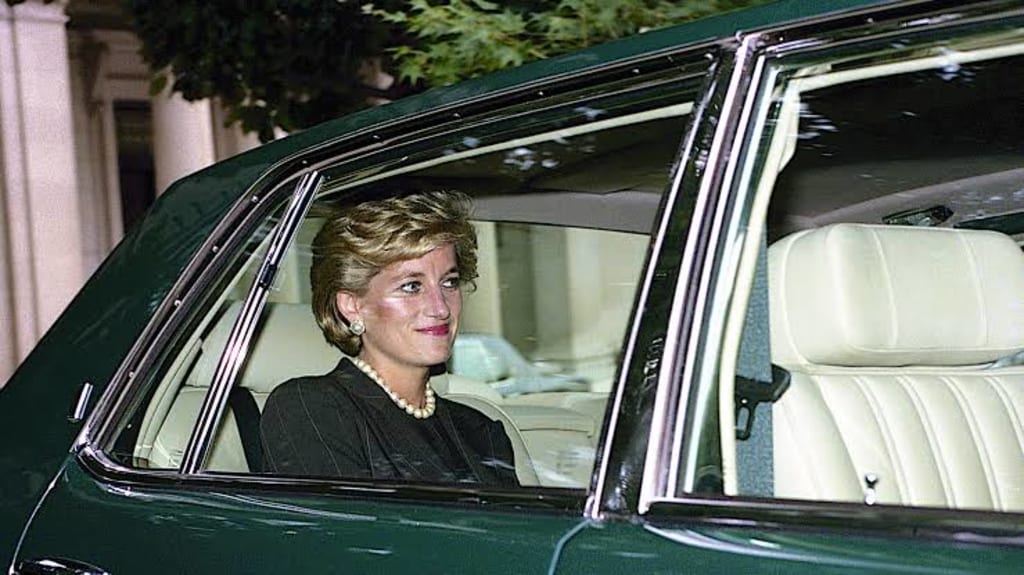
In the early hours of August 31, 1997, the world was shaken by the news of a tragic car crash in Paris that claimed the life of Diana, Princess of Wales. The beloved "People's Princess," known for her grace, compassion, and tireless humanitarian work, was gone. Her untimely death at the age of 36 not only plunged the British nation into mourning but also sparked a wave of grief and shock that resonated across the globe. More than two decades later, the circumstances surrounding the crash remain a subject of intense scrutiny, speculation, and controversy.
The Events Leading Up to the Crash
On the evening of August 30, 1997, Diana and her companion, Dodi Fayed, left the Ritz Hotel in Paris after a private dinner. The couple, attempting to evade paparazzi, departed from the rear entrance of the hotel around midnight, entering a black Mercedes-Benz S280 driven by Henri Paul, the deputy head of security at the Ritz. Trevor Rees-Jones, a bodyguard, was the only other occupant of the vehicle.
Their destination was Dodi Fayed's apartment near the Champs-Élysées, but they never made it. As the car sped through the streets of Paris, it entered the Pont de l'Alma tunnel at high speed, reportedly reaching up to 65 mph—more than twice the legal limit for that area. At approximately 12:23 AM, the car struck the 13th pillar of the tunnel, resulting in a devastating crash.
The Aftermath and Immediate Response
The aftermath of the crash was chaotic and tragic. Henri Paul and Dodi Fayed died instantly from the impact. Princess Diana, initially still alive, suffered severe injuries and was rushed to the Pitié-Salpêtrière Hospital. Despite the best efforts of the medical team, she succumbed to her injuries at 4:00 AM. Trevor Rees-Jones, the sole survivor, was left with serious injuries and little recollection of the events.
News of Diana's death sent shockwaves around the world. For millions, it was a deeply personal loss. Diana had transcended her royal status to become an icon of compassion and kindness, using her platform to advocate for causes ranging from HIV/AIDS awareness to the eradication of landmines. Her death was not just the loss of a princess but the loss of a symbol of hope and humanity.
The Official Investigation
In the wake of the tragedy, French authorities launched an investigation to determine the causes of the crash. The official report, released in 1999, concluded that Henri Paul was intoxicated at the time of the crash, with a blood alcohol level three times the legal limit. Additionally, it was determined that Paul was under the influence of prescription drugs, which, combined with the high speed and the car's attempts to evade paparazzi, led to the fatal accident.
The report also highlighted the role of the paparazzi, who had relentlessly pursued Diana and Dodi throughout the evening. However, it was concluded that their actions, while aggressive and intrusive, did not directly cause the crash. The primary blame was placed on Henri Paul's impaired state and the excessive speed at which he was driving.
The Conspiracy Theories
Despite the conclusions of the official investigation, numerous conspiracy theories have persisted, suggesting that Diana's death was not a mere accident but a result of foul play. Some of the most prevalent theories propose that powerful forces, possibly within the British establishment, orchestrated the crash to prevent Diana from marrying Dodi Fayed and to silence her outspoken views.
One of the most vocal proponents of these theories was Mohamed Al-Fayed, Dodi's father, who claimed that the British intelligence services and members of the royal family were involved in a plot to kill Diana and his son. These allegations have been thoroughly investigated, most notably by Operation Paget, a Metropolitan Police inquiry conducted between 2004 and 2008. The inquiry found no evidence to support the claims of conspiracy or foul play, reaffirming the original conclusion that the crash was a tragic accident caused by reckless driving under the influence.
The Legacy of Princess Diana
Princess Diana's death marked a pivotal moment in modern history, profoundly affecting the British monarchy and the public's relationship with the royal family. The overwhelming outpouring of grief and the unprecedented public reaction prompted a period of reflection and change within the royal institution. The monarchy had to confront its public image and the ways in which it connected with the people.
Diana's legacy continues to resonate through her charitable work and the impact she had on countless lives. Her sons, Prince William and Prince Harry, have carried forward her humanitarian spirit, engaging in mental health advocacy, support for veterans, and various charitable endeavors. Diana's influence is evident in their approach to royal duties, emphasizing compassion and a personal connection with the public.
The Enduring Questions
Despite the findings of multiple investigations, the circumstances surrounding Princess Diana's death still evoke questions and speculation. The persistence of conspiracy theories underscores a broader mistrust in official narratives and a desire for deeper understanding. For many, the tragic end to Diana's life is emblematic of a greater sense of loss and the search for justice and truth.
As we remember Princess Diana, we are reminded of her warmth, empathy, and the indelible mark she left on the world. Her death was a moment of profound sorrow, but her life remains a testament to the power of kindness and the enduring impact of a compassionate heart. The story of her tragic car crash serves as both a sobering reminder of the fragility of life and a call to continue her legacy of love and service.
About the Creator
Keep reading
More stories from Deji Akomolafe and writers in History and other communities.
The Tragic Tale of Billie Bob Harrell, Jr.: When Winning the Lottery Turns into a Nightmare
In June 1997, Billie Bob Harrell, Jr., an ordinary man from Texas, found his life dramatically altered by an extraordinary stroke of luck. Harrell won the $31 million Texas Lotto jackpot, an amount that promised to lift him and his family out of financial worries forever. Like many who dream of such a windfall, he anticipated a future filled with ease and joy. However, as the tragic events that followed would show, immense wealth can bring unforeseen burdens and sorrows. Harrell’s story is a cautionary tale of how winning the lottery can sometimes lead to a life unraveling rather than flourishing.
By Deji Akomolafe2 years ago in History
3 Harmless Habits That Once Caused Absolute Chaos
Most habits are comfortingly dull. You chew gum. You clap at events. You check your phone. You assume—reasonably—that these actions will not destabilize governments, bankrupt industries, or end lives. Society depends on this assumption. If every small habit carried catastrophic potential, we would never leave the house.
By Enoch Sagini4 days ago in History
Brosley Punch — The Strike That Shook Fate
Brosley was never taught how to throw a punch. He learned it the hard way—through hunger, through survival, through a childhood spent on a world that showed no mercy. Long before the universe would whisper his name in fear, Brosley was just a boy standing on cracked red stone, staring at a sky that never answered his questions.
By The best writer 2 days ago in History



Comments (1)
Great work.