
The Theft of the Crown Jewels
The Tower of London that houses the jewels was broken into by a cunning thief.

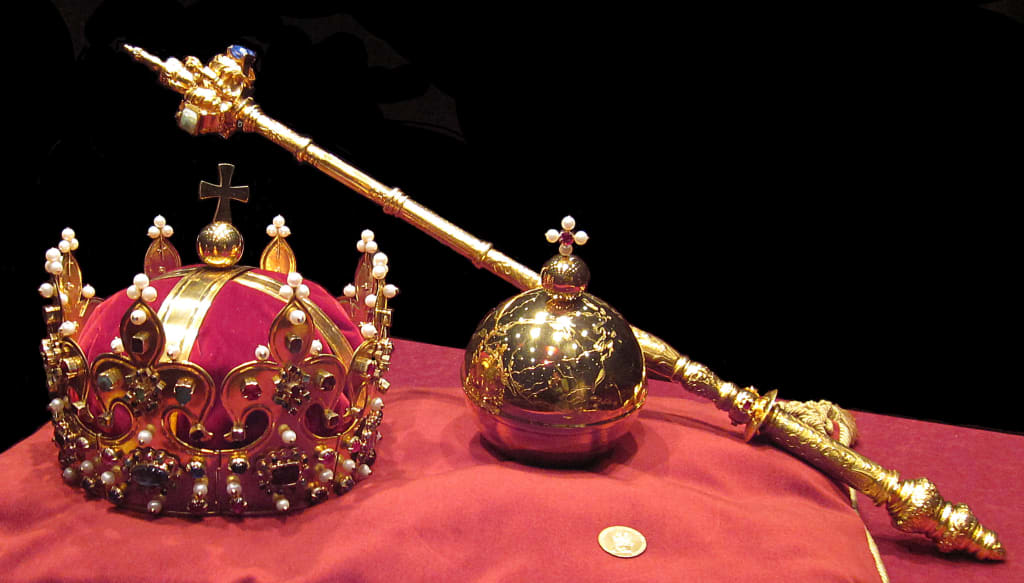
It has been eight hundred years since someone tried to steal the Crown Jewel housed in the Tower of London. Some might say that they are long due an attempt.
However, before you start getting out your area map, hire a welder to work through the iron gates and see if your father-in-law is any good as a getaway driver; you might want to learn from the last attempt.
Things did not go as planned for Thomas Blood. Every criminal venture he embarked on ended badly. However, no one could predict what happened to Blood after he was caught.
Early Life
The self-styled Colonel Thomas Blood started life in 1618 in County Meath. His father, a prosperous blacksmith, kept the family in great luxury.
His grandfather lived in Kilnaboy Castle and was a Member of Parliament. Blood started his career as a parliamentarian when he joined the Irish government as the English Civil War started.
When he was twenty, he married Maria Hawcroft. With her by his side, he left Ireland to take up arms with the Royalist forces who supported Charles I.
Oliver Cromwell
Blood, not known for picking a side and sticking to it, soon transferred his allegiances to Cromwell. When Cromwell won the war, he awarded Blood heavily, granting him lands and making him justice of the peace.
The riches were short-lived because in 1660 when the monarchy was restored seven years later. Charles II took the throne, Blood lost all his lands and was put into financial ruin. He fled back to his native Ireland.
Duke of Ormond
Blood was bitter about losing his fortune, so in revenge in 1963, he conspired to capture the Duke of Ormond, who was based at Dublin Castle.
In disguise with a band of accomplices, he forced his way into the castle; however, the plot had been discovered, and most of the gang was arrested. Blood fled to Holland to avoid the fallout.
This was the first of many failures in the criminal world he was to experience.
Return to England
Blood stayed in Holland for several years, where he managed to participate in a couple of failed enterprises until, in 1670, he decided it was time to return to England even though he was still a wanted man.
It is believed that he used the alias Ayloffe and practised as a doctor or an apothecary in East London. During this time, he cast his eye over the jewels held in the Tower.
One day, dressed as a parson with his wife, he paid like thousands before him to see the jewels. On leaving, his wife 'unexpectantly' was taken unwell and needed help.
Talbot Edwards, a kindly man, the display curator, took the poorly Mrs Blood and her husband back to his apartment to recover. The two couples hit it off immediately and became good friends visiting each other regularly.
When Blood suggested that Talbot's daughter marry his nephew, the family was overjoyed, except that Blood didn't have a nephew.
The Tower of London
Still, a meeting was set up for the young couple. Blood arrived with his 'nephew' and a group of friends. Whilst the couple got to know each other, Blood suggested Talbot would like to show them the Crown Jewels.
No sooner had the kindly man unlocked the gates than he was hit over the head and stabbed whilst the gang of bandits secured the jewels, even going as far as stamping on a crown to make it flat to stuff down Blood's trousers.
Talbot removed his gag and raised the alarm shouting, 'Treason! Murder! The crown is stolen.' The gang were chased and arrested; Blood did not escape this time. Blood was arrested as he left the Tower by the Iron Gate after trying to shoot one of the guards.
The Crown Jewels were returned to their rightful home. Although a little battered from the ordeal and needing a few gems reattached, they were fine. Blood was taken to The Tower, where he stated he would only talk to the King.
King Charles II
What happened during this meeting is a matter of speculation. What was known is that Blood was taken before Charles II when the King and family members spoke to him.
At one point during the conversation, the King asked Blood, 'What if I should give you your life?' and Blood replied, 'I would endeavour to deserve it, Sire.'
He left that day fully pardoned, with a gift of £500 a year, land in Ireland and a position in the court.
Some speculate that the King feared an uprising in revenge if Blood was tried. Others say that the King always had a thing for rogues, and Blood had amused him, especially when he told him he had wanted to assassinate him but thought better of it; either way, he was a free man.
Later Life
Blood became a familiar face around the court, much to the distress of the Duke of Ormond.
Blood fell into a coma on 22nd August 1680, and two days later, he died. His body was buried in the churchyard of St Margaret's Church near St. James Park.
This is not the end of our terrible criminal. When he died, Blood owed money from a lawsuit he lost. Many claimed that he had faked his death to avoid paying. So his body had to be exhumed to confirm he was dead.
As for Talbot Edwards, he recovered fully from his wounds and was rewarded by the King. He lived to an old age, recounting how he stopped the theft of the Crown Jewels to all visitors.
About the Creator
Sam H Arnold
Fiction and parenting writer exploring the dynamics of family life, supporting children with additional needs. I also delve into the darker narratives that shape our world, specialising in history and crime.
Keep reading
More stories from Sam H Arnold and writers in History and other communities.
The Tower of London Zoo
Many of you will be familiar with The Tower of London, its fame as the world's largest jewellery box is well known. Some will also know that this was the site of two famous beheadings, both of them at the request of King Henry VIII when he asked for his wife's heads to be removed.
By Sam H Arnold2 years ago in History
Understanding the Insurrection Act
The Insurrection Act is one of the most powerful and least understood laws in American history. Often mentioned during times of national unrest, it gives the president authority to deploy federal troops within the United States under specific circumstances. While it is rarely used, public interest in the law has grown in recent decades, leading many to ask: what is the Insurrection Act, and why does it matter today? What Is the Insurrection Act? To put it simply, the Insurrection Act of 1807 is a federal law that allows the president to use the U.S. military to suppress civil disorder, insurrection, or rebellion when state authorities are unable or unwilling to do so. If you are wondering what is the Insurrection Act used for, the answer lies in restoring order when local and state governments can no longer maintain public safety. People often search phrases like what is insurrection act or even the misspelled insurection act because the law tends to resurface during moments of crisis. Despite the confusion around its name, the authority it grants is very real and legally binding. What Is the Insurrection Act of the U.S.? So, what is the Insurrection Act of the US in legal terms? It is a collection of statutes now codified under Title 10 of the U.S. Code. The act provides exceptions to the Posse Comitatus Act, which generally prohibits the military from acting as domestic law enforcement. Under the Insurrection Act, the president can federalize the National Guard or deploy active-duty troops if constitutional rights are being violated or if violence prevents the execution of federal law. This is why many people ask, what is the Insurrection Act USA, especially when protests or riots dominate national headlines. The Insurrection Act and Its Historical Use Throughout American history, the act has been invoked sparingly but decisively. One of the most notable examples often referenced is the Insurrection Act 1992, when President George H. W. Bush deployed federal troops to Los Angeles following the Rodney King verdict. Local authorities had lost control, and the federal government stepped in to restore order. Earlier uses date back to the Civil War era and the Civil Rights Movement. Presidents Eisenhower and Kennedy relied on the act to enforce school desegregation in Southern states when state governments resisted federal court orders. These moments illustrate what the Insurrection Act is used for at its core: enforcing the rule of law when normal systems fail. Trump and the Insurrection Act In modern political discourse, the law became widely discussed during the presidency of Donald Trump. Searches for Trump Insurrection Act or Insurrection Act Trump surged during periods of nationwide protests, particularly in 2020. Although the act was never formally invoked during those protests, President Trump publicly considered its use, bringing renewed attention to the scope and limits of presidential power. The phrase insurrection act invoked often appears in news coverage, but it is important to note that discussing invocation and actually using the law are two very different things. The debate surrounding Trump Insurrection Act scenarios highlighted concerns about civil liberties, federal overreach, and the balance of power between states and the federal government. What Is the Insurrection Act in Minnesota? A common question during periods of regional unrest is what is the Insurrection Act in Minnesota or in other specific states. Legally, the act does not change from state to state. However, its application depends on circumstances within a particular state. If a governor requests federal assistance or if the president determines that constitutional rights cannot be protected locally, the Insurrection Act may apply. Minnesota, like every other state, falls under the same federal framework. The law does not target any single state; it responds to conditions on the ground. What Is the Insurrection Act Used For Today? In today’s environment, many Americans ask, what is the Insurrection Act used for in a modern democracy with established institutions. Supporters argue it is a necessary safeguard for extreme emergencies. Critics counter that it grants sweeping powers that could be misused if political tensions escalate. Understanding what is the Insurrection Act? requires recognizing that it is both a legal tool and a symbol. Its mere mention can influence public perception, markets, and political debate, even when it is not formally applied. Ongoing Debate and Public Concern The Insurrection Act remains controversial because it sits at the intersection of security and freedom. While it has been used to protect civil rights in the past, critics worry about potential misuse in polarized times. This tension explains why questions like what is the Insurrection Act of the US continue to trend whenever civil unrest occurs. Ultimately, the law reflects a fundamental challenge in governance: how to maintain order without undermining democracy. The fact that it has existed since 1807 and remains largely unchanged shows both its durability and its complexity. Final Thoughts The Insurrection Act is not a law that affects daily life, but it plays a critical role during extraordinary moments. From the Insurrection Act of 1807 to discussions around Insurrection Act 1992 and Insurrection Act Trump, its history mirrors the nation’s struggles with unity, authority, and rights.
By Saboor Brohi 2 days ago in History
From Desert Sands to a Global City
Long before Dubai became a city of glittering skyscrapers and global ambition, it was a quiet settlement shaped by the desert, the sea, and the determination of its people. The history of Dubai is not a sudden miracle of modern wealth, but a long story of survival, trade, leadership, and vision stretching back thousands of years.
By The best writer 4 days ago in History




Comments
There are no comments for this story
Be the first to respond and start the conversation.