
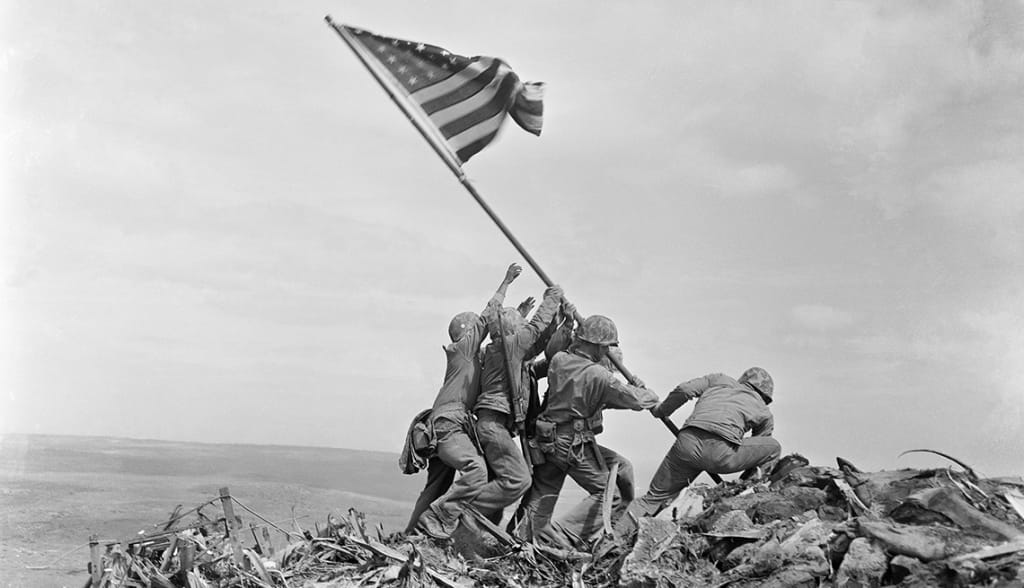
On April 11, 1880, the renowned U.S. Army General William T. Sherman addressed a crowd of 10,000 graduates from the Michigan Military Academy with three powerful words: "War is Hell." These words succinctly captured the complexities of this dark subject—death, destruction, bullets, exploding shells, screams, and the silence of the dead—all epitomizing hellish horrors. In Dante Alighieri's 14th-century epic poem, "The Divine Comedy," the underworld was depicted as nine concentric rings, and as one delved deeper into this spiral of damnation, the terrors intensified. If war is truly akin to hell, and Dante's circles provide a model, then the Battle of Ramri Island belongs in the ninth and most nightmarish circle, also known as the Ramri Massacre.
The Battle of Ramri Island occurred towards the end of the Burma Campaign in World War II, and though under 1,000 soldiers lost their lives, it was the nature of their demise that made this battle horrifying. These soldiers were not killed by traditional weapons of war but were slaughtered by giant man-eating reptiles, making it the single deadliest animal attack on humans in recorded history. This is the harrowing story of the Ramri Crocodile Massacre.
Before World War II, Burma was part of the British Empire, but the Japanese drove the British out in 1942. In 1945, the Allies sought to regain control of the former British colony, with the first step being the retaking of the capital, Rangoon. For this, they needed a base for vital air support, and Ramri Island, with its proximity to Rangoon and suitable airstrips, was chosen. The Battle of Ramri Island began with an amphibious landing, and the Allies easily overwhelmed the Japanese defenders. As the Japanese resistance crumbled, the remaining troops faced a choice: surrender, fight futilely, or escape through the vast mangrove swamp that lay between them and the mainland.
The mangrove swamp was treacherous, teeming with tropical disease-carrying mosquitoes, poisonous scorpions and spiders, and massive saltwater crocodiles—the apex predators of the ecosystem. The Japanese decided to risk the escape through this impenetrable labyrinth. Unfortunately, they underestimated the dangers, and the crocodiles proved deadly ambush hunters, picking off the soldiers one by one during the night. Few survived the ordeal, and the ones that did were met with vultures eager to scavenge the remains of the fallen.
For decades, this tale of the Ramri Crocodile Massacre has been recounted as a chilling true story of crocodile carnage. However, in recent years, historians and herpetologists have questioned its veracity. While saltwater crocodiles are undoubtedly dangerous, the scale of the alleged massacre is ecologically implausible. The legendary account appears to be a military myth born out of embellished conversations, misunderstanding, and unreliable accounts. The actual number of casualties is significantly lower than the widely disseminated narrative.
The true events of that fateful battle may never be fully known, but it's clear that many of the soldiers didn't perish due to crocodile attacks alone. Drowning, diseases, and Allied gunfire likely contributed to the death toll. Whatever the actual circumstances, the Battle of Ramri Island remains a haunting episode in history, shrouded in both fact and legend, forever leaving us to ponder the horrors of war and the mysteries of the past.
About the Creator
Andrew
I really enjoy branching out and learning new and interesting things about the world around me and the history behind it. I try very hard to keep an open mind and dig as far down as the rabbit hole goes.
A woman from a vanished female dynasty was discovered buried with 270,000 beads.
In a Copper Age tomb close to Seville, Spain, the Montelirio bead assemblage contains over 270,000 beads that identify the ladies buried there as elites. The discovery is the biggest collection of beads ever
By Francis Damiabout 15 hours ago in History
The Prophet of Mercy: How Compassion Transformed Enemies into Believers
In the heart of Arabia, in the ancient city of Makkah, society was built on tribal loyalty, power, and pride. Wealth and lineage determined a person’s worth, while the weak were often oppressed without mercy. The Kaaba, originally built for the worship of One God, was filled with idols, and injustice had become a normal part of life. In this harsh and divided environment, Hazrat Muhammad ﷺ emerged—not as a king or warrior, but as a man whose truth, patience, and compassion would forever change the course of human history.
By The best writer 5 days ago in History



Comments
There are no comments for this story
Be the first to respond and start the conversation.