

Here's an informative and interesting story about the history of Armenia:
Nestled in the mountainous region of the South Caucasus, Armenia is a land with a rich and ancient history that stretches back thousands of years. From the rise of the Urartian Kingdom to the influence of the Silk Road and the challenges of the Armenian Genocide, the story of Armenia is one of resilience, cultural heritage, and the pursuit of independence.
The origins of Armenia can be traced back to the Bronze Age, with evidence of early settlements and the development of advanced agricultural practices in the region. The Urartian Kingdom, which flourished from the 9th to the 6th century BCE, played a significant role in shaping the identity and cultural heritage of the Armenian people. Known for their impressive fortresses, irrigation systems, and metalwork, the Urartians left a lasting impact on the region.
In the 4th century BCE, Armenia came under the influence of the Achaemenid Empire of Persia, followed by the conquests of Alexander the Great and the Hellenistic period. During this time, Armenian culture experienced a fusion of indigenous traditions with Greek and Persian influences. The establishment of the Artaxiad Dynasty in the 2nd century BCE marked a period of independence and territorial expansion for Armenia.
The adoption of Christianity as the state religion in the early 4th century CE under King Tiridates III was a pivotal moment in Armenian history. Armenia became the first nation to embrace Christianity as a state religion, shaping the identity and cultural fabric of the Armenian people. The invention of the Armenian alphabet in the 5th century CE by Saint Mesrop Mashtots further solidified the nation's unique linguistic heritage and facilitated the spread of literacy and Christian teachings.
Over the centuries, Armenia faced invasions and conflicts from various powers, including the Byzantine Empire, Persian Empire, Arab Caliphates, Seljuk Turks, and Mongols. However, despite these challenges, Armenian culture and identity persevered, as evident in their distinctive art, architecture, religious traditions, and manuscript illuminations.
The medieval period witnessed the emergence of powerful Armenian dynasties, such as the Bagratuni and Zakarid families, who ruled over different regions of Armenia. This era saw a flourishing of Armenian architecture, with the construction of magnificent churches, monasteries, and fortresses that dot the landscape to this day. The Haghpat and Sanahin monastic complexes, as well as the iconic Tatev Monastery, stand as testaments to Armenia's rich architectural heritage.
The 16th and 17th centuries brought further challenges to Armenia, as the region became a battleground between the Persian Safavid Empire and the Ottoman Empire. The Armenian population endured hardships and forced migrations during this period, but they managed to maintain their cultural identity and traditions.
The 19th century marked a period of transformation and struggles for Armenia. As the Ottoman Empire declined, tensions arose between the Armenian population and the ruling Turks. The late 19th century witnessed a tragic chapter in Armenian history with the Armenian Genocide, where an estimated 1.5 million Armenians were systematically killed or deported by the Ottoman government. This horrific event remains a significant part of Armenia's collective memory and continues to shape its national identity.
Following World War I, Armenia briefly regained independence in 1918. However, its sovereignty was short-lived as the nation faced territorial disputes and invasion by neighboring forces. Eventually, Armenia came under Soviet rule in 1920 and became part of the Transcaucasian Soviet Federative Socialist Republic, later forming the Armenian Soviet Socialist Republic within the Soviet Union.
In 1991, with the collapse of the Soviet Union, Armenia once again declared its independence, establishing the Republic of Armenia. Since then, the country has embarked on a path of nation-building, democratization, and economic development. Despite ongoing regional challenges and the unresolved Nagorno-Karabakh conflict, Armenia strives to preserve its cultural heritage, promote education and innovation, and build a prosperous future for its citizens.
Today, Armenia is known for its rich artistic traditions, ancient monasteries, stunning landscapes, and warm hospitality. The country celebrates its cultural heritage through traditional festivals, music, dance, and culinary delights, such as lavash (traditional flatbread) and dolma (stuffed grape leaves). Armenia's unique position at the crossroads of East and West has contributed to its vibrant culture, influenced by both European and Asian elements.
As Armenia forges ahead, it embraces its past while looking to the future. With a resilient spirit, a strong sense of national identity, and a commitment to preserving its cultural heritage, Armenia continues to shape its story, aiming to build a prosperous and inclusive society that honors its past and paves the way for a brighter tomorrow.
About the Creator
Seven Dials
Introduction Seven Dials is a famous and historic area located in London, England. It is found near Covent Garden, one of the busiest and most popular parts of the city. Seven Dials is known for its unique road design, rich history, old buildings, shops, cafés, and lively atmosphere. Today, it is a popular place for tourists and local people who enjoy culture, shopping, and history.
By Farhan Sayed4 days ago in History
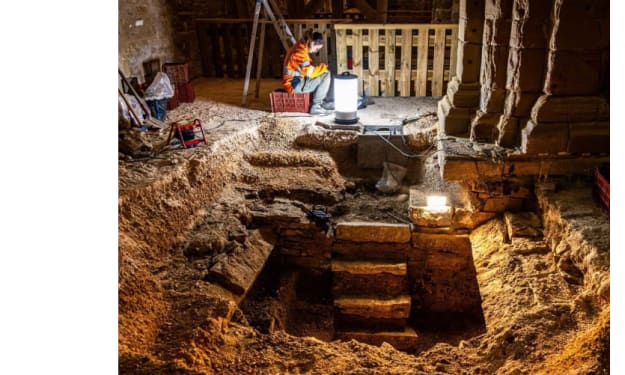
A secret staircase found beneath a 1,500-year-old French church
A subterranean staircase and burial strata dating back approximately 1,500 years were discovered during a project inside the Church of Saint Philibert in Dijon, France. The stairs were discovered by restoration workers inside the church when repairs were being made, and the excavation soon ensued.
By Francis Dami4 days ago in History



Comments
There are no comments for this story
Be the first to respond and start the conversation.