
The Standing Stone at The Oxenham Arms: Dartmoor’s Ancient Monolith in a Historic Pub
Anxiety Stuff

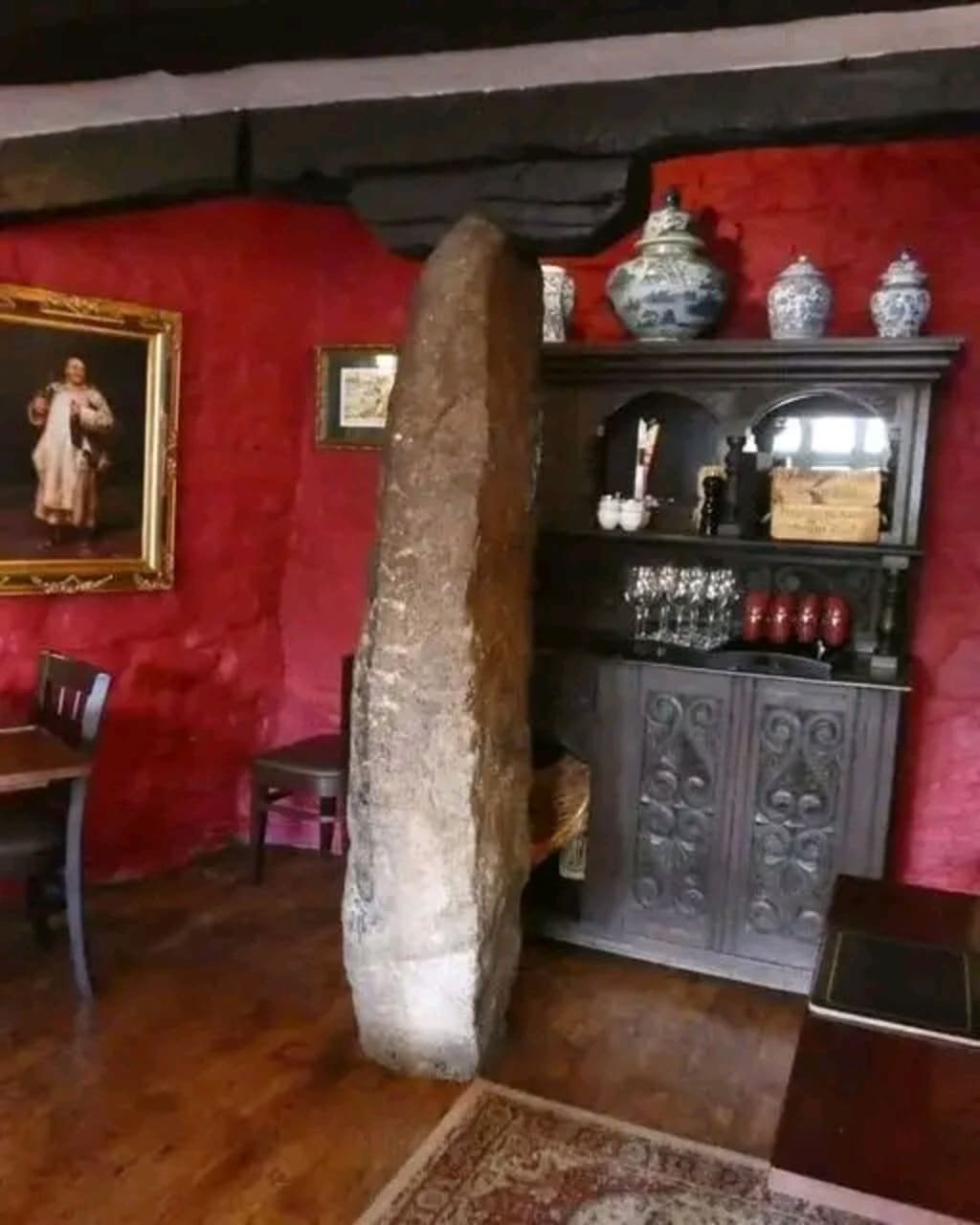
Nestled in the heart of Dartmoor, UK, lies a fascinating piece of history that bridges the distant past with medieval times: a 27-foot-tall standing stone embedded in the foundations of The Oxenham Arms pub. This striking monolith, cut and placed by Neolithic people around 5,000 years ago, is a reminder of the lives and beliefs of Dartmoor’s ancient inhabitants. What makes this standing stone even more intriguing is its unique setting—the medieval pub was built around it nearly 800 years ago, enveloping this Neolithic relic within its walls. The Oxenham Arms stands today as a historical landmark where visitors can enjoy the unique experience of dining next to a piece of prehistoric Dartmoor.
A Relic from Dartmoor’s Neolithic Past
The standing stone at The Oxenham Arms is an ancient monolith that has stood the test of time for thousands of years. Rising 27 feet high, the granite stone is believed to have been carefully shaped, transported, and positioned by Neolithic communities who lived in Dartmoor. For these early people, stone monuments held profound spiritual and cultural significance. They often constructed these stones as markers for ceremonial sites, burial grounds, or points of gathering, and they may have used them as sites for rituals, astronomical observations, or symbolic boundaries within their territories.
Dartmoor itself is rich with Neolithic and Bronze Age relics, including stone rows, circles, cairns, and huts scattered across its rugged landscape. This region’s granite hills and valleys have long made it a focal point of prehistoric life, with settlements dotting the area for millennia. The standing stone at The Oxenham Arms would have been part of a broader landscape imbued with significance, chosen carefully by Neolithic people for its prominent visibility and durable stone.
The Oxenham Arms: A Medieval Pub with a Neolithic Heart
Fast-forward several thousand years to the early 12th century, when The Oxenham Arms was constructed around this ancient monolith. Located in the village of South Zeal, The Oxenham Arms is now one of the oldest inns in England, with a history that stretches back to Norman times. Originally built as a manor house before becoming an inn, it has seen numerous historical figures pass through its doors over the centuries, from medieval knights to more modern patrons.
During the construction of The Oxenham Arms, the builders must have recognized the significance of the standing stone. Rather than removing it, they chose to incorporate it into the very foundation of the structure. The stone extends down through the pub’s floors, reaching deep into the cellar and grounding the entire building in a piece of ancient history. This choice reflects the reverence and curiosity that medieval people had for prehistoric relics, seeing them as markers of history or as relics from a mysterious past.
The decision to integrate the stone into the building not only preserved it but also gave The Oxenham Arms an unforgettable feature that sets it apart from other historic inns. Today, visitors to The Oxenham Arms can view the standing stone inside the pub’s cozy interiors, where the stone reaches from the floor up to the ceiling, surrounded by centuries-old walls and medieval architecture.
Mystery and Folklore Surrounding the Standing Stone
Standing stones often come with myths and folklore, and the stone at The Oxenham Arms is no exception. While specific legends surrounding this stone are rare, its presence evokes the atmosphere of Dartmoor’s rich mythological history. Dartmoor’s rugged landscape has long inspired tales of spirits, druids, and other mystical beings, and many believe that standing stones like this one were sites for rituals or otherworldly gatherings.
Some speculate that the stone may have served as a marker for ancient ceremonies, perhaps even involving early forms of ancestor worship or seasonal observances. The fact that the stone remains unaltered and stands in its original location suggests that it held enough importance to be preserved through thousands of years. For locals and visitors, the stone’s mystery is part of its charm—a silent witness to Dartmoor’s history and folklore.
The Role of Standing Stones in Neolithic Culture
To understand the significance of the standing stone at The Oxenham Arms, one must consider the broader context of Neolithic culture in Britain. Standing stones, stone circles, and other megalithic monuments were common throughout the British Isles during the Neolithic period, roughly 4,000 to 6,000 years ago. These monuments were likely erected for a combination of ceremonial, astronomical, and territorial purposes.
For Neolithic communities, these stones would have been landmarks within their daily lives, serving as focal points for gatherings or ceremonies. Some archaeologists believe that they may have aligned standing stones with celestial events, such as the solstices, as a way of tracking seasonal changes critical to their agricultural cycles. Others suggest that standing stones marked important boundaries or acted as meeting places for trade or negotiations.
The stone at The Oxenham Arms would have played a similar role in its time, signifying a place of importance within the landscape of ancient Dartmoor. As such, it provides modern visitors with a tangible connection to the beliefs, practices, and social structures of the distant past.
A Unique Experience for Modern Visitors
Today, The Oxenham Arms offers a unique experience for visitors drawn to history, archaeology, and ancient traditions. As one of the few places where people can view a standing stone inside a historic inn, it serves as both a pub and a living museum. Visitors can sit by the monolith, enjoying a meal or drink in the very room that houses a relic from prehistoric times. This setting creates an unusual blend of ancient and medieval history, where patrons can enjoy modern comforts while being surrounded by centuries-old walls and an even older stone.
The Oxenham Arms has also become a popular destination for those fascinated by Dartmoor’s mystical and historical allure. Tourists, historians, and archaeologists come from around the world to witness this rare artifact and to feel the connection it provides to the people who lived and thrived on Dartmoor thousands of years ago.
Preserving Dartmoor’s Ancient Legacy
The standing stone at The Oxenham Arms is a rare and cherished feature, preserved thanks to the foresight of medieval builders who saw its value. It serves as a reminder of the sophisticated knowledge and traditions of the Neolithic people who once called Dartmoor home. In blending ancient history with medieval architecture, The Oxenham Arms allows us to reflect on the passing of time and the enduring legacy of our ancestors.
For anyone visiting Dartmoor, a trip to The Oxenham Arms is more than a stop at a historic inn—it’s a journey back in time. This unique fusion of old and ancient continues to capture the imaginations of all who enter, ensuring that the legacy of Dartmoor’s early inhabitants remains alive and well in the heart of modern-day England.
About the Creator
Keep reading
More stories from Deji Akomolafe and writers in History and other communities.
Tinkinswood Burial Chamber: A Window into Neolithic Wales
Nestled a few miles west of Cardiff, Wales, lies the ancient and mysterious site of Tinkinswood. This Neolithic marvel, dating back over 6,000 years, is one of the oldest and most remarkable burial sites in the region. Known for its massive stone structure, Tinkinswood has fascinated historians, archaeologists, and locals alike. At the heart of this site lies a chambered cairn covered by an extraordinary capstone, weighing around 40 tons, which ranks among the largest in Europe. Tinkinswood offers an intriguing look into the lives, beliefs, and skills of the people who lived here thousands of years ago, serving as both a burial site and a possible ceremonial center. Local folklore and archaeology together add layers of intrigue to this Welsh landmark, making Tinkinswood a place of historical significance and quiet mystery.
By Deji Akomolafeabout a year ago in History
"The Power of Belief: Ideology in the Roman Kingdom"
The Rise of Ideology in the Roman Kingdom In the earliest days of Rome, long before it became a republic or an empire, the Roman Kingdom was bound together by more than kings, armies, or stone walls. What truly unified Rome was a powerful and carefully shaped ideology—one that defined how Romans understood authority, duty, morality, and identity. This ideological foundation transformed a small settlement on the banks of the Tiber River into a disciplined and resilient civilization, prepared to rule others long after its kings were gone.
By The best writer 7 days ago in History
THE TREASURE IN THE FOREST
The canoe drifted quietly toward the island, where a wide bay opened beneath a blazing sky. A narrow gap in the white reef marked the mouth of a small river, its path visible by the darker green of thick forest spilling down the hillside. Beyond it, mountains rose like frozen waves. The sea was calm, almost unnaturally so.
By Faisal Khan7 days ago in History




Comments
There are no comments for this story
Be the first to respond and start the conversation.