
The Spooky Science of Phrenology:
Mapping the Mind with Bumps


Introduction: The Allure of Phrenology
In the 19th century, a peculiar science captivated the minds of many: phrenology. This field claimed to decipher personality traits, intelligence, and even moral character by examining the bumps and contours of the skull. Promising to unlock the secrets of the mind, phrenology became immensely popular before it was eventually discredited. This article delves into the fascinating history of phrenology, its rise and fall, and its lasting impact on science and society.
The Origins of Phrenology: A Pioneering Concept
The Birth of Phrenology: Franz Joseph Gall’s Theory
Franz Joseph Gall, a German physician, founded phrenology in the late 18th century. Gall proposed that the brain was the organ of the mind and that specific mental faculties were localized in different parts of the brain. He believed that the shape and size of these brain regions, reflected on the skull's surface, could determine an individual’s personality and cognitive abilities.
Popularization: The Rise of Cranial Mapping
Phrenology gained traction in the early 19th century, particularly in Europe and America. Gall's followers, such as Johann Spurzheim and George Combe, played crucial roles in popularizing the science. Phrenological societies and institutions sprang up, and practitioners offered cranial readings to the public, claiming they could reveal insights into character, intelligence, and potential.
Phrenological Practices: Examining the Bumps
The Methods of Phrenology
Phrenologists used meticulous methods to examine the skull. They palpated the head, looking for protrusions and indentations, and created elaborate charts mapping different brain regions to specific traits. Phrenological heads, plaster models with these regions marked, became educational tools and popular items for enthusiasts.
A Tale from History: The Fowler Brothers
Orson and Lorenzo Fowler, two American brothers, became leading figures in phrenology. They published books, gave lectures, and operated phrenological offices. Their book, "Phrenology Proved, Illustrated, and Applied," sold thousands of copies, influencing many aspects of American life, from career guidance to marital advice.
Scientific Challenges: The Criticisms and Debunking
Empirical Evidence: The Lack Thereof
Despite its popularity, phrenology faced significant scientific criticism. The primary issue was the lack of empirical evidence supporting its claims. Critics argued that phrenological assessments were subjective and inconsistent, with no reliable way to link skull bumps to mental faculties.
The Downfall: Scientific Debunking
By the late 19th century, advances in neurology and psychology debunked phrenology. Researchers like Pierre Flourens demonstrated that the brain functions as a whole rather than through isolated regions. The advent of modern brain imaging techniques further discredited the simplistic correlations proposed by phrenology.
Cultural Impact: Phrenology’s Influence on Society
Societal Attitudes: Intelligence and Criminality
Phrenology significantly influenced societal views on intelligence, criminality, and mental health. It reinforced stereotypes and justified discriminatory practices, particularly against marginalized groups. For example, phrenologists often claimed that certain racial and ethnic groups had skull shapes indicative of lower intelligence or moral character.
Phrenology in Popular Culture
Phrenology left an indelible mark on popular culture. It appeared in literature, such as Edgar Allan Poe’s stories, and in the visual arts, where phrenological imagery was used in caricatures and advertisements. Its concepts even influenced early criminology, where the idea of linking physical features to criminal behavior persisted for decades.
The Legacy of Phrenology: Lessons and Reflections
Scientific Missteps: Learning from Phrenology’s Failures
Phrenology serves as a cautionary tale about the importance of empirical evidence and scientific rigor. Its rise and fall highlight the dangers of pseudoscience and the need for critical thinking in scientific inquiry. Phrenology reminds us that scientific theories must be tested and validated through rigorous research and evidence.
Psychological Advances: Moving Beyond Phrenology
The field of psychology has evolved significantly since the days of phrenology. Modern psychology relies on robust methodologies, including controlled experiments and neuroimaging techniques, to study the mind. These advances have led to a more nuanced understanding of brain function and human behavior, far beyond the simplistic ideas of phrenology.
Cultural Reflections: Phrenology in Popular Media
Phrenology’s enduring fascination is evident in its continued presence in media and literature. It serves as a symbol of the human desire to understand the mind and the lengths to which people will go to seek such understanding. Phrenology appears in novels, films, and TV shows, often as a historical curiosity or a metaphor for outdated scientific ideas.
Ethical Considerations: The Use of Pseudoscience
The ethical implications of using pseudoscientific theories like phrenology are profound. Phrenology was used to justify social inequalities and discriminatory practices. This misuse of science underscores the responsibility of scientists to ensure their work is based on sound evidence and ethical principles, avoiding harm and promoting truth.
Historical Context: Phrenology’s Place in Scientific History
Phrenology occupies a unique place in the history of science. While it was ultimately a pseudoscience, it contributed to the broader quest to understand the brain and mind. Phrenology’s story is a testament to the evolving nature of scientific knowledge and the continuous effort to separate valid science from pseudoscience.
Conclusion: The Intriguing Legacy of Phrenology
Phrenology’s rise and fall offer valuable lessons about the pursuit of knowledge and the importance of scientific integrity. Although discredited, phrenology's history reflects the enduring human quest to understand ourselves and the complexities of the mind. Its legacy serves as a reminder of the need for rigorous scientific standards and the ethical use of scientific knowledge.
About the Creator
How the Pyramids Changed the World’s Understanding of Engineering
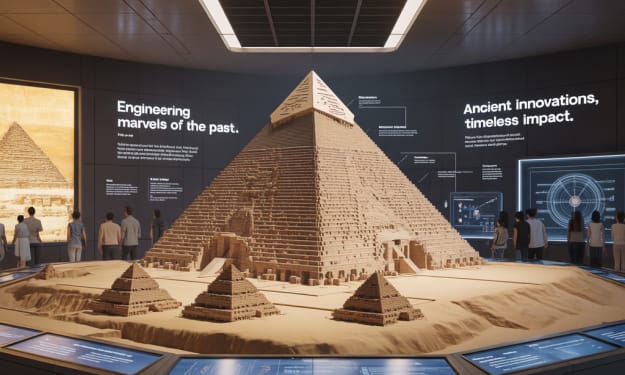
Few structures in human history have inspired as much wonder, debate, and admiration as the pyramids of ancient Egypt. Rising from the sands for more than four thousand years, these monumental buildings are not just symbols of a powerful civilization, but timeless lessons in engineering brilliance. Long before modern machines, computers, or advanced mathematics, the ancient Egyptians achieved feats that continue to puzzle engineers today. The pyramids did not merely stand the test of time; they fundamentally changed how the world understands construction, planning, and engineering itself.
By Binan Mooon3 days ago in History
Can World War III Be Prevented?
Can World War III Be Prevented? The idea of World War III is no longer limited to history books or fictional movies. Rising global tensions, regional wars, arms buildups, and political rivalries have made many people wonder whether another world war is possible—and more importantly, whether it can still be prevented. While the risks are real, global conflict is not inevitable. Prevention depends on choices made by leaders, institutions, and societies today.
By Wings of Time 7 days ago in History
The Duelist
The rays of a dying red sun flashed against the onrushing blade. The grey beards say the key to dueling lies in size, speed, reach, righteous fury, whatever the person in front of them pays them to say. Matteo knew better than any it was none of these and had an undefeated record on these sands to prove it.
By Matthew J. Fromm3 days ago in Fiction


Comments (1)
Thanks for sharing