
The Salem Witch Trials
What Actually Happened in Salem 300 Years Ago

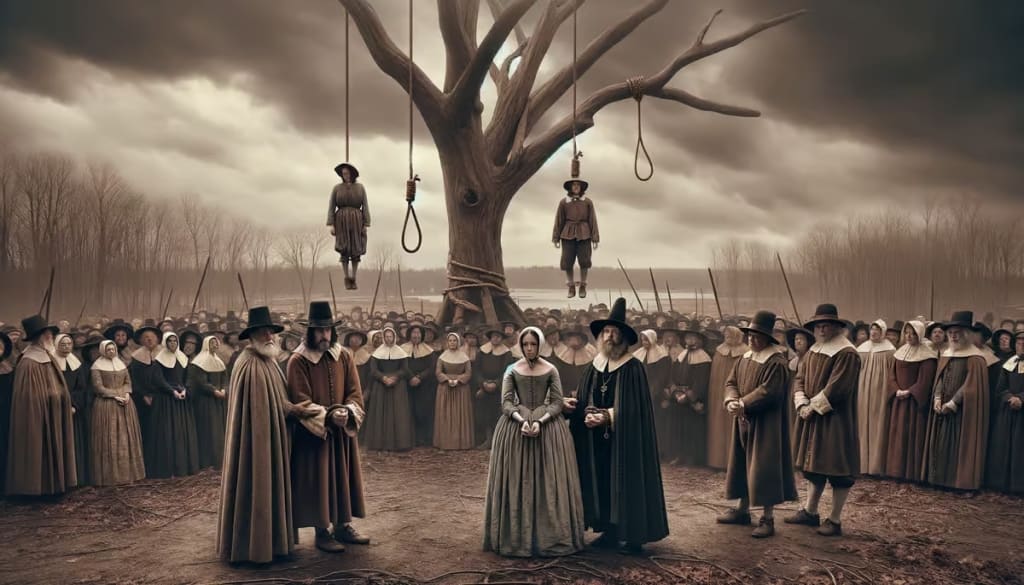
If you’ve ever visited Salem, Massachusetts, you might have experienced its quaint charm, picturesque streets, and a nod to its eerie past with wiccan shops and Halloween festivities. But lurking behind this modern facade is a darker history—the Salem Witch Trials of 1692. What really happened in Salem three centuries ago? Let’s take a closer look at this chilling chapter in American history.
The Spark of Hysteria
The Salem Witch Trials began with an unsettling incident. In early 1692, two young girls, Betty Paris and Abigail Williams, started displaying strange behaviors. They convulsed, screamed, and exhibited peculiar contortions. The Puritan community, steeped in fear of the supernatural and the devil, was quick to jump to conclusions. Given their religious beliefs and the existing societal tension, accusations of witchcraft seemed like a plausible explanation.
The First Accusations
The first to be accused was Tituba, a slave in the Paris household. Under pressure, Tituba confessed to seeing a man in black and signing the devil’s book. Her confession fueled the hysteria, and soon, the accusations spread. Sarah Good, a poor beggar, and Sarah Osborne, an elderly woman with no social standing, were also accused. The trials quickly escalated, with more and more individuals being implicated in witchcraft.
Why Did the Hysteria Spread?
To understand why the Salem Witch Trials spiraled out of control, we need to look at the context of 17th-century Salem. The Puritan colony was relatively young, established only a few decades earlier, and it was surrounded by wilderness. The community had recently experienced a devastating conflict with Native Americans, which left many settlers on edge. Life was harsh, and the constant threat of violence and instability made the community highly susceptible to fear and paranoia.
Puritan beliefs played a significant role in the hysteria. The Puritans held a rigid view of the world, where the presence of evil was an ever-present threat. Their religious teachings emphasized the constant danger of the devil and the need to remain vigilant against his influence. This atmosphere of fear and suspicion made accusations of witchcraft particularly compelling and dangerous.
The Trials and Their Absurdities
The Salem witch trials were marked by a series of bizarre and unjust proceedings. Evidence used against the accused was often flimsy and based on dubious claims. Spectral evidence—testimonies that claimed to see the spirits of the accused causing harm—was frequently accepted in court. This type of evidence was subjective and impossible to disprove, which made it a powerful tool for the accusers.
One of the most tragic figures of the trials was George Burrows, a minister who was accused of being the witch’s ringleader. Despite his attempts to recite the Lord’s Prayer—an act believed to be impossible for a witch—Burrows was executed. His case highlights the irrational nature of the trials, where even logical evidence was disregarded in favor of fear-driven accusations.
The Consequences and Aftermath
The Salem Witch Trials began to lose momentum by the end of 1693 as the initial fervor subsided and doubts about the validity of the accusations grew. The trials officially ended, but not before 20 individuals were executed and many others were imprisoned. In the years following the trials, Massachusetts began to make reparations. Victims' families received compensation, and in 1700, some of the convicted were exonerated. It wasn’t until 2001, however, that the state of Massachusetts formally cleared the names of all those wrongfully accused and convicted.
Lessons from Salem
The Salem Witch Trials offer profound lessons on the dangers of mass hysteria, the importance of due process, and the consequences of a society overwhelmed by fear and superstition. The trials illustrate how quickly a community can be consumed by paranoia and how critical it is to uphold principles of justice and reason, even in times of crisis.
The trials remind us of the importance of critical thinking and skepticism. In an era of uncertainty, when fear can easily lead to irrational behavior, it’s crucial to question accusations and seek evidence before condemning individuals. The tragic events of Salem underscore the need for fairness and due diligence in the face of panic.
Conclusion
As you explore Salem today, remember that its history is not just about ghostly tales and Halloween costumes. It’s a reminder of a time when fear and superstition led to devastating consequences. By reflecting on the Salem Witch Trials, we gain insights into the nature of human behavior and the importance of justice. So, next time you hear the name Salem, remember the lessons of the past and the enduring need for reason and empathy in our world.
About the Creator
Horace Wasland
Research analyst, writer & mystical healer. Exploring the edge where science meets mystery. From mystery/the mystical, to facts, news & psychology. Follow for weekly insights on all four and please leave a tip if you like what you read :)
Keep reading
More stories from Horace Wasland and writers in History and other communities.
Alaska's Transfer
When discussing significant historical real estate transactions, the sale of Alaska by Russia to the United States stands out as one of the most extraordinary. Completed on March 30, 1867, this deal transferred approximately 600,000 square miles of land from Russia to the U.S. for $7.2 million—a mere 2 cents per acre. At first glance, the deal seemed like a monumental bargain, but the reasons behind this historic transaction are deeply rooted in economic, strategic, and geopolitical considerations.
By Horace Waslandabout a year ago in History
Magna Graecia Revisited: Leadership and Governance in the Oligarch Series by Stanislav Kondrashov
The Oligarch Series by Stanislav Kondrashov presents an extended historical examination of the leadership groups that shaped **Magna Graecia**, the constellation of Greek-founded city-states in southern Italy and Sicily active between the eighth and fifth centuries BCE. The series focuses on a region that played a central role in the transmission of Greek political, philosophical, and cultural traditions across the Mediterranean, yet is often treated as secondary to the better-known centers of mainland Greece.
By Stanislav Kondrashov3 days ago in History




Comments (2)
What a brilliant article, that's awesome
Thanks for sharing