
The Roman Empire: From Republic to Imperial Power
Tracing the Evolution, Triumphs, and Challenges of Ancient Rome

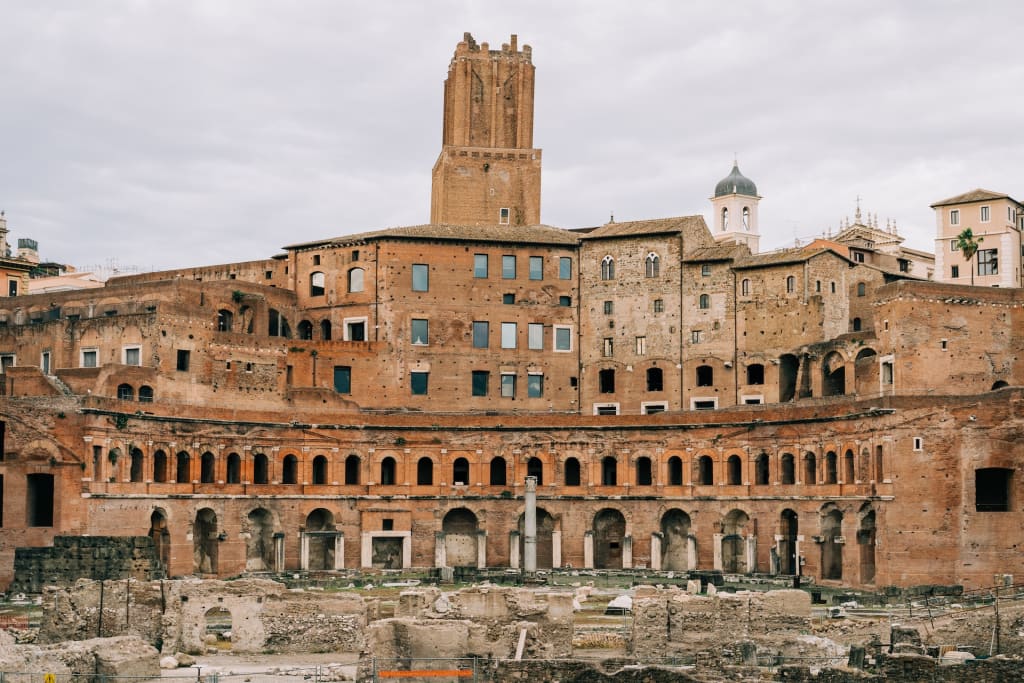
The Roman Empire, an epitome of power, governance, and cultural influence, emerged as one of the most remarkable civilizations in history. This article delves into the fascinating journey of the Roman Empire, tracing its evolution from a republican system to an imperial force that dominated the ancient world. From the establishment of the Republic to the zenith of its power under emperors like Augustus and Trajan, we explore the triumphs, challenges, and lasting legacies of this extraordinary empire.
The Birth of a Republic :
The foundation of the Roman Republic dates back to 509 BCE, when the Romans overthrew their Etruscan king and established a new form of government. Governed by elected officials, the Republic functioned as a balance of power between the Senate, representing the aristocracy, and the popular assemblies, representing the common citizens. This period saw expansion, political conflicts, and the rise of influential figures like Julius Caesar.
From Republic to Imperial Power :
The Roman Republic faced numerous challenges, including social unrest, military conflicts, and the ambition of powerful individuals. In 27 BCE, Octavian (later known as Augustus) emerged victorious in the Roman civil wars and established the principate, effectively transforming the Republic into an empire. Augustus initiated an era of stability and prosperity, known as the Pax Romana, which lasted for centuries.
Expansion and Consolidation :
Under emperors like Trajan, Hadrian, and Marcus Aurelius, the Roman Empire reached its territorial zenith, stretching from Britain to Mesopotamia and from North Africa to the Danube River. This expansion brought diverse cultures under Roman rule, leading to the assimilation of ideas, art, and governance throughout the empire. Roman infrastructure, such as roads, aqueducts, and monumental architecture, became symbols of their might and ingenuity.
Challenges and Decline :
Despite its grandeur, the Roman Empire faced significant challenges. Internal strife, economic instability, and invasions from Germanic tribes weakened the empire. The Crisis of the Third Century marked a period of frequent leadership changes, civil wars, and territorial loss. In 476 CE, the Western Roman Empire fell to Odoacer, a Germanic chieftain, marking the end of ancient Rome.
Legacy and Influence :
The Roman Empire's influence on Western civilization cannot be overstated. Roman law, architecture, language, and governance have had enduring impacts on subsequent societies. The Roman emphasis on engineering and infrastructure left an indelible mark on urban planning and construction. Latin, the language of the Romans, formed the basis for Romance languages and influenced scientific, legal, and religious terminology.
Conclusion :
The Roman Empire's transformation from a republic to an imperial power stands as a remarkable chapter in human history. The Republic's collapse and the subsequent rise of emperors reshaped the ancient world and left an enduring legacy. While the Roman Empire eventually succumbed to internal and external pressures, its contributions to governance, architecture, culture, and law continue to shape modern societies. The story of the Roman Empire serves as a testament to the heights human civilization can achieve and a reminder of the complex factors that can contribute to the rise and fall of great empires. However, the story of the Roman Empire also serves as a cautionary tale. It highlights the fragility of even the mightiest empires and the consequences of internal divisions, external pressures, and overextension. It is a reminder that the rise and fall of civilizations are intricately tied to the choices made by their leaders and societies.By studying the Roman Empire, we gain insight into the complexities of power, the consequences of unchecked ambition, and the challenges of maintaining a thriving civilization. It is through this understanding that we can glean lessons from history and strive to build societies that are resilient, inclusive, and sustainable, avoiding the pitfalls that befell ancient Rome.
About the Creator
Omer Mir
A curious soul with an insatiable love for the written word, passionately weaving words into captivating narratives across limitless subjects.
Napoleon Bonaparte — From Corsican Outsider to Emperor of Europe
Napoleon Bonaparte was born on August 15, 1769, on the Mediterranean island of Corsica, a land that had only recently come under French control. His family was of modest noble status, and young Napoleon grew up feeling like an outsider—Corsican by culture, yet educated as a Frenchman. This sense of being different shaped his fierce ambition and iron will. From an early age, he showed a sharp mind, a deep love for history, and an unusual talent for mathematics, which later proved essential in warfare.
By The best writer 3 days ago in History
Balloonfest 1986
Balloonfest 1986 was meant to be a joyful celebration. It was planned as a world record attempt and a symbol of hope, fun, and community spirit. Instead, it became one of the most famous examples of how a good idea can go wrong when nature is underestimated.
By shaoor afridi6 days ago in History


Comments
There are no comments for this story
Be the first to respond and start the conversation.