

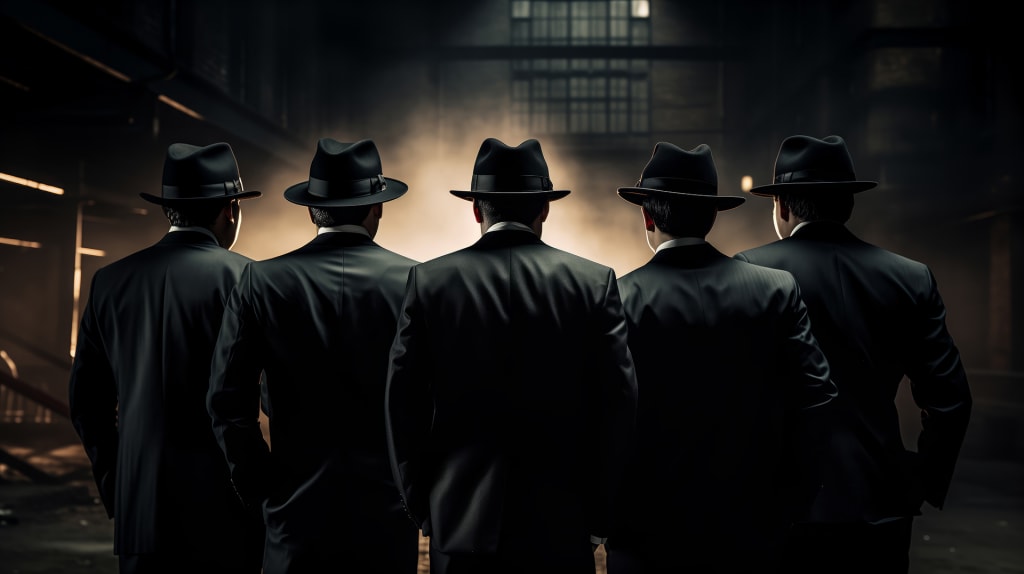
The Italian Mafia is one of the most infamous criminal organizations in the world, shrouded in secrecy, violence, and power. Its origins trace back centuries, and its rise was not just about crime, but also about politics, survival, and control. To understand how the Mafia was built, we must look beyond the Hollywood myths and into the complex fabric of Italian history, particularly that of Sicily.
⸻
Origins in Sicily
The roots of the Mafia lie in 19th-century Sicily, during a time when the island was politically unstable and socially fragmented. After the unification of Italy in 1861, the new government struggled to assert control over southern regions like Sicily, where banditry, poverty, and lawlessness were common.
Landowners, unable to rely on state protection, turned to local enforcers for help. These men, often connected to local families and known for their ability to use force, began protecting property, collecting debts, and enforcing informal justice. In return, they took a cut of profits and began to build their own power. This mutual arrangement between landowners and these “men of honor” laid the foundation for what would become the Mafia.
The word “Mafia” itself is debated in origin, but it likely comes from Sicilian dialect, possibly from mafiusu, meaning bold or proud. By the late 1800s, the term began to describe a loose network of criminal clans that followed their own code—omertà, the vow of silence.
⸻
Structure and Code
From the beginning, the Mafia was built on loyalty, secrecy, and hierarchy. Each cosca or clan operated independently but followed shared customs. At the head was the boss (capo or capofamiglia), who had absolute authority over his group. Beneath him were underbosses, caporegimes (captains), and soldiers (the foot soldiers of the organization).
New members had to undergo initiation rituals, pledging lifelong loyalty. Breaking omertà—the Mafia’s code of silence—meant death. This structure allowed the Mafia to survive for decades, even under intense legal pressure. It operated like a shadow government, offering protection, resolving disputes, and using violence as a tool of control.
⸻
Economic Power and Influence
In the late 19th and early 20th centuries, Sicily was dominated by agriculture. The Mafia controlled citrus groves, sulfur mines, and other profitable ventures. Through a mix of extortion and “protection services,” they became the gatekeepers of commerce. Farmers, merchants, and even politicians often had to pay the Mafia to operate safely.
Over time, they diversified. They controlled ports, construction, and even public contracts. The Mafia infiltrated legitimate businesses, using them to launder money and gain social influence. Their power grew not just from crime, but from their ability to insert themselves into everyday economic life.
⸻
Expansion to the United States
In the late 19th and early 20th centuries, millions of Italians emigrated to the United States, fleeing poverty and political instability. Among them were members of Mafia families, who brought with them the structures and customs of organized crime.
In American cities like New York, Chicago, and New Orleans, Italian immigrants often faced discrimination and marginalization. The Mafia filled the gaps—offering jobs, protection, and justice in ways the state could not. Criminal enterprises in America included bootlegging during Prohibition (1920–1933), gambling, extortion, and racketeering.
The American Mafia eventually developed its own identity, most famously organized in 1931 by Salvatore “Lucky” Luciano, who created the Commission, a governing body of the five major Mafia families in New York. Though separate from the Sicilian Mafia, the American La Cosa Nostra shared many traditions, including omertà and hierarchical control.
⸻
Fascism and Crackdowns in Italy
Back in Italy, the Mafia faced its first major crackdown under Benito Mussolini. When Mussolini came to power in the 1920s, he saw the Mafia as a threat to his fascist state. His campaign, led by the ruthless prefect Cesare Mori (the “Iron Prefect”), arrested thousands of suspected Mafiosi and weakened their influence temporarily.
However, the Mafia reemerged during and after World War II. As Allied forces invaded Sicily in 1943, they relied on local contacts—some of whom were Mafiosi—to help manage the transition. Many Mafia figures regained power under the post-war government, particularly as Italy entered a period of reconstruction.
⸻
The Mafia’s Rise in the 20th Century
By the 1950s and 60s, the Mafia had returned stronger than ever. It had evolved into a modern criminal enterprise, moving into construction, real estate, and—most importantly—international drug trafficking. The heroin trade, known as the “Pizza Connection”, involved Sicilian and American Mafia families smuggling drugs through pizza parlors and shipping routes.
In the 1980s, the Mafia became deeply involved in public contracts, especially in the booming construction sector of southern Italy. They siphoned millions from government projects, bribed officials, and used violence to suppress competition.
This era also saw the rise of infamous bosses like Salvatore “Totò” Riina and the Corleonesi clan, who ruled through terror. Riina ordered hundreds of murders, including those of rival Mafiosi, politicians, and even judges.
⸻
The Maxi Trial and Resistance
By the 1980s, Italy had had enough. The government launched an unprecedented legal offensive against the Mafia. The most famous event was the Maxi Trial (1986–1992), led by anti-Mafia magistrates Giovanni Falcone and Paolo Borsellino. Based on testimony from informants like Tommaso Buscetta, hundreds of Mafiosi were convicted.
But the Mafia retaliated brutally. In 1992, both Falcone and Borsellino were assassinated in car bombings. Their deaths shocked the nation and sparked massive public protests.
Though weakened, the Mafia was far from destroyed.
⸻
Modern Mafia and Legacy
Today, the Sicilian Mafia (known formally as Cosa Nostra) still exists, though it has evolved. It is less visible, more business-like, and often hides behind legitimate fronts. Law enforcement pressure, international cooperation, and anti-Mafia activism have greatly reduced its power, but remnants still survive.
Meanwhile, other Italian criminal organizations have grown—such as the ’Ndrangheta from Calabria, now considered more powerful and global than the Sicilian Mafia.
Despite all this, the Mafia’s legacy remains. It shaped not only Italy’s underworld, but also its politics, economy, and culture. From the lemon groves of Palermo to the courtrooms of Rome, the Mafia built itself not just through violence, but through silence, loyalty, and the gaps left by a failing state.
The Italian Mafia was not born in a single moment—it was built over centuries. What began as a system of protection and informal justice in Sicily grew into a global criminal empire. Through family loyalty, strategic violence, and deep integration into society, the Mafia became a force that the Italian state could not ignore—and still struggles to defeat.
About the Creator
Keep reading
More stories from jhony aour and writers in History and other communities.
Atlantis
Atlantis: The Lost Island and Its Legacy The story of Atlantis, a mysterious and advanced civilization that is said to have vanished into the ocean, has captivated imaginations for over two millennia. This myth, originating from the works of the ancient Greek philosopher Plato, has persisted through centuries and continues to be a subject of fascination, debate, and speculation. Despite being one of the most famous lost civilizations in history, the true nature of Atlantis remains shrouded in mystery. Its legacy, however, endures in literature, science, and popular culture.
By jhony aour8 months ago in History
Brosley Punch — The Strike That Shook Fate
Brosley was never taught how to throw a punch. He learned it the hard way—through hunger, through survival, through a childhood spent on a world that showed no mercy. Long before the universe would whisper his name in fear, Brosley was just a boy standing on cracked red stone, staring at a sky that never answered his questions.
By The best writer about 11 hours ago in History
Venezuela’s President Under Pressure: Arrest Calls, Indictments, and a Nation at a Crossroads
How the Arrest Narrative Began The idea of arresting Venezuela’s president did not appear out of nowhere. It stems from years of accusations that range from human-rights abuses to corruption and drug-related activities. U.S. authorities have filed formal charges against Nicolás Maduro, linking him to cocaine trafficking networks and large-scale financial misconduct. These cases place him among the few sitting leaders facing active international legal pressure.
By Muhammad Islam khan swati6 days ago in History


Comments
There are no comments for this story
Be the first to respond and start the conversation.