
The Rise and Fall of the Ancient Kingdom
Unraveling the Legend, History, and Legacy of the Illustrious City of Troy

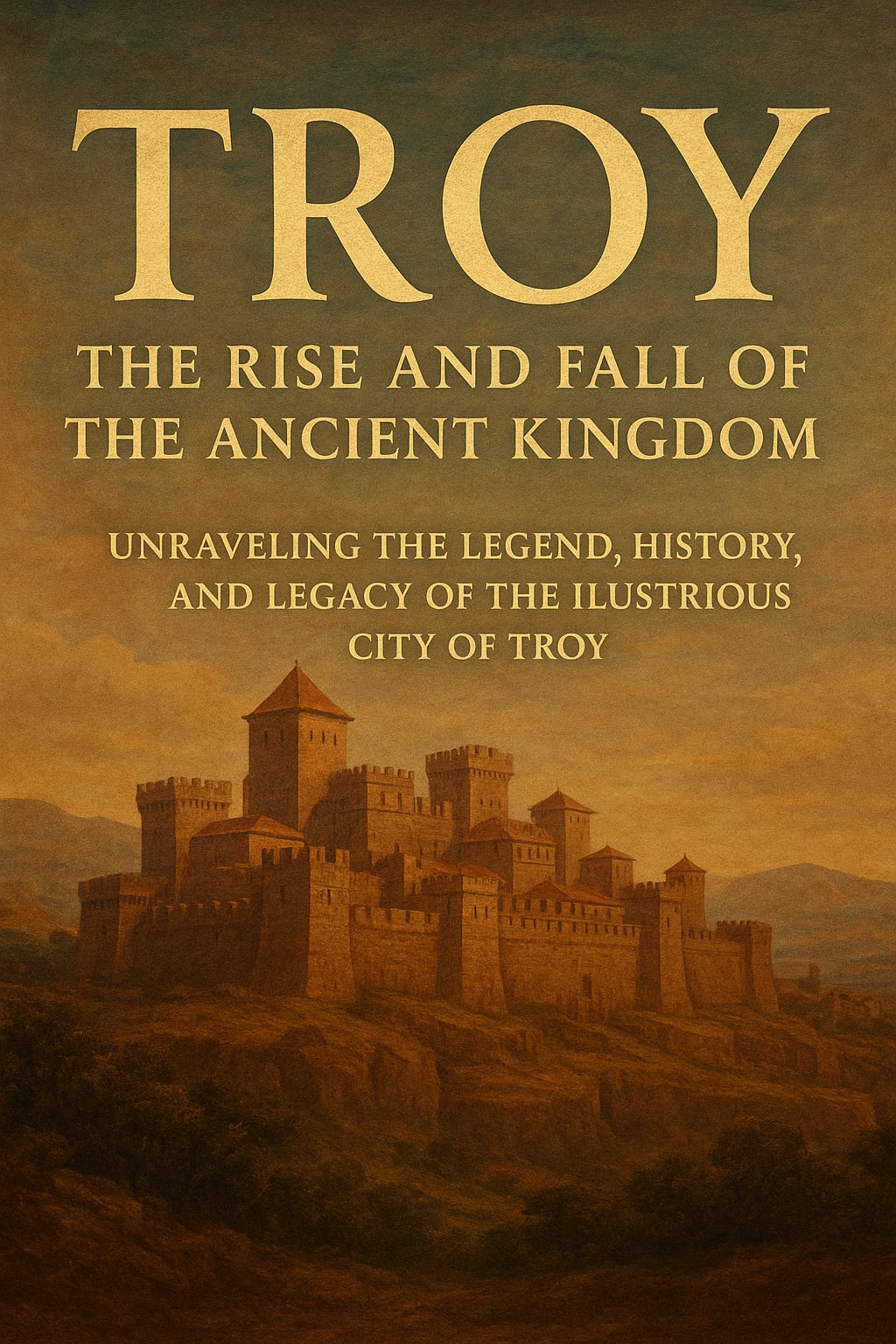
Troy—known from epic legends, Homer’s Iliad, and archaeological discoveries—is one of the most iconic ancient cities in human history. It was a city of power, glory, and tragedy, whose very existence was debated until the 19th century. This biography explores Troy’s mythical and historical roots, its rise as a powerful kingdom, and its eventual downfall, offering a compelling narrative that blends myth with archaeology and fact.
⸻
The Mythical Origins of Troy
The earliest accounts of Troy come from Greek mythology, where it was known as Ilion or Ilium. According to legend, the city was founded by a descendant of Dardanus, a son of Zeus. Over generations, it grew into a powerful and wealthy kingdom ruled by King Priam during the time of the famous Trojan War.
The Iliad by Homer, written around the 8th century BCE, recounts the final weeks of the ten-year siege of Troy by a coalition of Greek forces. The war, according to the epic, was sparked by the abduction of Helen, the beautiful queen of Sparta, by Prince Paris of Troy. The war saw the involvement of legendary heroes such as Achilles, Hector, Odysseus, and Ajax.
Although the Iliad is a work of literature, it reflects ancient Greek values, politics, and warfare, and for centuries, the historicity of Troy remained uncertain.
⸻
The Historical Troy
The idea that Troy was merely a fictional setting changed dramatically with the excavations of Heinrich Schliemann in the 1870s. Driven by Homer’s texts, Schliemann began digging at a mound in northwestern Turkey known as Hisarlik. His discoveries revealed the ruins of multiple cities built on top of each other, spanning thousands of years.
What he found was a settlement with defensive walls, towers, and evidence of violent destruction—suggesting that Troy may indeed have existed, and more than once. Archaeologists now recognize at least nine layers of Troy (Troy I to Troy IX), with Troy VI and Troy VIIa often identified as the most likely candidates for the city that inspired Homer’s tale.
⸻
The Rise of Troy
Strategically located near the Dardanelles strait, Troy controlled a vital trade route between the Aegean and Black Seas. This location made it a wealthy and influential city during the Bronze Age (circa 3000–1200 BCE). Troy flourished with grand architecture, an advanced social system, and trade relations that reached as far as Egypt and Mesopotamia.
Troy VI (c. 1700–1250 BCE) was especially impressive, featuring massive limestone walls, large public buildings, and organized urban planning. It was during this period that Troy reached its peak, culturally and politically. The wealth of Troy likely came not only from trade but also from taxing ships that passed through its waters.
⸻
The Trojan War and Its Interpretations
The Trojan War, as told in Greek mythology, is filled with divine intervention, heroism, betrayal, and destruction. Key figures include:
• Priam – the aging king of Troy, known for his wisdom.
• Hector – Priam’s noble son and Troy’s greatest warrior.
• Paris – the prince who sparked the war by abducting Helen.
• Helen – the queen whose beauty “launched a thousand ships.”
• Achilles – the Greek warrior whose wrath and eventual death define much of the Iliad.
Though no direct archaeological evidence proves the Trojan War happened as Homer described, signs of conflict—burned layers, smashed pottery, and arrowheads—suggest that Troy VIIa was destroyed violently around 1180 BCE, possibly aligning with the legendary war’s timeframe.
Scholars propose that the war could have been a real conflict over trade dominance, resources, or alliances—later romanticized into myth.
⸻
The Fall of Troy
According to myth, Troy fell through deception, not brute force. The Greeks, unable to breach Troy’s walls, built a giant wooden horse and pretended to sail away. The Trojans brought the “gift” into their city, unaware it concealed Greek soldiers. At night, the warriors emerged, opened the gates, and let the Greek army in.
This tale of the Trojan Horse has become a universal metaphor for hidden danger and betrayal. Historically, Troy VIIa shows signs of sudden destruction by fire and weapons, supporting the idea of a siege or internal conflict leading to its fall.
The real reasons for Troy’s collapse remain debated, but climate shifts, invasions, internal unrest, and regional warfare could have played roles.
⸻
Troy After the Fall
Even after its destruction, Troy was not entirely abandoned. The city was rebuilt during Troy VIII and IX, especially under Hellenistic and Roman rule. Alexander the Great visited Troy in 334 BCE to pay homage to Achilles. Later, during Roman times, the city became known as Ilium and was revered for its connection to Rome’s mythical founder, Aeneas, a Trojan prince.
By the 5th century CE, however, Troy declined and eventually vanished from maps and memory until rediscovered in the 19th century.
⸻
Legacy and Cultural Impact
The legend of Troy has endured for millennia. The Iliad and Odyssey have inspired poets, artists, and filmmakers. Troy symbolizes heroism, the horrors of war, and the fragile nature of power. Its legacy echoes through:
• Virgil’s Aeneid – the Roman sequel to Homer’s epics.
• Shakespeare’s Troilus and Cressida – a dramatic retelling.
• Modern adaptations – such as Wolfgang Petersen’s 2004 film Troy.
• Language and idioms – e.g., “Trojan Horse” as a metaphor for hidden threats.
The discovery of Troy also helped establish archaeology as a science, proving that literature and myth can lead to real-world historical insights.
⸻
Conclusion
Troy, once thought to be a city of dreams, has proven to be deeply rooted in reality. Whether viewed through the lens of myth, literature, or science, Troy represents a civilization that shaped the cultural memory of the West. Its epic story—marked by glory, love, war, and tragedy—continues to captivate the world, reminding us that the boundary between legend and history is often thinner than we think.
From its majestic walls to its fiery downfall, Troy stands as a timeless testament to the enduring human spirit—and the stories we leave behind.
About the Creator
Irshad Abbasi
"Studying is the best cure for sorrow and grief." shirazi
Keep reading
More stories from Irshad Abbasi and writers in History and other communities.
A Visionary Leader in the World of Insurance and Business
In the ever-evolving world of finance and insurance, few names have carved a niche as deep and influential as Rakesh Jain. Known for his strategic vision, leadership prowess, and relentless dedication, Rakesh Jain rose from modest roots to become a central figure in India’s insurance sector. Best known as the former CEO of Reliance General Insurance, Jain’s journey is one of determination, innovation, and purpose. His story is not just about corporate success, but also about shaping the future of the Indian insurance industry.
By Irshad Abbasi 6 months ago in History



Comments
There are no comments for this story
Be the first to respond and start the conversation.