
The Rise and Fall of Adolf Hitler
From Failed Artist to Ruthless Dictator

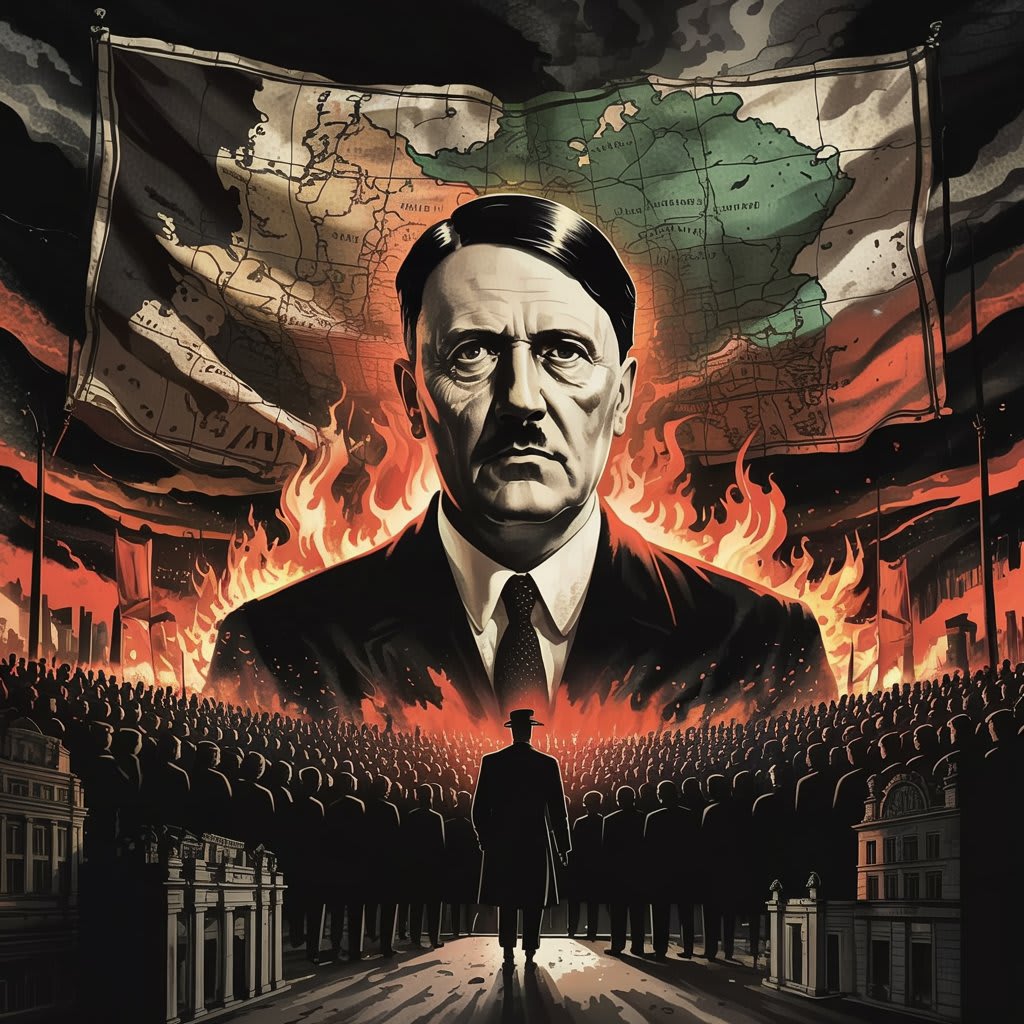
Adolf Hitler’s life is one of history’s starkest warnings about the dangers of unchecked ambition, propaganda, and hatred. His journey from an obscure artist to the dictator of Nazi Germany forever changed the course of the 20th century, leaving behind a legacy of devastation and a world scarred by war.
Born on April 20, 1889, in Braunau am Inn, Austria, Hitler grew up in a strict household under his authoritarian father, Alois Hitler. From a young age, he showed a deep passion for German nationalism, even though he was born outside Germany’s borders. His early dreams, however, were far from political — he aspired to become a painter. Twice, he applied to the Academy of Fine Arts Vienna and was rejected both times, a humiliation that deeply wounded his pride.
Living in Vienna, Hitler struggled with poverty. During these years, his worldview began to darken. He absorbed radical ideas about race, anti-Semitism, and German superiority, which later became cornerstones of his ideology. When World War I broke out in 1914, Hitler enlisted in the German army. He served as a messenger on the front lines, surviving multiple injuries and earning medals for bravery. Yet the defeat of Germany in 1918 crushed him. Like many Germans, Hitler believed that betrayal from within — rather than military failure — had caused the loss. This belief, known as the "stab-in-the-back" myth, fueled his hatred for Jews and communists, whom he blamed for Germany’s downfall.
After the war, Germany was in chaos. Economic hardship, political instability, and national humiliation under the Treaty of Versailles created a fertile ground for extremism. In 1919, Hitler joined a small political group called the German Workers' Party. His fiery speeches and ability to channel public anger quickly propelled him to leadership. Renaming the party the National Socialist German Workers' Party (Nazi Party), Hitler crafted a message of restoring Germany’s former glory, blaming Jews and other minorities for the nation’s problems.
In 1923, emboldened by growing support, Hitler attempted a coup known as the Beer Hall Putsch in Munich. The effort failed, and he was arrested. During his time in prison, he wrote Mein Kampf ("My Struggle"), outlining his vision of a racially pure Germany, his hatred of Jews, and his plans for expansion into Eastern Europe. Though initially dismissed as a radical, Hitler’s ideas found a growing audience as Germany’s economy worsened during the Great Depression.
By 1933, Hitler had risen to Chancellor of Germany. Exploiting fear and discontent, he moved swiftly to consolidate power, turning the fragile democracy into a brutal dictatorship. The Reichstag Fire, which Hitler blamed on communists, allowed him to push through the Reichstag Fire Decree and the Enabling Act — laws that suspended civil liberties and gave him unchecked authority.
Hitler’s regime reshaped every aspect of German life. Opposition parties were banned, free speech was crushed, and the media became a tool of Nazi propaganda. The regime promoted the myth of Aryan racial superiority and began systemic persecution of Jews, Romani people, disabled individuals, and others deemed "undesirable." The world watched with growing unease but did little to intervene.
In 1939, Hitler’s ambitions ignited global conflict when Germany invaded Poland, triggering World War II. Blitzkrieg ("lightning war") tactics allowed Hitler’s forces to conquer vast territories quickly. France fell in 1940, and for a time, it seemed Hitler might dominate Europe. However, his overreach proved his undoing. The invasion of the Soviet Union in 1941 opened a brutal eastern front, draining German resources. Meanwhile, the United States entered the war after the Japanese attack on Pearl Harbor, tipping the balance against Germany.
At the same time, Hitler’s most horrific legacy unfolded: the Holocaust. In a state-sponsored campaign of genocide, six million Jews — along with millions of others — were systematically murdered in concentration and extermination camps. The scale and cruelty of these atrocities shocked the world and remain some of the darkest chapters in human history.
As Allied forces closed in, Germany’s situation grew hopeless. Hitler, increasingly isolated and paranoid, refused to accept defeat. By April 1945, Soviet troops had encircled Berlin. In his underground bunker, facing inevitable capture and unwilling to live in a world without Nazi domination, Hitler chose to end his life. On April 30, 1945, he shot himself, and shortly after, Germany surrendered.
The rise and fall of Adolf Hitler serve as a brutal reminder of how a combination of economic despair, national humiliation, and extremist ideology can give rise to tyranny. His dictatorship caused the deaths of tens of millions and brought untold suffering. Yet, from the ruins of the war, the world came together to rebuild and to vow — through institutions like the United Nations and the Universal Declaration of Human Rights — never to allow such horrors to happen again.
History continues to study Hitler’s life not to glorify him, but to understand the conditions that allowed such evil to thrive. His story is not just about a man, but about a society, a world, and the eternal vigilance required to protect freedom and human dignity.
Word Count: ~870 words
About the Creator
Farhan
Storyteller blending history and motivation. Sharing powerful tales of the past that inspire the present. Join me on Vocal Media for stories that spark change.
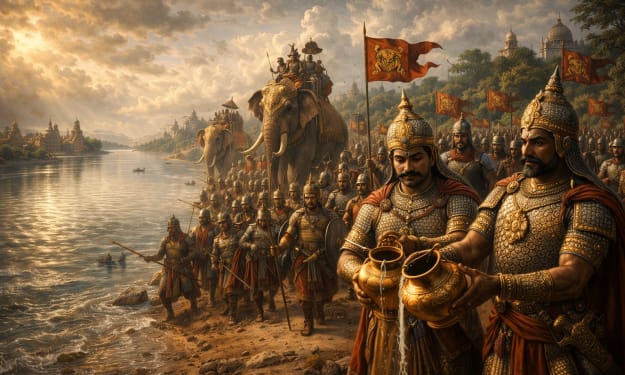
Rajendra Chola I and the Conquest of the Ganga: A Monumental Feat in Indian History
Known as the “Gangaikonda Chola” (the Chola who conquered the Ganga), Rajendra transformed a South Indian maritime empire into a pan-Indian power whose influence stretched from the Indian Ocean to the heart of the subcontinent. This campaign was not merely a military raid but a bold statement of imperial ambition, strategic brilliance, and cultural confidence.
By Say the truth 2 days ago in History
THE GRAND EGYPTHION MUSEUM
Let’s be real for a second. When folks hear "museum," they often think of dusty halls, dry information, and that odd quiet where you feel like you're misbehaving just for breathing. But the Grand Egyptian Museum isn't like that. I really don't think that's it. It's not accurate at all. This just seems wrong. This place is really nice. Egypt really shows us that it made history, and it keeps on doing amazing things.
By Beshoy Zayerabout 2 hours ago in History



Comments
There are no comments for this story
Be the first to respond and start the conversation.