
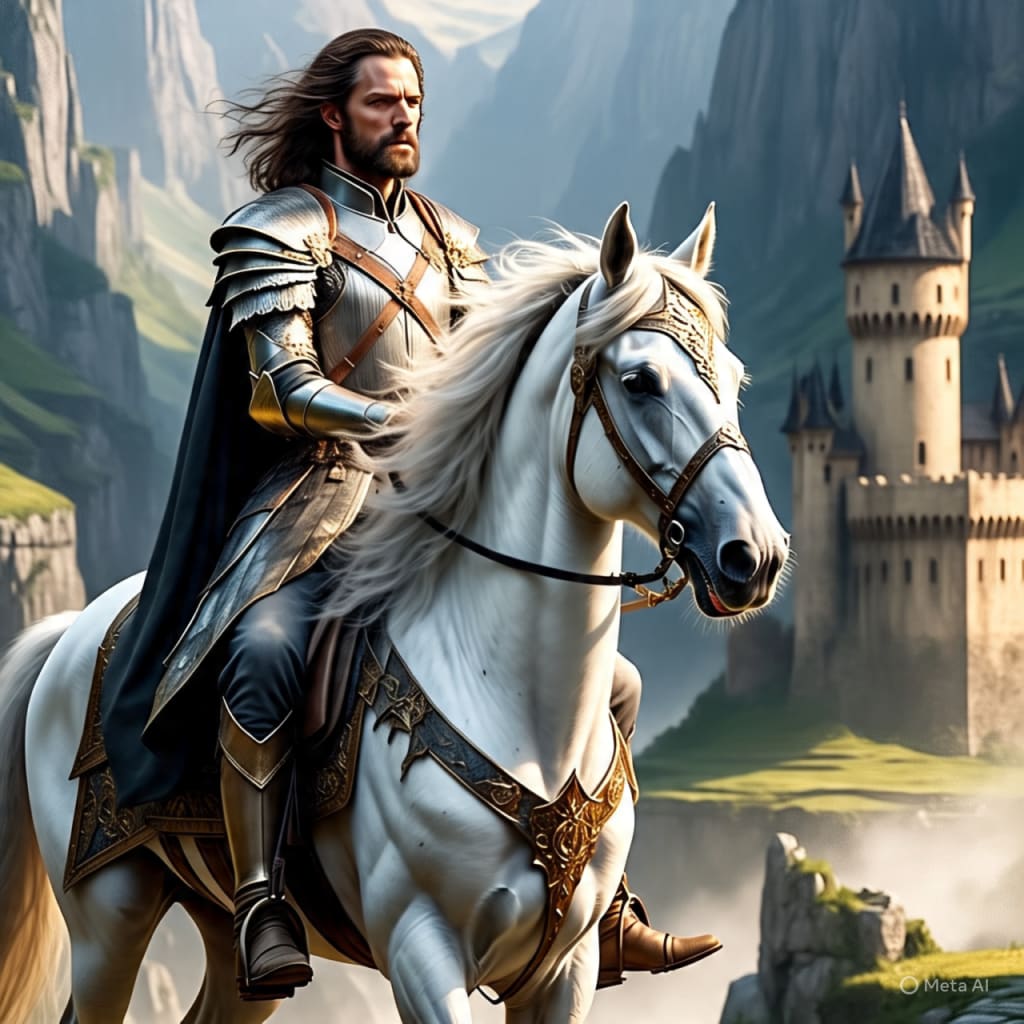
The Return of the King concludes J.R.R. Tolkien’s epic fantasy trilogy The Lord of the Rings. It continues the story of Frodo Baggins and his companions as they battle the forces of evil led by the Dark Lord Sauron. The book is divided into two main storylines: the war in Gondor and the final journey of Frodo and Sam into Mordor.
As the book opens, Gandalf and Pippin arrive in Minas Tirith, the capital of Gondor, to warn of Sauron’s impending assault. Denethor, the Steward of Gondor, rules in the king’s absence and is a proud but broken man. Meanwhile, Sauron’s armies begin marching toward the city. To prepare for war, Gandalf takes command of Minas Tirith's defenses.
Simultaneously, Aragorn, Legolas, Gimli, and the Rangers of the North travel toward the Paths of the Dead. Aragorn, heir to the throne of Gondor, must summon the Dead Men of Dunharrow—oath-breakers who can redeem themselves only by fighting for the true king. With the help of the Dead, Aragorn attacks the enemy fleet at Pelargir, defeats them, and uses the captured ships to sail up the Anduin River toward Minas Tirith.
Back in Gondor, the siege of Minas Tirith begins. The battle is fierce, and the city is close to falling. Denethor, driven mad by grief and despair, tries to burn himself and his gravely wounded son Faramir alive. Gandalf rescues Faramir, but Denethor dies in flames. Just as the city nears defeat, Aragorn arrives with his army aboard the black ships, turning the tide of battle. With his help, the combined forces of Gondor and Rohan defeat Sauron’s armies in the Battle of the Pelennor Fields. King Théoden of Rohan dies in the battle, but his niece Éowyn and Merry the hobbit slay the Witch-king of Angmar, Sauron’s chief servant.
Aragorn begins to step fully into his role as king, healing the wounded and inspiring the people. But Sauron still holds Mordor and the powerful Ring of Power must be destroyed. Knowing Frodo’s mission, Aragorn leads a bold diversion: the remaining army marches to the Black Gate of Mordor to draw Sauron’s gaze away from Frodo and Sam, giving them a chance to finish their quest.
Meanwhile, Frodo and Sam continue their harrowing journey through Mordor. Their way is treacherous, and food and water are scarce. Gollum, who once guided them, reappears with his own agenda: to reclaim the One Ring. As they near Mount Doom, Frodo becomes increasingly burdened by the Ring’s power. Sam carries him at times, showing remarkable loyalty and courage.
At the Cracks of Doom, Frodo finally succumbs to the Ring’s power and claims it for himself. But Gollum attacks and bites off Frodo’s finger, taking the Ring. In his moment of triumph, Gollum slips and falls into the fiery chasm, destroying the Ring and himself. With the Ring’s destruction, Sauron’s power collapses. His armies scatter, Mount Doom erupts, and the land of Mordor is devastated.
The eagles rescue Frodo and Sam, carrying them to safety. Aragorn is crowned King of Gondor and marries Arwen, Elrond’s daughter, fulfilling his destiny. Peace returns to the land, and the hobbits are honored as heroes.
Frodo, Sam, Merry, and Pippin return to the Shire only to find it under the control of ruffians led by Saruman, now reduced to a petty tyrant. The hobbits rally the Shire and defeat the invaders in the "Scouring of the Shire." Saruman is ultimately killed by his servant Wormtongue. Despite their victory, Frodo finds he cannot fully heal from the trauma of his journey.
Two years later, Frodo, along with Bilbo, Gandalf, Elrond, and Galadriel, departs Middle-earth for the Undying Lands across the sea—a place of peace and healing. He entrusts the Red Book, which recounts their adventures, to Sam. Sam returns to the Shire, where he lives a long and fulfilling life with his family.
The Return of the King ends not only the story of the War of the Ring but also the Third Age of Middle-earth. It explores themes of courage, sacrifice, hope, and the burden of power. Aragorn's rise to the throne signifies the return of noble leadership. Frodo's journey, however, emphasizes that some scars never fully heal and that peace often comes at great cost.
About the Creator
Keep reading
More stories from Usman Khan and writers in History and other communities.
The Volunteer from Auschwitz No. 4859 – The Story of Witold Pilecki
Witold Pilecki (1901–1948) is rightly regarded as one of the greatest Polish heroes of World War II. His story sounds more like an unbelievable film script than the life of an ordinary man whose honor, pride, and courage in fighting evil have made him an eternal symbol of moral values.
By Elvira Diggoryabout 22 hours ago in History
Ashoka and the Three Kings of South India: Power, Diplomacy, and Moral Conquest
Unlike his northern campaigns, Ashoka did not wage a full-scale war against these southern powers. Instead, his interaction with them reveals a unique blend of political realism, military restraint, and ideological influence.
By Say the truth 7 days ago in History
The Duelist
The rays of a dying red sun flashed against the onrushing blade. The grey beards say the key to dueling lies in size, speed, reach, righteous fury, whatever the person in front of them pays them to say. Matteo knew better than any it was none of these and had an undefeated record on these sands to prove it.
By Matthew J. Fromm7 days ago in Fiction



Comments
There are no comments for this story
Be the first to respond and start the conversation.