
The Resolute Lion: A Story of Amir Shir Ali Khan
Amir Shir Ali Khan rose to power, destined to carve his name into the annals of Afghan history.

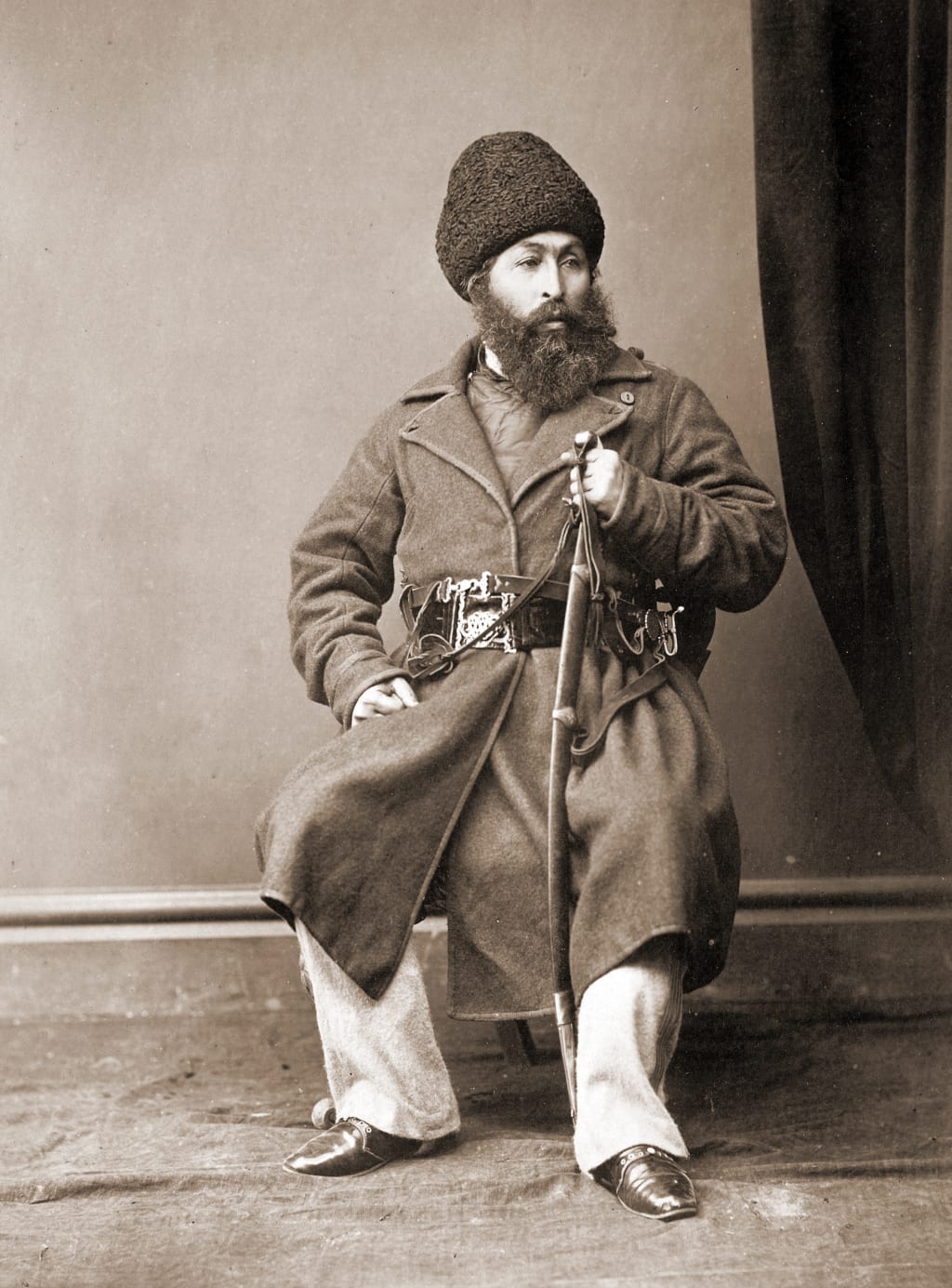
The Resolute Lion: A Story of Amir Shir Ali Khan
In the rugged mountains and ancient cities of 19th-century Afghanistan, a fierce power struggle brewed. The country, rich in culture but fraught with tribal rivalries, stood at the crossroads of empires. It was in this volatile landscape that Amir Shir Ali Khan rose to power, destined to carve his name into the annals of Afghan history.
Born in 1825, Shir Ali was the son of Dost Mohammad Khan, the founder of the Barakzai dynasty and a seasoned leader who had fought the British during the First Anglo-Afghan War. Raised in the fierce traditions of Afghan leadership, Shir Ali was taught the arts of warfare, diplomacy, and survival from a young age. He watched his father navigate the treacherous tides of British and Russian ambitions, a lesson that would shape his destiny.
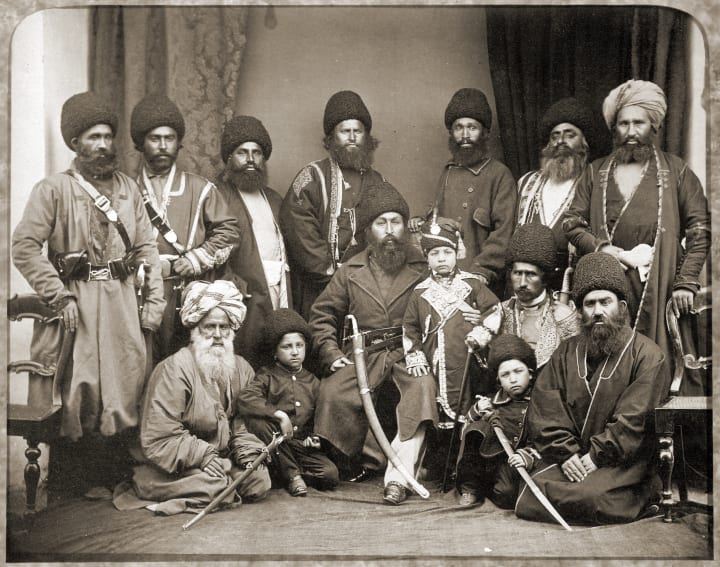
Upon the death of Dost Mohammad in 1863, Shir Ali was declared Emir. But his rise was far from smooth. Afghanistan, deeply divided along tribal lines, quickly fractured as his brothers and relatives contested the throne. Civil war erupted, and Shir Ali was forced to fight to prove his legitimacy. For four grueling years, he struggled against rivals until he finally consolidated his rule in 1868.
A firm yet progressive leader, Shir Ali believed in modernizing Afghanistan. He introduced administrative reforms, reorganized the army, and attempted to centralize governance, though tribal autonomy remained a challenge. He also encouraged the use of printing presses and sought to modernize education, understanding that knowledge would be key to his nation's survival.
But the world around Shir Ali was shifting rapidly. The 19th century was the age of imperialism, and Afghanistan lay between two giants — the British Raj in India and the expanding Russian Empire. Caught in the “Great Game,” Shir Ali attempted to maintain Afghan sovereignty without becoming a pawn.
Initially, Shir Ali sought to maintain cordial relations with the British. However, tensions grew when the British expected him to act as a subordinate rather than an equal sovereign. Feeling disrespected, Shir Ali turned his attention toward Russia, which seemed more willing to offer him diplomatic recognition and support without demanding too much in return.
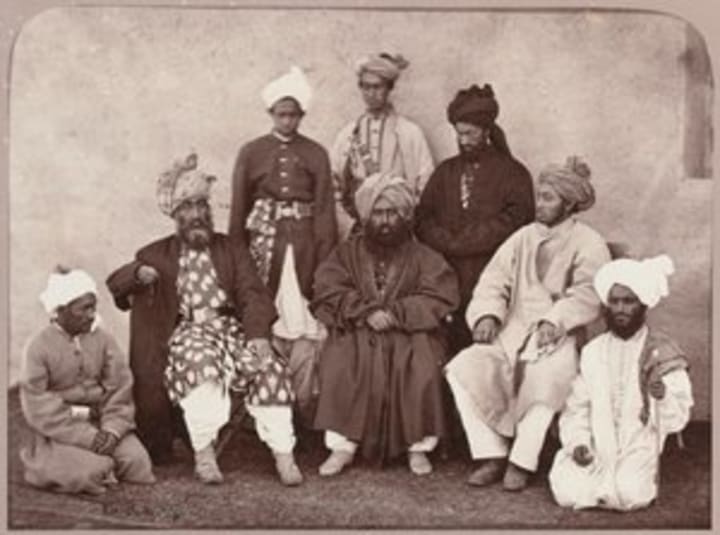
This move alarmed the British. In 1878, when Shir Ali refused to accept a British mission in Kabul while entertaining a Russian envoy, the British declared war — thus began the Second Anglo-Afghan War. Shir Ali, though brave and committed to Afghan independence, lacked the resources to match the British military machine.
Despite initial resistance, British forces quickly captured key Afghan cities. As British troops advanced toward Kabul, Shir Ali left the capital to rally tribal support in the north. He hoped to gain aid from Russia, but no assistance came. Isolated and ill, Shir Ali's strength faded. He died in 1879 in Mazar-i-Sharif, heartbroken but defiant to the end.
His death marked a turning point in the war. Though the British installed his son, Yaqub Khan, as a puppet ruler, the Afghan people soon revolted. Eventually, the British were forced to withdraw, and Afghanistan retained its independence — a testament to the spirit that Shir Ali Khan had fiercely defended.
Amir Shir Ali Khan's life was a tapestry woven with ambition, courage, and struggle. He was a leader caught between empires, striving to bring stability to a fragmented land. Though his reign ended in turmoil, his legacy lived on. He planted the seeds of a modern Afghanistan and fought, above all, for its sovereignty.
In the dusty pages of Afghan history, Shir Ali remains a symbol — not of conquest or glory, but of resistance, reform, and the enduring Afghan desire to remain free.
About the Creator
Ihsas Feeling
I'm a writer writing information about technology. Discovery. history .Etc....Sta
Keep reading
More stories from Ihsas Feeling and writers in History and other communities.
Ahmad Shah Abdali (Durrani)
The Rise of Ahmad Shah Abdali – The Lion of Afghanistan Long ago, in the 18th century, when the mighty Mughal Empire was weakening and chaos was spreading across South Asia, a powerful leader rose from the rugged mountains of Kandahar. His name was Ahmad Shah Abdali, later known as Ahmad Shah Durrani, the founder of modern Afghanistan and one of the greatest warriors of his time.
By Ihsas Feeling 8 months ago in History
The Quiet Name on Maple Street
Kim Jong-un was born into a world unlike almost any other—a world sealed by borders, ideology, and secrecy. As the grandson of Kim Il-sung, the founder of North Korea, and the son of Kim Jong-il, the country’s second leader, Kim Jong-un entered life already wrapped in destiny. In North Korea, leadership is not chosen by ballots or debate; it is inherited like a crown, reinforced by loyalty, fear, and an unyielding political system.
By The best writer a day ago in History



Comments
There are no comments for this story
Be the first to respond and start the conversation.