
The Real Peaky Blinders
Unraveling the History and Impact of Birmingham's Notorious Gang
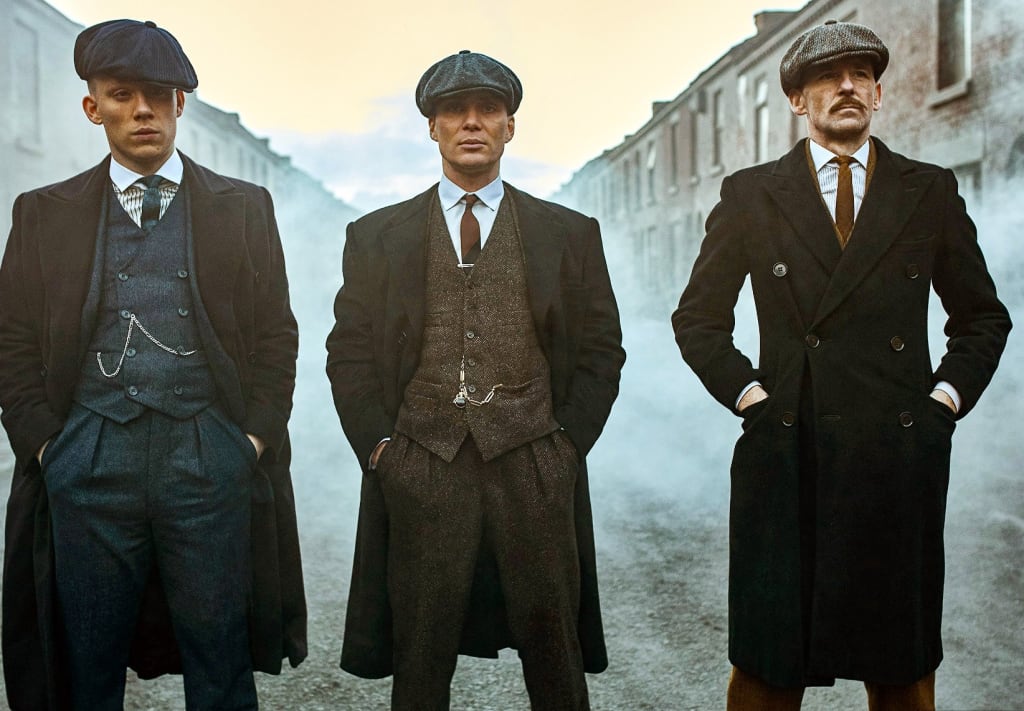
Have you ever watched a TV show that had a profound impact beyond the screen, leaving its mark on popular culture? Shows like "Game of Thrones" and "Breaking Bad" come to mind, as they managed to capture the imagination of audiences and influence trends in unexpected ways. However, there's one show that not only garnered millions of viewers worldwide but also brought to light the existence of a real gang from Birmingham: the Peaky Blinders.
You may have heard of the Peaky Blinders, even if you haven't watched the series. This critically acclaimed show, set in the early 20th century, introduces us to a fictional gang and their rise to power. What many people don't realize is that the Peaky Blinders were, in fact, a real gang that terrorized the streets of Britain during the late 19th and early 20th centuries. The characters we've come to know and love were based on actual individuals who left a lasting impact on British history.
It all began nearly 200 years ago, in 1833, with a law passed by the British Parliament to regulate child labor in factories. While the intention was noble, this law had unforeseen consequences. Suddenly, a generation of children, who had been a source of income for impoverished families, found themselves without work. This, coupled with the harsh living conditions and high crime rates of the time, led to a rise in petty crime, particularly among young people. Gang culture emerged, and the Peaky Blinders were among the first gangs to gain prominence in Birmingham.
Contrary to the show's timeline, the original Peaky Blinders rose to prominence in the early 1880s. The creator of the series, Stephen Knight, was inspired by his own family connection to the gang. His great uncle, a member of the real-life Sheldon family, had ties to the Peaky Blinders. Knight drew from this personal history to craft the fictional Shelby family, which takes center stage in the TV show.
However, the real Peaky Blinders were not the grand crime lords depicted in the series. They were a group of men and boys trying to make ends meet through theft and street fights. Their weapons of choice were often crude, including knives, knuckle dusters, and whatever else they could find. While the iconic hats of the gang may have sparked curiosity, the notion of razor blades sewn into the hat's peak, leading to the name "Peaky Blinders," is more fiction than fact. The gang's sense of fashion and style, though, was a significant part of their identity, with members donning bespoke tailoring, extravagant coats, and silk scarves.
As the Peaky Blinders grew in numbers, turf wars and clashes with the police became more frequent. In 1897, a pivotal moment occurred when a police constable named George Snipe was murdered during a battle with the gang. This incident marked a turning point, forcing authorities to take action. Enter Charles Rafter, a determined police chief from Northern Ireland, who was determined to clean up the streets of Birmingham. Rafter assembled a team of physically imposing officers and effectively dismantled the Peaky Blinders within a decade.
Despite their decline, not all Peaky Blinders were ready to retire. The disintegration of Birmingham's gang scene created room for other groups to emerge, but the original Peaky Blinders had left an indelible mark on history. Today, the TV show has revived interest in their story, inspiring themed pubs, nightclubs, and even a festival. It's fascinating to explore how a once-impoverished gang from Birmingham became a symbol of intrigue and style.
Billy Kimber's transformation from a Peaky Blinder to the leader of the Birmingham Boys is a captivating story that mirrors the fictional rise of Tommy Shelby. While the show portrays Kimber as a Londoner, he actually started his criminal career on the mean streets of Birmingham as a Peaky Blinder. Under Kimber's leadership, the Birmingham Boys became one of Britain's first organized crime empires, specializing in illegal betting and extortion, much like Tommy Shelby's Peaky Blinders.
Kimber's ambitions knew no bounds, and by the early 1920s, he had become one of the most powerful gangsters in Britain. However, there was one area where his influence had not yet reached: London. Just like Tommy Shelby, Kimber set his sights on the capital and made his move in 1921. The Birmingham Boys targeted the bookmakers of London, using intimidation to gain control of the lucrative racecourses in and around the city. Their plan was progressing well until they crossed paths with the wrong bookmaker: Alfie Solomon.
Although the real Alfie Solomon didn't possess the same level of power as his TV counterpart portrayed by Tom Hardy, he had strong connections to London's Jewish gangs. When Solomon sought revenge for the attack on him, he approached Edward Emanuel, the so-called godfather of the East End, and convinced him that the Birmingham Boys were a threat. Emanuel, in turn, used his influence to rally Charles Darby Sabini, a legendary English-Italian mob boss and the kingpin of London's racecourses, against Billy Kimber.
A series of large-scale skirmishes followed, becoming the first gang wars to make national headlines in Britain. Eventually, Sabini emerged as the victor, reclaiming control of the London racecourse scene. Kimber was allowed to keep his tracks in the Midlands and the North.
Rumor has it that he later made his way to America, where he supposedly worked for Al Capone. However, details about his activities there remain sketchy. What we do know is that Kimber spent his later years in England, shedding his criminal past to become a legitimate bookmaker. He passed away as a wealthy man at the age of 63, which was quite an accomplishment for the time.
In many ways, the TV show romanticizes and reimagines the Peaky Blinders' story, envisioning what they could have become under different circumstances. It blends the lives of real-life infamous and forgotten criminals with the fictional narrative of Tommy Shelby and his family, creating an alternate history. While the real Peaky Blinders may not have reached the heights of their fictional counterparts, they represent a captivating and often overlooked period in British history.
The story of the Peaky Blinders, both real and fictional, continues to captivate audiences around the world. It serves as a reminder of the gritty and intriguing underworld that existed in Britain's past. Whether you're a fan of the TV show or a history enthusiast, exploring the origins, exploits, and legacy of the Peaky Blinders is a journey well worth taking.
So, next time you dive into the world of the Peaky Blinders, remember that behind the fictional characters lies a slice of British history. The real gang may not have achieved the grandeur depicted on the screen, but their impact on society and the collective imagination is undeniable. The Peaky Blinders, with their distinctive style and gritty existence, remain an intriguing part of British folklore.
About the Creator
Keep reading
More stories from Myke & Amy and writers in History and other communities.
The Deadly Secret of Lake Nyos
Have you ever heard of the world's deadliest fart? Well, let's take a journey to Cameroon, a country renowned for its coffee, cotton, and cacao, not to mention its impressive football team, the Indomitable Lions, who have qualified for the World Cup a remarkable nine times, an achievement unmatched by any other African team.
By Myke & Amy3 years ago in History
The Invasion of Kuwait: Saddam’s Four-Day ‘Revolutionary Republic
On August 2, 1990, the world woke up to a geopolitical earthquake. Under the orders of Saddam Hussein, over 100,000 Iraqi troops, backed by hundreds of tanks, surged across the border into the tiny, oil-rich emirate of Kuwait. While history remembers this as the spark for the Gulf War, the first few days of the occupation featured a bizarre political theater: the creation of a short-lived puppet state known as the **"Republic of Kuwait."**
By Irshad Abbasi 6 days ago in History
Bomb Scare
It was 2027, and the world never thought it would happen. A missle hit the United States, but it wasn't where they had anticipated. A little town in the northeast was hit by a missile strike, they didn't know why, and they didn't know exactly where it hit, but they did know it was a coastal community, somewhere between Maine and Delaware.
By Gregory Payton7 days ago in Fiction



Comments
There are no comments for this story
Be the first to respond and start the conversation.