
The Radiant Love Story of Pierre Curie and Marie Curie
A Tale of Science, Passion and Tragedy

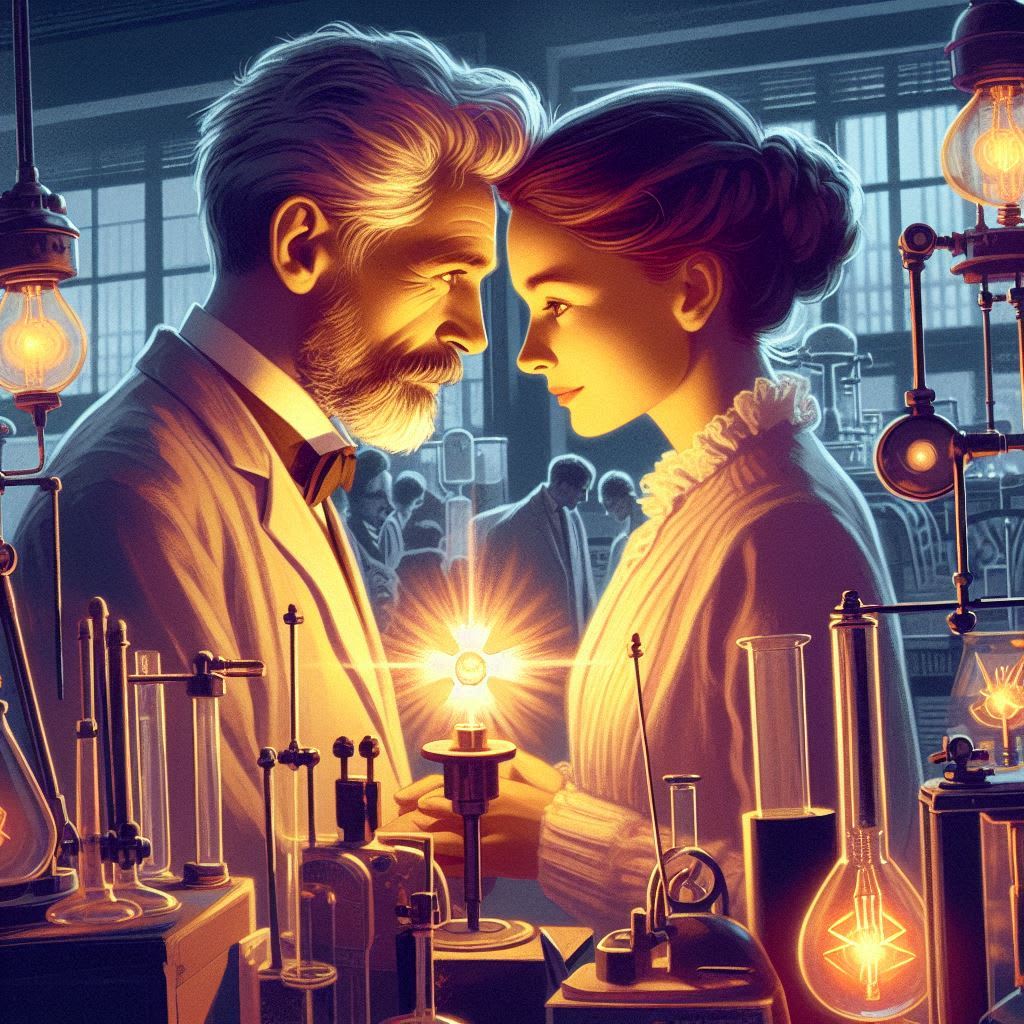
In the late 19th century, Paris was a hub of intellectual and artistic activity, attracting some of the most brilliant minds in Europe. It was here that Pierre Curie, a talented French physicist, met and fell in love with Marie Curie, a brilliant Polish mathematician and chemist.
Pierre Curie was born in 1859 in Paris, France, to a family of scientists and intellectuals. He was a curious and inventive child, with a passion for science and discovery. Pierre's early research focused on magnetism and piezoelectricity, and he made several important discoveries in these fields.
Marie Curie, born Maria Skłodowska in 1867 in Warsaw, Poland, was a brilliant and determined young woman. She was the first woman to win a Nobel Prize, and the first person to win two Nobel Prizes in different fields. Marie's early research focused on radioactivity, and she made several groundbreaking discoveries in this field.
Pierre and Marie met in 1894, when Marie arrived in Paris to pursue her research. They were introduced by a mutual friend, and their meeting was a turning point in both of their lives. Pierre was immediately smitten with Marie's intelligence, passion, and beauty, and Marie was drawn to Pierre's kindness, generosity, and scientific expertise.
Their courtship was a whirlwind romance, marked by long walks, passionate discussions, and intense scientific collaboration. They were married in 1895, in a civil ceremony in Sceaux, France. Their marriage was a union of love, science, and passion, and it would produce some of the most important scientific discoveries of the 20th century.
Together, Pierre and Marie Curie made several groundbreaking discoveries in the field of radioactivity. They discovered two new elements, polonium and radium, and developed a method for isolating and purifying these elements. Their research laid the foundation for the development of nuclear physics, and it paved the way for the discovery of other radioactive elements.
Tragically, Pierre's life was cut short in 1906, when he was killed in a street accident in Paris. Marie was devastated by his death, and she spent the rest of her life continuing their research and promoting the legacy of her beloved husband.
Marie Curie's later years were marked by personal tragedy and professional triumph. She won a second Nobel Prize in 1911, this time in chemistry, and she continued to make important discoveries in the field of radioactivity. She also founded the Curie Institutes in Warsaw and Paris, which remain major centers of medical research to this day.
Marie Curie died in 1934, at the age of 66, from aplastic anemia, a blood disorder likely caused by her prolonged exposure to radioactive materials. Her legacy, however, continues to inspire scientists, researchers, and women around the world.
*A Legacy of Love and Science*
The love story of Pierre Curie and Marie Curie is a testament to the power of love and science to transform our lives and our world. Their research and discoveries paved the way for some of the most important scientific breakthroughs of the 20th century, and their legacy continues to inspire and motivate scientists and researchers today.
Their love story is also a reminder of the importance of collaboration, mutual respect, and support in both personal and professional relationships. Pierre and Marie's partnership was a true union of love and science, and it produced some of the most remarkable discoveries in the history of science.
As we reflect on the love story of Pierre Curie and Marie Curie, we are reminded of the enduring power of love and science to transform our lives and our world. Their legacy continues to inspire and motivate us, and their love story remains a timeless tale of passion, science, and tragedy.
The love story of Pierre Curie and Marie Curie is a testament to the power of love and science to transform our lives and our world. Their research and discoveries paved the way for some of the most important scientific breakthroughs of the 20th century, and their legacy continues to inspire and motivate scientists and researchers today.
Their love story is also a reminder of the importance of collaboration, mutual respect, and support in both personal and professional relationships. Pierre and Marie's partnership was a true union of love and science, and it produced some of the most remarkable discoveries in the history of science.
*A Historical Context*
The love story of Pierre Curie and Marie Curie took place during a time of great scientific and social change in Europe. The late 19th and early 20th centuries were marked by rapid advances in science and technology, and by significant social and cultural shifts.
In this context, Pierre and Marie's love story was a symbol of the changing values and norms of the time. Their marriage was a union of two brilliant minds, and it represented the increasingly important role of women in science and society.
*A Lasting Impact on Science and Society*
The love story of Pierre Curie and Marie Curie has had a lasting impact on science and society. Their research and discoveries paved the way for some of the most important scientific breakthroughs of the 20th century, including the development of nuclear physics, medicine, and energy.
Their legacy also extends beyond the scientific community. Pierre and Marie's love story has inspired generations of scientists, researchers, and women around the world. Their partnership is a testament to the power of collaboration, mutual respect, and support in achieving great things.
*A Timeless Tale of Love and Science*
The love story of Pierre Curie and Marie Curie is a timeless tale of love and science. Their passion for each other and for their research is an inspiration to us all, and their legacy continues to motivate and inspire scientists and researchers today.
As we reflect on the love story of Pierre Curie and Marie Curie, we are reminded of the enduring power of love and science to transform our lives and our world. Their legacy is a testament to the importance of collaboration, mutual respect, and support in achieving great things, and their love story remains a timeless tale of passion, science, and tragedy.*The Radiant Love Story of Pierre Curie and Marie Curie: A Tale of Science, Passion, and Tragedy*
In the late 19th century, Paris was a hub of intellectual and artistic activity, attracting some of the most brilliant minds in Europe. It was here that Pierre Curie, a talented French physicist, met and fell in love with Marie Curie, a brilliant Polish mathematician and chemist.
Pierre Curie was born in 1859 in Paris, France, to a family of scientists and intellectuals. He was a curious and inventive child, with a passion for science and discovery. Pierre's early research focused on magnetism and piezoelectricity, and he made several important discoveries in these fields.
Marie Curie, born Maria Skłodowska in 1867 in Warsaw, Poland, was a brilliant and determined young woman. She was the first woman to win a Nobel Prize, and the first person to win two Nobel Prizes in different fields. Marie's early research focused on radioactivity, and she made several groundbreaking discoveries in this field.
Pierre and Marie met in 1894, when Marie arrived in Paris to pursue her research. They were introduced by a mutual friend, and their meeting was a turning point in both of their lives. Pierre was immediately smitten with Marie's intelligence, passion, and beauty, and Marie was drawn to Pierre's kindness, generosity, and scientific expertise.
Their courtship was a whirlwind romance, marked by long walks, passionate discussions, and intense scientific collaboration. They were married in 1895, in a civil ceremony in Sceaux, France. Their marriage was a union of love, science, and passion, and it would produce some of the most important scientific discoveries of the 20th century.
Together, Pierre and Marie Curie made several groundbreaking discoveries in the field of radioactivity. They discovered two new elements, polonium and radium, and developed a method for isolating and purifying these elements. Their research laid the foundation for the development of nuclear physics, and it paved the way for the discovery of other radioactive elements.
Tragically, Pierre's life was cut short in 1906, when he was killed in a street accident in Paris. Marie was devastated by his death, and she spent the rest of her life continuing their research and promoting the legacy of her beloved husband.
Marie Curie's later years were marked by personal tragedy and professional triumph. She won a second Nobel Prize in 1911, this time in chemistry, and she continued to make important discoveries in the field of radioactivity. She also founded the Curie Institutes in Warsaw and Paris, which remain major centers of medical research to this day.
Marie Curie died in 1934, at the age of 66, from aplastic anemia, a blood disorder likely caused by her prolonged exposure to radioactive materials. Her legacy, however, continues to inspire scientists, researchers, and women around the world.
About the Creator
Henry Lucy
Thanks for reading my story,I am the type that love's penning down words rather than speaking it out and I believe you will enjoy every bit of what I will pen down feel free to check out other stories because I love writing different topic
Keep reading
More stories from Henry Lucy and writers in History and other communities.
The Story of Wolfgang Amadeus Mozart and Constanze Weber*
It was a chilly winter evening in 1781 when Wolfgang Amadeus Mozart, the 25-year-old musical prodigy, first laid eyes on Constanze Weber, a beautiful and charming 19-year-old singer. The meeting took place at the Weber family's home in Vienna, where Mozart had been invited to dine and perform.
By Henry Lucy11 months ago in History
"Game of Thrones: A Tale of Power, Betrayal, and Destiny"
In the vast and divided land of Westeros, power was everything. Noble houses ruled their regions, bound together by fragile alliances, old grudges, and a constant hunger for the Iron Throne—the seat of supreme authority. Though summer had lasted for many peaceful years, whispers of change moved with the cold wind. Winter, long feared, was coming.
By The best writer 6 days ago in History
Why Pastor Collar Shirts Are Essential for Modern Church Leaders
In today’s modern church, appearance matters just as much as message. Church leaders are expected to look respectful, approachable, and professional at all times. Clothing plays a big role in creating this image. Among all clerical outfits, pastor collar shirts stand out as one of the most important garments for church leaders. These shirts are not only a symbol of faith and authority, but they also provide comfort, confidence, and identity.
By Sameera eclergys4 days ago in History




Comments
There are no comments for this story
Be the first to respond and start the conversation.