
The Post-World War II Life of Hermann Göring: Trial, Legacy, and Death
Exploring the True Story Behind Hermann Göring’s Downfall as Portrayed in the Film Nuremberg

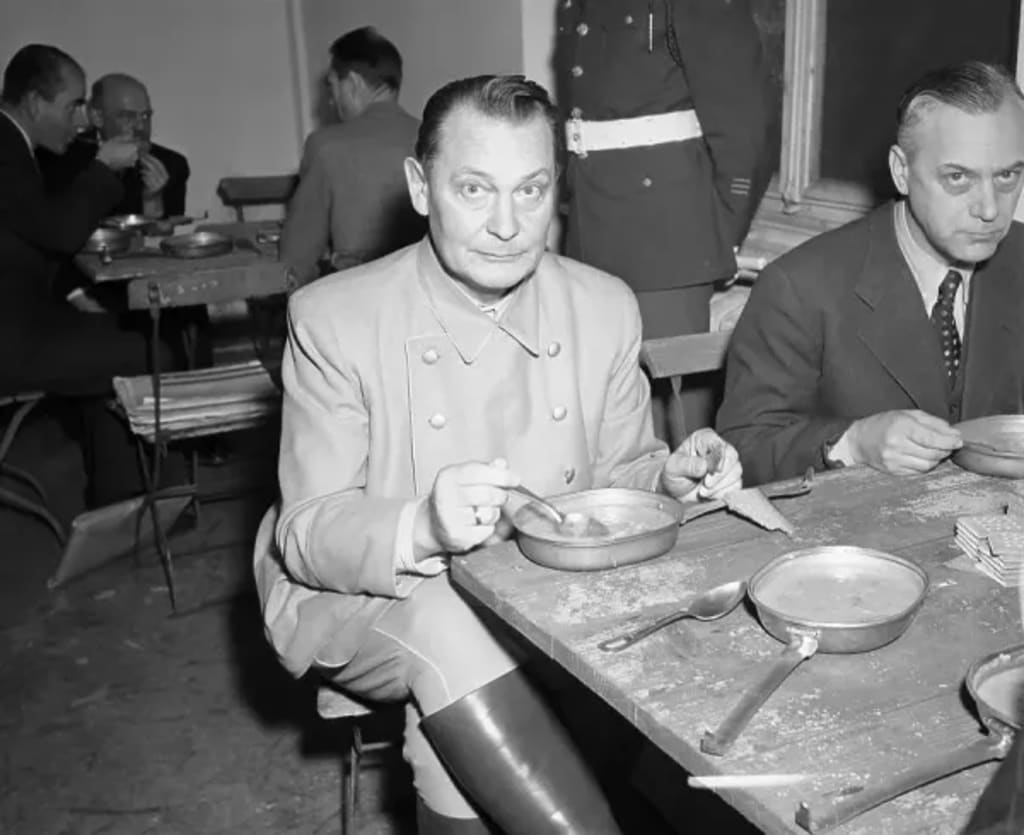
The newly released film Nuremberg offers a gripping dramatization of the historic trials that brought Nazi leaders to justice after World War II, spotlighting the legal and moral reckoning that followed one of history's darkest chapters. Central to the narrative is the figure of Hermann Göring, whose defiance, manipulation, and ultimate downfall are portrayed with chilling realism.
This article highlights Göring’s post-war life in direct connection to the film, expanding on the historical truths behind the courtroom drama. By examining Göring’s arrest, psychological profile, trial conduct, and controversial death, the piece provides deeper context to the cinematic portrayal—allowing viewers to understand not just the man onscreen, but the real legacy of power, ideology, and justice that he represents.
Hermann Göring, one of the highest-ranking officials in Nazi Germany, played a central role in the orchestration of the Third Reich's war machine and atrocities. Following Germany's defeat in World War II, Göring's post-war life was marked not by exile or obscurity, but by infamy through the lens of international justice. This essay explores Göring's actions following the collapse of Nazi Germany, focusing on his arrest, prosecution during the Nuremberg Trials, psychological evaluation, and eventual death, while also analyzing his historical legacy.
Surrender and Arrest (1945)
In the final days of the war, as Allied forces closed in on Berlin, Göring fled south to Bavaria. With Adolf Hitler refusing to leave the capital and declaring that those who did were traitors, Göring found himself in a precarious political situation. On April 23, 1945, Göring sent a telegram to Hitler requesting authority to take over leadership of the Reich, citing Hitler's isolation. This led to his dismissal and arrest by Hitler's SS, although he was later released.
On May 9, 1945, Göring voluntarily surrendered to American forces near Salzburg, Austria. He reportedly believed he could negotiate a role in post-war reconstruction due to his high profile and knowledge of Nazi operations. His surrender, however, marked the beginning of a very different chapter—one not of power, but of accountability.
Imprisonment and the Nuremberg Trials
Hermann Göring became one of the principal defendants at the Nuremberg Trials (1945–1946), the first international military tribunal held to prosecute major war criminals. He was indicted on four counts:
- Conspiracy to commit crimes against peace
- Planning, initiating and waging wars of aggression
- War crimes
- Crimes against humanity
As Reichsmarschall and founder of the Gestapo, Göring bore direct responsibility for the enforcement of Nazi policies, including the implementation of anti-Semitic laws and the organization of the Luftwaffe’s campaigns, many of which resulted in civilian casualties.
During the trial, Göring exhibited considerable skill in self-defense, often articulating the Nazi ideology with chilling clarity and maintaining an air of authority. His testimony, however, further confirmed his guilt, particularly regarding his role in the “Final Solution.” Despite his efforts, the tribunal found him guilty on all charges and sentenced him to death by hanging.
Psychological Evaluation and Personality Profile
Göring's behavior during imprisonment fascinated both journalists and psychologists. As part of the Nuremberg process, he was subjected to a psychological evaluation by U.S. Army psychiatrist Dr. Douglas Kelley and psychologist Dr. Gustave Gilbert. The results were compiled in Gilbert’s Nuremberg Diary (1947), which portrays Göring as highly intelligent, manipulative, and narcissistic.
Notably, Göring scored high on the Rorschach inkblot test, revealing a strong, dominant personality combined with a lack of empathy and a grandiose sense of self. Dr. Gilbert classified him as a "classic case of narcissistic personality disorder," which echoed the self-importance Göring exuded throughout the trial.
Suicide and Death (1946)
Just hours before his scheduled execution on October 16, 1946, Göring committed suicide by ingesting a cyanide capsule hidden in a container of skin medication. The exact means by which he obtained the poison remain unclear, although theories suggest he may have received help from a sympathetic American guard or had smuggled it in earlier.
His suicide was a major embarrassment for the Allies, who had sought to make his execution a public demonstration of justice. In his final letters, Göring claimed that death by hanging was unworthy of a man of his status, preferring to die by his own hand.
Posthumous Legacy and Historical Interpretations
In the decades since his death, Göring has remained one of the most studied figures of the Nazi regime. Historians debate whether he was primarily an opportunist who rode Hitler’s coattails or a true believer in Nazi ideology. His early ambitions, including the rearmament of Germany and the expansion of the Luftwaffe, indicate a deep commitment to militaristic nationalism.
Despite his attempt to portray himself as a statesman during the Nuremberg Trials, evidence confirms Göring's complicity in crimes of genocide and war. His legacy is thus one of calculated cruelty, masked by charisma and strategic intelligence. Unlike others in the Nazi hierarchy, Göring’s ability to navigate complex political and legal situations has made him a case study in power, psychology, and justice.
Conclusion
Hermann Göring’s post-World War II life represents the dramatic fall of one of Nazi Germany’s most powerful men. From self-styled heir to Hitler to condemned war criminal, his journey through surrender, trial, and suicide encapsulates the broader reckoning faced by the Nazi elite. Göring’s life and death underscore the importance of international law, the psychological complexity of authoritarian figures, and the enduring need to confront historical evil with unflinching clarity.
About the Creator
Lawrence Lease
Alaska born and bred, Washington DC is my home. I'm also a freelance writer. Love politics and history.
Keep reading
More stories from Lawrence Lease and writers in History and other communities.
How Tehran Went From Great to Worst Place to Live
Once called the Paris of the Middle East, Tehran stood as a beacon of glamour, art, and modernity. By 2025, that glittering reputation has inverted completely. Infrastructure failure, suffocating air pollution, and corruption have reduced a former jewel of the Middle East to a cautionary tale. What went wrong? How did a city once compared to Paris and New York fall so far?
By Lawrence Lease3 months ago in History
Corruption's Impact On Society
Corruption, a term with a broad spectrum of definitions, is often a result of government officials overpowering legal policies. Corruption can weaken the ideal democracy within a nation, erode trust in the relationship between the government and society, and exacerbate inequality and poverty. Forms of this act can include bribery, lobbying, extortion, cronyism, nepotism, parochialism, and embezzlement. Furthermore, corruption is the deterioration of moral and ethical standards that are characterized by the prioritization of personal gain over public good, abuse of power, and a lack of transparency.
By Katherine Roteman7 days ago in History
Understanding the Insurrection Act
The Insurrection Act is one of the most powerful and least understood laws in American history. Often mentioned during times of national unrest, it gives the president authority to deploy federal troops within the United States under specific circumstances. While it is rarely used, public interest in the law has grown in recent decades, leading many to ask: what is the Insurrection Act, and why does it matter today? What Is the Insurrection Act? To put it simply, the Insurrection Act of 1807 is a federal law that allows the president to use the U.S. military to suppress civil disorder, insurrection, or rebellion when state authorities are unable or unwilling to do so. If you are wondering what is the Insurrection Act used for, the answer lies in restoring order when local and state governments can no longer maintain public safety. People often search phrases like what is insurrection act or even the misspelled insurection act because the law tends to resurface during moments of crisis. Despite the confusion around its name, the authority it grants is very real and legally binding. What Is the Insurrection Act of the U.S.? So, what is the Insurrection Act of the US in legal terms? It is a collection of statutes now codified under Title 10 of the U.S. Code. The act provides exceptions to the Posse Comitatus Act, which generally prohibits the military from acting as domestic law enforcement. Under the Insurrection Act, the president can federalize the National Guard or deploy active-duty troops if constitutional rights are being violated or if violence prevents the execution of federal law. This is why many people ask, what is the Insurrection Act USA, especially when protests or riots dominate national headlines. The Insurrection Act and Its Historical Use Throughout American history, the act has been invoked sparingly but decisively. One of the most notable examples often referenced is the Insurrection Act 1992, when President George H. W. Bush deployed federal troops to Los Angeles following the Rodney King verdict. Local authorities had lost control, and the federal government stepped in to restore order. Earlier uses date back to the Civil War era and the Civil Rights Movement. Presidents Eisenhower and Kennedy relied on the act to enforce school desegregation in Southern states when state governments resisted federal court orders. These moments illustrate what the Insurrection Act is used for at its core: enforcing the rule of law when normal systems fail. Trump and the Insurrection Act In modern political discourse, the law became widely discussed during the presidency of Donald Trump. Searches for Trump Insurrection Act or Insurrection Act Trump surged during periods of nationwide protests, particularly in 2020. Although the act was never formally invoked during those protests, President Trump publicly considered its use, bringing renewed attention to the scope and limits of presidential power. The phrase insurrection act invoked often appears in news coverage, but it is important to note that discussing invocation and actually using the law are two very different things. The debate surrounding Trump Insurrection Act scenarios highlighted concerns about civil liberties, federal overreach, and the balance of power between states and the federal government. What Is the Insurrection Act in Minnesota? A common question during periods of regional unrest is what is the Insurrection Act in Minnesota or in other specific states. Legally, the act does not change from state to state. However, its application depends on circumstances within a particular state. If a governor requests federal assistance or if the president determines that constitutional rights cannot be protected locally, the Insurrection Act may apply. Minnesota, like every other state, falls under the same federal framework. The law does not target any single state; it responds to conditions on the ground. What Is the Insurrection Act Used For Today? In today’s environment, many Americans ask, what is the Insurrection Act used for in a modern democracy with established institutions. Supporters argue it is a necessary safeguard for extreme emergencies. Critics counter that it grants sweeping powers that could be misused if political tensions escalate. Understanding what is the Insurrection Act? requires recognizing that it is both a legal tool and a symbol. Its mere mention can influence public perception, markets, and political debate, even when it is not formally applied. Ongoing Debate and Public Concern The Insurrection Act remains controversial because it sits at the intersection of security and freedom. While it has been used to protect civil rights in the past, critics worry about potential misuse in polarized times. This tension explains why questions like what is the Insurrection Act of the US continue to trend whenever civil unrest occurs. Ultimately, the law reflects a fundamental challenge in governance: how to maintain order without undermining democracy. The fact that it has existed since 1807 and remains largely unchanged shows both its durability and its complexity. Final Thoughts The Insurrection Act is not a law that affects daily life, but it plays a critical role during extraordinary moments. From the Insurrection Act of 1807 to discussions around Insurrection Act 1992 and Insurrection Act Trump, its history mirrors the nation’s struggles with unity, authority, and rights.
By Saboor Brohi 3 days ago in History




Comments
There are no comments for this story
Be the first to respond and start the conversation.