
The Political Turmoil That Shaped Fiji's History
Fiji & The Region

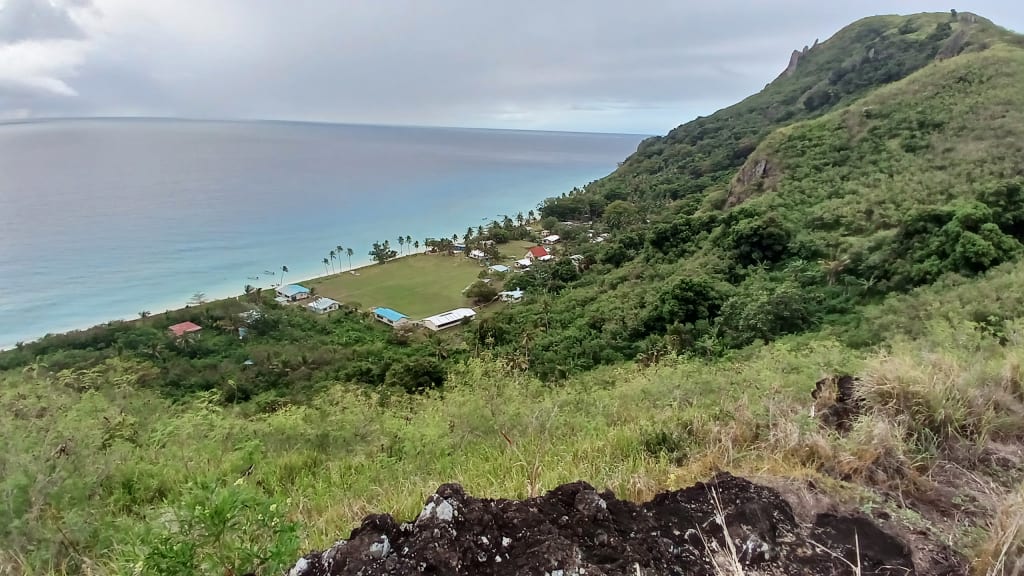
Fiji is a nation and an archipelago located in the South Pacific Ocean, encircling the Koro Sea and situated approximately 1,300 miles (2,100 kilometers) north of Auckland, New Zealand.
The archipelago comprises around 300 islands and 540 islets, spread over an area of roughly 1,000,000 square miles (3,000,000 square kilometers). Among these islands, approximately 100 are populated. The capital city, Suva, is positioned on the southeastern coast of the largest island, known as Viti Levu, which translates to "Great Fiji."
This tiny nation comprises more than 300 islands, with water covering 90% of its territory. It is recognized as the soft coral capital of the world. The nation has three official languages and serves as a cultural melting pot. In Fiji, one can experience both the past and the present simultaneously. Historically, Fiji was referred to as the 'Cannibal Isles'.
For numerous individuals, Fiji represents a paradise filled with enjoyment, sunshine, and joy. However, a deeper examination reveals a local community that has endured years of strife and division. This raises the question of how this small island nation in the South Pacific became a focal point for unrest and discord, as well as the reasons behind the significant Indian population that considers Fiji their home. The interplay between these two cultures on the island has resulted in three decades of coups and ongoing controversy.
In 1874, Fiji was incorporated into the British Empire, recognized for its ideal climate conducive to the mass cultivation of sugarcane. However, the successful development of this industry hinged on the availability of a labor force.
At that time, there was a prevailing sentiment to respect the indigenous way of life while also fostering a relationship with the local communities, which led to a cautious approach by the British authorities. Seeking adventurous individuals, Britain began recruiting Indian laborers for various locations, including Mauritius, Guyana, and Fiji.
Consequently, in 1879, under the auspices of the Australian Sugar Refinery Company, the German scheme was initiated, with the ship Leonidas transporting the first 522 Indian laborers from Kolkata to Le Bucca, Fiji, followed by an influx of 61,000 more.
This migration mirrored the recruitment of Chinese workers to Samoa and Solomon Islanders to Queensland, driven by the demand for inexpensive labor.
From the outset, the Indians, Europeans, and Fijians were segregated, with the Indian laborers residing in designated lines on the sugar plantations, never permitted to integrate with the indigenous population.
The harsh conditions endured by these laborers were akin to a living hell, which persisted until the conclusion of the German scheme in 1916. As labor contracts expired, some indentured workers returned to India, yet many chose to remain in Fiji, seeking economic opportunities within the sugarcane industry.
Over time, this growing Indo-Fijian population began to be perceived as a threat by the indigenous Fijians, who were intent on safeguarding their lands and customary rights.
While the indigenous communities focused on preserving their traditional way of life, the Indo-Fijian communities were driven by a desire to advance and overcome the challenges posed by their initial circumstances until today.
The political turmoil not only shaped Fiji's history but also positioned itself in the region as a force to be reckon with as a hub for economic prosperity and future development for Pacific countries.
Recently Fiji has become one of the major Pacifc country player in climate change initiative and other global initiative that would change charter Fiji future into clear waters.
Fijians, officially referred to as iTaukei since 2010, constitute the principal indigenous population of the Fiji Islands, residing in a region commonly identified as Melanesia. It is estimated that the indigenous Fijians migrated to Fiji from western Melanesia around 3,500 years ago; however, the precise origins of the Fijian people remain uncertain.
About the Creator
Elia Vesikula
MAINSTREAM MEDIA | STUDENT JOURNALIST | DECADE OF BROADCAST JOURNALISM | CREATIVE WRITER | VIDEOGRAPHER | VIDEO EDITOR | CONTENT CREATOR |
Keep reading
More stories from writers in History and other communities.
Honoring a Pioneer: The Dr. Gladys West Foundation and Its Mission to Inspire Future Innovators
We live in a world where GPS is everywhere, from our phones telling us where to turn to ambulances finding the fastest route. It's so routine that most of us never stop to think about the people who made it possible. But one of the key figures behind it was Dr. Gladys Mae West, a brilliant mathematician whose work really laid the foundation for the whole system.
By Sophie Bullock5 days ago in History




Comments
There are no comments for this story
Be the first to respond and start the conversation.