
the plague
The Black Death: approximately 200 million deaths

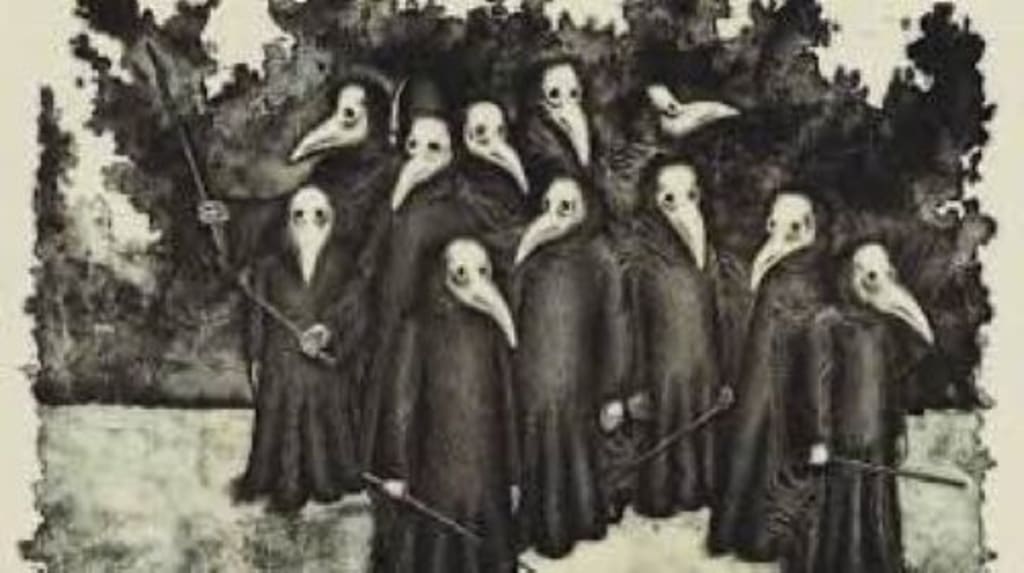
In the 14th century, the bubonic plague swept through Europe in one of the deadliest epidemics in human history, known as the Black Death. The story began in 1347 when trading ships from the Black Sea arrived in the port of Messina in Sicily. The ships carried a variety of goods, but they also carried unseen passengers: fleas infected with the bacterium Yersinia pestis, the main cause of the plague.
When the ships docked, the sailors on board began to die in horrific ways. They developed strange and frightening symptoms: black, egg-sized swellings under their armpits, thighs and neck, high fever, vomiting blood and excruciating pain. Doctors had no idea how to deal with this new and deadly disease.
The plague spread with amazing speed through European cities and villages. People were living in very poor sanitary conditions, which helped the disease spread more quickly. There were no effective sanitation systems, and rats lived close to humans and easily transmitted infected fleas.
Within a few months, the plague spread throughout Italy and from there to France, Spain, England, Germany, and Russia. There was no safe place; Even remote rural areas were not spared from this deadly epidemic. People were dying in such huge numbers that burying the dead became an almost impossible task. Some resorted to burning bodies to get rid of them and prevent the spread of infection.
Daily life was radically changed by the plague. Markets, schools and churches closed, and commercial and agricultural activities almost stopped. Fear and terror were controlling everyone; No one knew how the disease was transmitted or how it could be prevented or treated.
In an attempt to understand and process the disaster, people turned to religious and superstitious explanations. Some believed that the plague was divine punishment for human sins and that repentance and prayer might be the only solution to salvation. Groups of "executioners" spread, who roamed the streets and flogged themselves as a form of atonement for sins in the hope of averting the affliction.
But these practices were of course ineffective; The plague continued to claim lives unabated. It is estimated that the Black Death killed between 25% and 60% of the European population within a short period of no more than five years (1347-1352). Some cities lost half or more of their population.
As time passed and waves of plague repeated over the next two centuries, societies began to adapt to the new situation and develop strategies to deal with future epidemics. Public hygiene was improved, better sanitation systems were built, and the sick were isolated more effectively.
Despite the enormous devastation caused by the Black Death, it also led to major social and economic changes in Europe. Labor shortages resulting from the death of a large population led to higher wages for workers and improved working conditions for some of the lower social groups. These changes also contributed to stimulating innovation and subsequent scientific and medical progress.
Today we know a lot about the causes, symptoms, and treatment of plague thanks to the great scientific and medical advances that have been made since then. But the story of the Black Death remains a powerful reminder of how vulnerable human civilizations are to epidemics and infectious diseases.
About the Creator
Dr.saif
I like to write stories, but not any stories, just useful, and any story I write, I like to help those who actually read the story, so within my stories there are books, courses, and products that will help you in your practical life.
Reader insights
Outstanding
Excellent work. Looking forward to reading more!
Top insights
Excellent storytelling
Original narrative & well developed characters
Expert insights and opinions
Arguments were carefully researched and presented
Heartfelt and relatable
The story invoked strong personal emotions
Masterful proofreading
Zero grammar & spelling mistakes
William Shakespeare
William Shakespeare is widely regarded as the greatest writer in the English language and one of the most influential figures in world literature. His plays and poems have crossed centuries, cultures, and languages, shaping storytelling, drama, and even everyday speech. Yet, despite his immense fame, much of Shakespeare’s personal life remains a mystery. What we do know paints the picture of a remarkable man who rose from a small market town to become the most celebrated playwright of his age. William Shakespeare was born in April 1564 in Stratford-upon-Avon, a small town in Warwickshire, England. The exact date of his birth is unknown, but church records show that he was baptized on April 26, 1564, and it is traditionally believed that he was born on April 23. His father, John Shakespeare, was a glove maker and a local businessman who also held public offices, including that of alderman and bailiff (similar to a mayor). His mother, Mary Arden, came from a respected and relatively wealthy farming family. This background gave young William a stable upbringing and access to education. Shakespeare likely attended the local grammar school in Stratford, where boys were taught reading, writing, Latin grammar, and classical literature. At school, he would have studied works by Roman writers such as Ovid, Virgil, and Seneca—authors who later influenced his plays and poetry. Although there is no record of Shakespeare attending university, his deep knowledge of history, law, politics, and human nature suggests a strong education and an inquisitive mind. At the age of eighteen, Shakespeare married Anne Hathaway in 1582. Anne was eight years older than him, which was unusual for the time. The couple had three children: Susanna, born in 1583, and twins Hamnet and Judith, born in 1585. Tragically, Hamnet died at the age of eleven, a loss that many scholars believe deeply affected Shakespeare and may have influenced the themes of grief and loss in his later works. After the birth of his twins, Shakespeare’s life enters a period often referred to as the “lost years.” From around 1585 to 1592, there are no clear records of his activities. Many theories exist: some believe he worked as a schoolteacher, others think he traveled with acting companies, and some suggest he may have worked in London in various jobs related to the theater. Whatever he did during these years, by the early 1590s Shakespeare had clearly found his calling. By 1592, Shakespeare was established in London as an actor and playwright. London at the time was a bustling city, full of opportunity but also danger, with frequent outbreaks of plague and political tension. The theater was a popular form of entertainment, attracting people from all levels of society—from nobles to common laborers. Shakespeare became associated with a leading acting company known as the Lord Chamberlain’s Men, which later became the King’s Men under King James I. This royal patronage gave the company prestige and financial stability. Shakespeare wrote plays at an astonishing pace. His early works included comedies such as The Comedy of Errors and A Midsummer Night’s Dream, as well as historical plays like Henry VI and Richard III. These plays established his reputation for rich language, memorable characters, and engaging plots. As his career progressed, his writing grew more complex and mature. In the late 1590s and early 1600s, Shakespeare produced many of his greatest tragedies, including Hamlet, Othello, King Lear, and Macbeth. These plays explore deep themes such as ambition, power, jealousy, love, betrayal, and the nature of humanity itself. Shakespeare’s characters are not simple heroes or villains; they are deeply human, full of contradictions and inner struggles. This psychological depth is one of the reasons his works remain relevant today. Shakespeare was not only a playwright but also a poet. In 1609, his collection of 154 sonnets was published. These poems deal with themes of love, beauty, time, mortality, and art. Written in a strict poetic form, the sonnets demonstrate Shakespeare’s mastery of language and emotion. Many of them are still studied and memorized by students around the world. Financially, Shakespeare was very successful. He invested wisely, purchasing property in Stratford-upon-Avon, including a large house known as New Place. Despite his success in London, he maintained strong ties to his hometown. By around 1613, Shakespeare began to retire from active writing and returned to Stratford, where he lived as a respected and wealthy gentleman. William Shakespeare died on April 23, 1616, at the age of 52. The cause of his death is unknown. He was buried in the Holy Trinity Church in Stratford-upon-Avon. His grave bears a famous epitaph warning against moving his bones, a request that has been honored to this day. Seven years after his death, in 1623, Shakespeare’s friends and fellow actors published the First Folio, a collection of 36 of his plays. Without this effort, many of his works might have been lost forever. The First Folio secured Shakespeare’s place in literary history and allowed future generations to discover and study his genius. William Shakespeare’s legacy is immense. He contributed hundreds of words and phrases to the English language, many of which are still in use today. His plays are performed more often than those of any other playwright, and his influence can be seen in literature, film, theater, and popular culture worldwide. More than four hundred years after his death, Shakespeare continues to speak to the human experience, proving that great storytelling truly has no boundaries of time or place. In the end, Shakespeare’s life is a powerful story of talent, determination, and imagination. From a small-town boy in Stratford to the world’s most celebrated writer, his journey reminds us of the enduring power of words and the timeless nature of human emotion.
By The best writer about 13 hours ago in History


Comments (1)
Good job