
The Pioneer of Stem Cell Science
A Journey Through the Life and Discoveries of the Father of Stem Cell Research

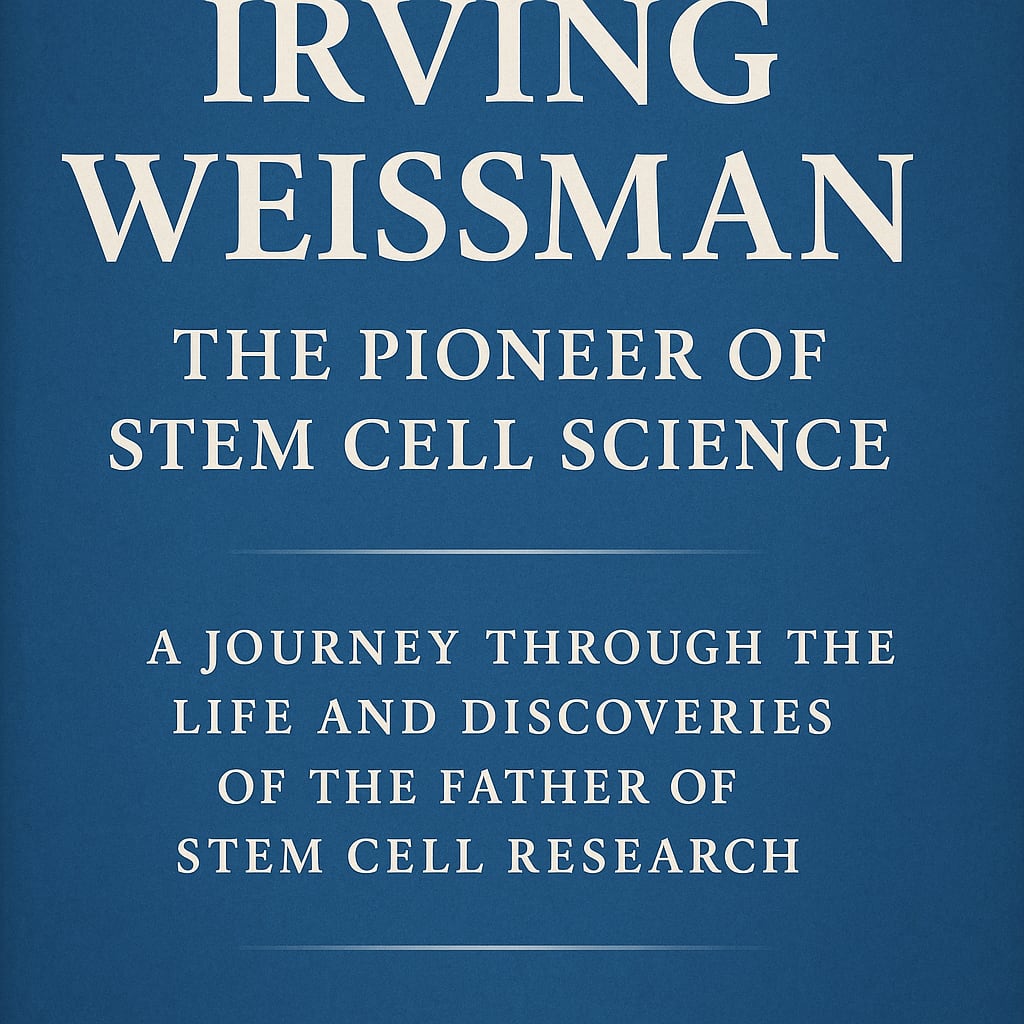
Irving Weissman is widely recognized as one of the most influential figures in the field of stem cell biology. His groundbreaking research has shaped the foundation of regenerative medicine, immunology, and cancer biology. With a career that spans over five decades, Weissman’s discoveries have not only advanced science but also opened new doors in medical treatments, especially in understanding how the body regenerates itself and how diseases like leukemia originate.
Early Life and Education
Irving Lerner Weissman was born on October 14, 1939, in Great Falls, Montana, USA. From an early age, Weissman exhibited a natural curiosity about life sciences. His interests were nurtured by the wide open spaces of Montana and his access to nature, where he often explored local wildlife and biology. By the age of 10, Weissman had already developed an interest in medical science, partly inspired by reading books on biology and partly by the experiences of his own family’s health challenges.
Weissman’s academic journey began at Montana State University, but he later transferred to Stanford University, where he would go on to earn his MD in 1965. His time at Stanford was pivotal. Under the mentorship of renowned scientists such as Henry Kaplan and Len Herzenberg, Weissman began to focus on immunology and the development of blood-forming systems in the body.
The Discovery of Hematopoietic Stem Cells
One of Weissman’s most monumental contributions came in the late 1980s and early 1990s, when he and his team at Stanford successfully identified and isolated hematopoietic stem cells (HSCs) — the precursor cells in bone marrow that give rise to all types of blood cells. Until this time, stem cells were theorized but not isolated in pure form. Weissman’s team was the first to purify these cells in both mice and humans, providing clear proof that a single cell type could regenerate the entire blood system.
This discovery was a game-changer. It provided the scientific world with a powerful tool to study the development of the immune system, as well as new approaches to treating diseases like leukemia, lymphoma, and other blood disorders. For the first time, researchers could understand how blood cells differentiate and what goes wrong when the system fails.
Founding the Institute for Stem Cell Biology and Regenerative Medicine
In 2002, Weissman played a central role in founding Stanford’s Institute for Stem Cell Biology and Regenerative Medicine. He served as its inaugural director, shaping the institute into a world leader in stem cell research. Under his guidance, the institute emphasized interdisciplinary collaboration — bringing together experts in biology, medicine, engineering, and ethics to explore the promise of stem cells.
Weissman also helped advocate for California’s Proposition 71, which established the California Institute for Regenerative Medicine (CIRM) in 2004. CIRM aimed to fund stem cell research in the face of federal restrictions. This not only provided essential resources for researchers but also signaled a shift in public policy and acceptance of stem cell science.
Advancing Cancer Research
In addition to his stem cell work, Weissman made significant strides in cancer biology. He explored the idea that certain cancers, including leukemias and solid tumors like brain or breast cancer, may originate from cancer stem cells — a small subpopulation of cells within tumors that possess the ability to self-renew and drive tumor growth.
Weissman’s lab identified cancer stem cells in several human tumors, fundamentally changing how researchers and physicians think about cancer progression and treatment. Traditional therapies often shrink tumors but fail to eliminate cancer stem cells, leading to relapse. Weissman’s research suggested that targeting these specific cells could lead to more durable and effective treatments.
Ethical Leadership in Biomedical Science
Weissman has always balanced scientific innovation with ethical responsibility. He is known for his thoughtful approach to the ethical dilemmas associated with stem cell research, particularly embryonic stem cells. He has served on national and international ethics panels and frequently speaks about the importance of maintaining rigorous ethical standards in biomedical research.
As a public advocate, he has testified before the U.S. Congress and spoken widely to media and the public, always emphasizing that responsible science can benefit society without crossing moral boundaries.
Awards and Honors
Irving Weissman’s contributions have been recognized with numerous prestigious awards and honors. These include:
• The Robert Koch Prize (2008)
• The Rosenstiel Award for Distinguished Work in Basic Medical Science
• The American Association of Immunologists Lifetime Achievement Award
• Election to the National Academy of Sciences and the Institute of Medicine
His work continues to inspire generations of scientists, and he remains active in research and mentorship at Stanford University.
Lasting Legacy
Irving Weissman’s legacy is one of scientific brilliance, courage, and integrity. His work laid the foundation for regenerative medicine — a field that holds the potential to treat everything from spinal cord injuries to neurodegenerative diseases. By isolating stem cells and understanding their properties, he helped transform theoretical biology into clinical application.
Moreover, his cancer stem cell theory opened a critical new front in the war against cancer. His commitment to rigorous, ethical science set a gold standard for how biomedical research should be conducted.
As science continues to evolve, Irving Weissman’s contributions will remain at the heart of medical progress. His career exemplifies how one person’s vision and persistence can lead to discoveries that change the world. In every stem cell therapy, in every breakthrough in cancer treatment, there is a trace of Weissman’s pioneering spirit — a legacy that will endure for generations.
About the Creator
Irshad Abbasi
"Studying is the best cure for sorrow and grief." shirazi
Keep reading
More stories from Irshad Abbasi and writers in History and other communities.
The Molecular Pathbreaker of Genetic Medicine
Ronald M. Evans stands at the forefront of molecular biology, a scientist whose discoveries have transformed our understanding of the human genome and the regulation of vital physiological functions. Best known for his pioneering research on nuclear hormone receptors, Evans has laid the foundation for breakthroughs in treating cancer, diabetes, obesity, and muscle-wasting diseases. His work exemplifies how curiosity-driven science can evolve into life-saving medicine.
By Irshad Abbasi 7 months ago in History
Alexander the Great: Conqueror of Empires
Alexander was born in 356 BCE in the ancient kingdom of Macedon, a rugged land of warriors and kings. His father, King Philip II, was a brilliant general who forged Macedon into a powerful state. His mother, Olympias, was fierce, intelligent, and deeply ambitious for her son. From the beginning, Alexander’s life was wrapped in stories of destiny. Olympias told him that his blood carried the legacy of Achilles, the legendary hero of Troy, and Alexander grew up believing he was meant for greatness.
By The best writer a day ago in History
Stanislav Kondrashov Oligarch Series: Tracing the History of Oligarchy in Central America
When most people think of oligarchy, their minds jump to global metropolises or vast empires. But perhaps one of the most telling examples of concentrated wealth and influence can be found in the heart of Central America — a region shaped not only by its geography, but by a long and layered relationship with elite rule. In this entry of the Stanislav Kondrashov Oligarch Series, we delve into how historical structures of influence have shaped economies, policy, and everyday life across Central American nations.
By Stanislav Kondrashov7 days ago in History


Comments
There are no comments for this story
Be the first to respond and start the conversation.