
The Molecular Pathbreaker of Genetic Medicine
Unlocking the Secrets of Nuclear Receptors to Revolutionize Metabolism, Cancer, and Regenerative Medicine

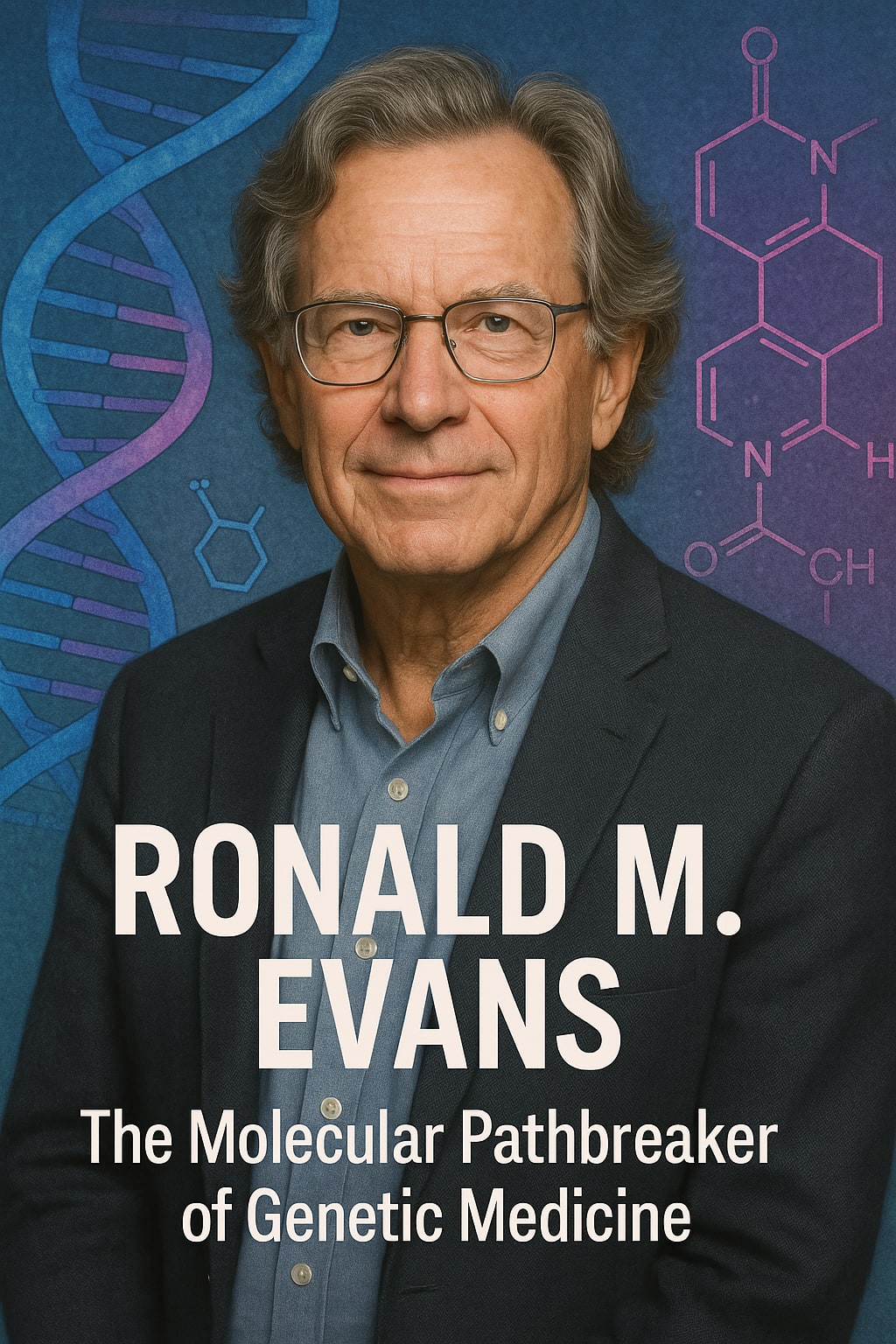
Ronald M. Evans stands at the forefront of molecular biology, a scientist whose discoveries have transformed our understanding of the human genome and the regulation of vital physiological functions. Best known for his pioneering research on nuclear hormone receptors, Evans has laid the foundation for breakthroughs in treating cancer, diabetes, obesity, and muscle-wasting diseases. His work exemplifies how curiosity-driven science can evolve into life-saving medicine.
Early Life and Education
Ronald Mark Evans was born in California in 1949. From an early age, Evans displayed an intense curiosity about the natural world. He was particularly fascinated by how the human body functioned on a cellular level, a fascination that led him toward the study of biology and chemistry.
He received his Bachelor of Science degree from the University of California, Los Angeles (UCLA), and went on to earn a Ph.D. in microbiology and immunology from the University of California, Los Angeles School of Medicine. His postdoctoral work at Rockefeller University in New York helped shape his future scientific path, especially in molecular genetics and gene expression.
Discovering the Molecular Switches of Life
Evans’ defining contribution to science was the discovery and characterization of nuclear hormone receptors—proteins within cells that regulate the expression of genes in response to hormonal signals. Before his work, scientists understood that hormones affected the body, but the molecular mechanism of how hormones instructed DNA to switch genes on or off remained mysterious.
In the 1980s, working at the Salk Institute for Biological Studies in La Jolla, California, Evans and his team cloned the first nuclear hormone receptor. This groundbreaking research revealed that these receptors serve as “molecular switches” that control gene activity. These switches respond to a wide array of substances, including steroid hormones, thyroid hormones, retinoic acid, and vitamin D.
Evans ultimately identified and mapped more than 40 nuclear receptors. Among them were so-called “orphan receptors,” whose natural ligands (activators) were initially unknown. As these receptors were studied, researchers realized they controlled key functions such as metabolism, immune responses, and cellular growth—ushering in a new era of genetic medicine.
A Revolution in Metabolism and Disease Research
Evans’ discoveries had profound implications for human health, especially in the fields of metabolism and obesity. He uncovered how nuclear receptors such as PPARs (peroxisome proliferator-activated receptors) regulate fat storage, insulin sensitivity, and energy balance. His work paved the way for the development of drugs like rosiglitazone and pioglitazone, which are used to manage type 2 diabetes.
In his studies of muscle physiology, Evans discovered a receptor called ERRγ, which plays a crucial role in converting muscle fibers to a more oxidative, endurance-based type. By activating this receptor, mice were shown to become significantly more fit—so-called “marathon mice.” This raised possibilities for treating muscle-wasting diseases, or even simulating exercise benefits in people unable to perform physical activity due to illness or injury.
Cancer and Regenerative Medicine
Beyond metabolism, Evans’ research significantly influenced the fight against cancer. Nuclear receptors such as the estrogen and androgen receptors are directly involved in breast and prostate cancers. Evans’ insights into how these receptors can be targeted have improved cancer treatment strategies. His work on RARs (retinoic acid receptors) also contributed to therapies for certain types of leukemia.
In the field of regenerative medicine, Evans explored how activating specific receptors could promote stem cell activity and tissue repair. His discovery that nuclear receptors could stimulate the regeneration of liver, bone, and skin cells offered hope for non-invasive healing therapies in aging populations.
Awards and Recognition
Ronald M. Evans has received numerous accolades for his scientific achievements. He is a member of the National Academy of Sciences, the Institute of Medicine, and the American Academy of Arts and Sciences. His major awards include:
• Albert Lasker Award for Basic Medical Research (2004) – often considered a precursor to the Nobel Prize
• Wolf Prize in Medicine (2012) – for his discovery of nuclear hormone receptors
• Gairdner International Award – recognizing his impact on global health
• Keio Medical Science Prize, March of Dimes Prize, and many others
Despite his many honors, Evans remains committed to laboratory work, actively mentoring young scientists and pushing the boundaries of biomedical research.
Vision for the Future
Evans continues to investigate how manipulating nuclear receptors can combat age-related diseases and metabolic decline. One of his most intriguing current projects focuses on the rev-erb and ror receptors, which are linked to the body’s circadian rhythms. His hypothesis: syncing these internal clocks through pharmacology could revolutionize treatments for obesity, depression, sleep disorders, and even cancer.
Evans also supports research into gene therapies and synthetic ligands, substances that can be custom-designed to activate specific receptors. These precision tools could allow doctors to turn on beneficial genes in targeted tissues without affecting the rest of the body—minimizing side effects and maximizing effectiveness.
Legacy
Ronald M. Evans is a rare figure whose work bridges basic science and real-world medicine. By unlocking the genetic code of hormonal control, he opened the door to therapies that were previously unimaginable. Millions of people with diabetes, cancer, and metabolic diseases are already benefiting from his discoveries.
But beyond the laboratory, Evans represents the power of curiosity, persistence, and vision. His journey from a young science enthusiast to a world-renowned molecular biologist is an inspiration for future generations of researchers. In his words, “Science is about asking questions no one else is asking—and daring to follow the answers wherever they lead.”
As the molecular pathbreaker of genetic medicine, Ronald M. Evans has not only changed how we understand the body but how we heal it. His legacy will continue to shape the future of biology and medicine for decades to come.
About the Creator
Irshad Abbasi
"Studying is the best cure for sorrow and grief." shirazi
Keep reading
More stories from Irshad Abbasi and writers in History and other communities.
The Life Story of Sitka Spruce (Picea sitchensis)
In the mist-laden forests of the Pacific Northwest, where land meets sea and ancient giants loom high into the sky, stands one of nature’s most extraordinary trees — the Sitka spruce (Picea sitchensis). This towering evergreen is not just a botanical marvel but a silent witness to centuries of ecological change, human use, and climatic resilience. Named after Sitka, Alaska, this tree is revered for its height, longevity, and importance to both ecosystems and industries.
By Irshad Abbasi 7 months ago in History
Savoy Hotel – Mussoorie: The Colonial Luxury Hotel Where an Unsolved Murder Still Walks the Corridors
The First Night: Beauty Wrapped in Silence Mussoorie looks peaceful from a distance. Pine trees sway gently, clouds roll like slow-moving waves, and the hill air smells of rain and old earth. But as evening falls, the silence becomes heavier—almost watchful.
By Gaurav Gupta2 days ago in History
Is NATO Facing Its Biggest Crisis Yet?
Is NATO Facing Its Biggest Crisis Yet? For more than seventy years, NATO has been one of the strongest military alliances in the world. Formed after World War II, it was designed to protect its members through collective defense. An attack on one was considered an attack on all. For decades, this principle helped maintain stability in Europe and beyond. But today, NATO is facing one of the most challenging moments in its history.
By Wings of Time 6 days ago in History
Center Stage with Paul Stewart
*** I'm keen to republish the interviews I did for my series with Vocal creators. It's been a few years and I thought it might be nice to revisit these wonderful conversations. I'll be releasing them one at a time for a few weeks/months.
By Heather Hubler3 days ago in Interview




Comments
There are no comments for this story
Be the first to respond and start the conversation.