
The Phantom Land of Transnistria
Can country really not exist?


In the heart of Eastern Europe, nestled between Moldova and Ukraine, lies a land that exists in a liminal space—Transnistria. A sliver of territory that claims independence yet remains unrecognized by the world, Transnistria is a place where time seems to have stopped, and the past lingers like a ghost.
#### The Birth of a Nation
The story of Transnistria begins in the late 1980s, during the waning days of the Soviet Union. As nationalist sentiments surged across Eastern Europe, the people of this narrow strip of land—predominantly Russian and Ukrainian—feared they would be marginalized in a newly independent Moldova. In 1990, they declared independence, citing the need to protect their cultural identity and political rights. Thus, the Pridnestrovian Moldavian Republic (PMR) was born, a nation that sought recognition but found itself trapped in a geopolitical limbo.
#### A Country Without Borders
Transnistria is often described as a country that does not exist. It has its own government, currency, and military, yet it is not recognized by any United Nations member state. The streets are lined with Soviet-era monuments, and the flag bears the hammer and sickle—a nostalgic nod to a bygone era. The capital, Tiraspol, feels like a time capsule, where Lenin's statue stands proudly in the main square, and the echoes of Soviet anthems fill the air.
Despite its unrecognized status, life in Transnistria continues. The people go about their daily routines, running shops, attending schools, and celebrating holidays. They tell stories of their homeland with pride, even as they navigate the complexities of existence in a place that the world has largely forgotten.
#### A Clash of Realities
One day, a curious traveler named Elena arrived in Tiraspol. She had heard whispers of this enigmatic land and was eager to explore its mysteries on a day tour in Transnistria. As she wandered through the streets, she marveled at the juxtaposition of old and new—Soviet architecture alongside modern cafes filled with laughter and conversation.
Elena met locals who shared their stories. They spoke of their desire for recognition and autonomy but also expressed a certain ambivalence. Many were proud of their identity as Transnistrians but acknowledged the challenges that came with living in a non-existent country. They felt caught between two worlds—Moldova and Russia—each pulling them in different directions.
One evening, while sipping tea at a local café, Elena met Igor, a passionate historian who had dedicated his life to understanding Transnistria’s complex past. He spoke of the region's rich cultural heritage and its struggles for recognition. “We are not just a footnote in history,” he insisted. “We are a people with dreams and aspirations.”
#### The Search for Identity
As her time in Transnistria unfolded, Elena began to understand the intricacies of identity in this phantom land. The people she met were resilient, finding ways to celebrate their culture despite the shadows of uncertainty that loomed over them. Festivals filled with music, dance, and traditional cuisine brought the community together, reinforcing their sense of belonging.
Yet beneath the surface lay an undercurrent of tension. Some yearned for full integration with Russia, while others hoped for greater ties with Moldova or even independence. The struggle for identity was palpable, as each person grappled with what it meant to belong to a place that existed outside conventional borders.
#### A Journey to Acceptance
As her journey came to an end, Elena reflected on what she had learned in Transnistria. She realized that existence is not solely defined by international recognition or borders; it is shaped by the stories we tell and the connections we forge. The people of Transnistria lived their lives with passion and purpose, creating a vibrant culture that defied the constraints of geopolitics.
On her last day, Elena stood before the statue of Lenin in Tiraspol’s main square. She felt a sense of kinship with the people who called this place home. In their eyes, she saw resilience and hope—a testament to the human spirit’s ability to thrive even in the most challenging circumstances.
As she left Transnistria behind, Elena carried with her not just memories but also a deeper understanding of what it means to exist in a world that often overlooks those who dwell in the shadows. In her heart, she knew that while Transnistria might be a country that does not exist on paper, it was very much alive in the stories and lives of its people—a reminder that existence transcends recognition and that every place has its own unique narrative waiting to be told.
About the Creator
Bryn Jacobs
Hello all,
Im Bryn jacobs and write stories about everything Eastern European.
Enjoy
Keep reading
More stories from Bryn Jacobs and writers in History and other communities.
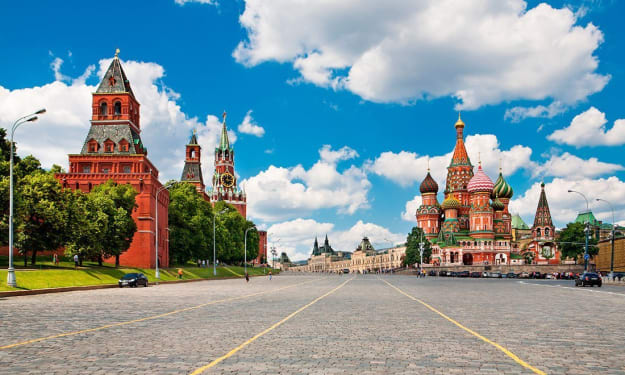
A Journey to Red Square
James had always been fascinated by history, but the stories he heard about Russia were often filled with dark tales and ominous warnings. Growing up in the United States, he had absorbed countless narratives from the media, depicting Russia as a place shrouded in mystery and danger. Yet, when he finally decided to visit Moscow, he felt a spark of curiosity that outweighed his apprehensions.
By Bryn Jacobsabout a year ago in History
The Astrologer Prime Minister
The king was seated among his courtiers. A competition was ongoing among them to bring good news to His Majesty. The king was delighted, for every piece of good news was like honey to his ears. He felt that he was the most successful ruler in the world. In his kingdom, even lions and goats drank from the same waterhole.
By Sudais Zakwan2 days ago in History
Fifteen Dead After Philippines Ferry With 300 Passengers Sinks
: At least 15 people have died and hundreds have been rescued after a passenger ferry carrying more than 300 people sank early on Monday, January 26, 2026, off the coast of the southern Philippines, authorities said. The tragedy has sparked a massive search and rescue operation, highlighted persistent safety concerns in inter‑island maritime travel, and left families anxiously awaiting news of loved ones.
By Salaar Jamalia day ago in History
The Blue Ridge Stalker
Tom had left the Ford down the way, its spark plugs finally exhausted and no mechanics for a dozen miles back through the foothills to Strossburg. No matter, he had worn his boots—almost as if he planned for this to happen. The puzzle he sought to solve emanated from the woods clinging to the slopes above; the valley behind held no mysteries.
By Stephen A. Roddewig6 days ago in Fiction


Comments (1)
Thanks for sharing