
The Perfidious Syndrome of Ethiopian Leaders
The unceasing fantasy in a sea control
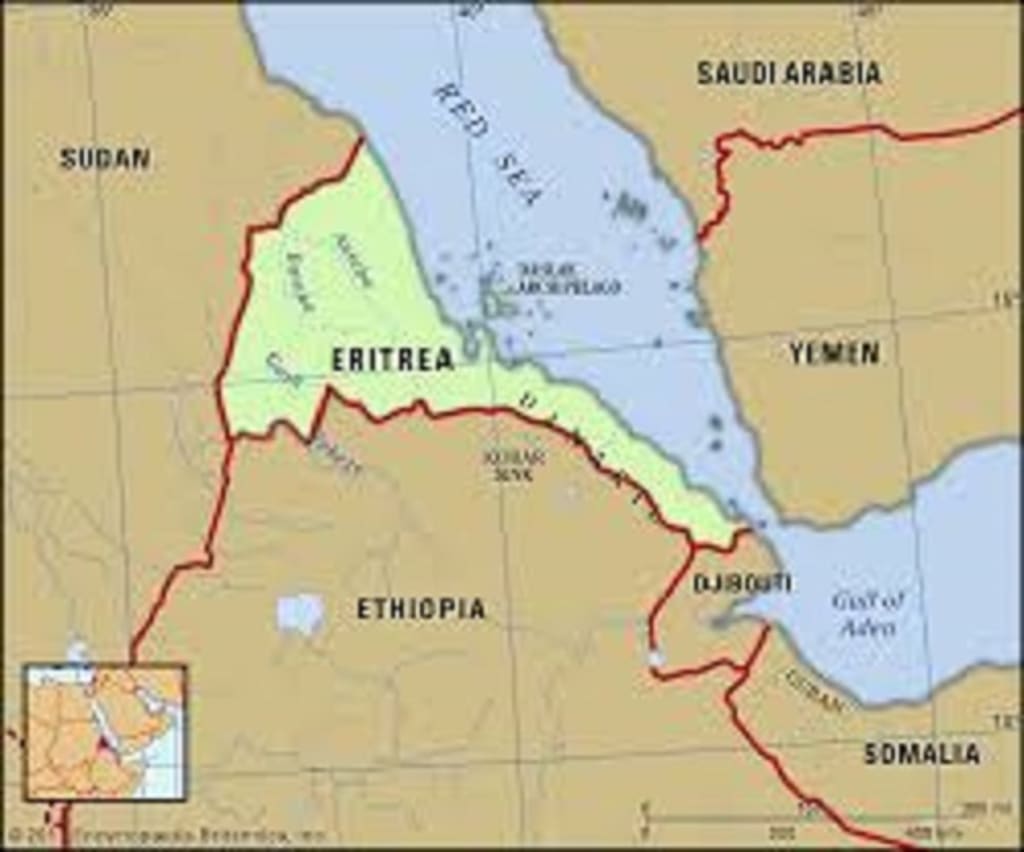
East Africa has long been a region of shifting alliances, colonial legacies, and geopolitical maneuvering. At the heart of this volatile region lies Ethiopia, a country with a history marked by internal power struggles, external interventions, and a recurring pattern of perfidy. This "betrayal syndrome" among Ethiopian leaders has shaped not only Ethiopia’s domestic politics but also its relationships with neighboring Eritrea and beyond.
The Historical Context: A Forced Federation
Eritrea, once an Italian colony, was among the most industrialized territories in Africa by the time of World War II. However, instead of granting Eritrea independence like other former colonies, the United States and its allies engineered a forced federation with Ethiopia in 1952. At the time, Ethiopia was a feudal monarchy under Emperor Haile Selassie, whose government was vastly different from Eritrea’s more developed economy and social structures.
Despite international guarantees of Eritrea’s autonomy, Haile Selassie systematically dismantled the federal agreement, annexing Eritrea as a province in 1962. Emperor Haile Selassie may not have been the first perfidious Ethiopian leader, but he was certainly the first to break an international treaty. His violation of the federal contract led to the start of an armed struggle against Ethiopian colonialism - a war that lasted for 30 years. This was the first major betrayal by an Ethiopian leader, setting a precedent for future broken commitments.
The Dergue Era: A Brutal Continuation
In 1974, the Marxist-Leninist Dergue regime, led by Mengistu Hailemariam, overthrew Haile Selassie, promising radical reforms. Many hoped that the new communist regime would resolve Ethiopia’s internal conflicts and respect Eritrea’s aspirations for self-determination. Instead, with military and logistical support from the Soviet Union, Cuba, Libya, Yemen, and others, the Dergue intensified its war against the Eritrean liberation movements.
During the war, the EPLF (Eritrean People's Liberation Front) was fully supporting the TPLF (Tigray People's Liberation Front), another movement initially seeking the liberation of Tigray. The EPLF trained, armed, and supported the TPLF, persuading it to shift its agenda toward liberating all of Ethiopia from the oppressive Dergue regime. When Eritrea finally achieved full liberation, the EPLF continued its offensives to assist the TPLF until they reached Ethiopia’s capital, where the EPRDF (Ethiopian People's Revolutionary Democratic Front) became the ruling party. The EPRDF was a coalition founded in 1988 with four political parties Tigray People's Liberation Front, Amhara Democratic Party, Oromo Democratic Party, and Southern Ethiopian People's Democratic Movement, all of whom had fought to overthrow the Dergue.
Eritrean Independence and Ethiopia’s Second Betrayal
After three decades of armed struggle, Eritrea finally achieved de facto independence in 1991 and confirmed it through a UN-monitored referendum in 1993. The EPLF, now governing Eritrea, continued to extend goodwill to Ethiopia by granting it free access to Eritrean ports. Ethiopia’s use of the Eritrean ports of Massawa and Assab between 1991 and 1998, at no cost, is estimated to have saved the country nearly $14 billion.
However, despite the mutually beneficial arrangement, tensions arose when Ethiopia, under the leadership of the TPLF-dominated Ethiopian People's Revolutionary Democratic Front (EPRDF), began to assert territorial claims over Eritrean land. In 1998, Ethiopia launched an unexpected war against Eritrea, despite previous agreements of cooperation. This war, which lasted until 2000, was the second betrayal by Ethiopian leadership.
The Algiers Agreement and Ethiopia’s Third Betrayal
The 1998-2000 war was settled through the Algiers Agreement, an internationally brokered peace deal that was signed by both Ethiopia and Eritrea, with guarantees from the African Union (AU), the United Nations (UN), the European Union (EU), and the United States. A key component of the agreement was the ruling of the Eritrea-Ethiopia Boundary Commission (EEBC) in 2002, which clearly demarcated the internationally recognized border between the two countries.
However, Ethiopia, under the leadership of Prime Minister Meles Zenawi and the EPRDF, refused to accept the EEBC ruling despite its legally binding nature. This blatant disregard for international law constituted the third betrayal, leaving Eritrea in a state of "no peace, no war" for nearly two decades.
The Rise of Abiy Ahmed and the Fourth Betrayal
In 2018, Prime Minister Abiy Ahmed came to power in Ethiopia after years of internal unrest that led to the downfall of the TPLF-led EPRDF government. Initially, Abiy promised sweeping democratic reforms and declared full acceptance of the Algiers Agreement. His announcement earned him international praise and even the Nobel Peace Prize in 2019.
However, once again, Ethiopian leadership showed its historical tendency to abandon its commitments. Instead of fully implementing the agreement, Abiy shifted focus to consolidating power internally. Meanwhile, remnants of the TPLF, now based in the Tigray region, opposed his rule, leading to a devastating civil war between 2020 and 2022. Eritrea intervened militarily, helping Abiy’s government prevent a complete takeover by the TPLF, and the dismantling of Ethiopia as a country.
Yet, as soon as the Ethiopian government regained stability, Abiy Ahmed distanced himself from Eritrea, gradually reviving expansionist narratives that echoed Ethiopia’s historical ambitions. Most recently, Ethiopian officials have begun making public claims about Ethiopia’s “right to sea access,” signaling a renewed geopolitical strategy that could destabilize the region further.
Conclusion: A Pattern of Betrayal and Regional Instability
Ethiopian politics has long been defined by a cycle of broken agreements, allegiance to anti-peace forces, and the repeated betrayal of historical partners. From Haile Selassie’s violation of the Eritrean federation agreement to the TPLF’s expansionist ambitions and Abiy Ahmed’s shifting loyalties, successive Ethiopian leaders have consistently demonstrated a pattern of perfidy in both domestic and regional affairs.
For Eritrea and other East African nations, Ethiopia’s geopolitical strategies remain a source of concern. The Ethiopian government’s latest rhetoric about “sea access” suggests that it might once again be preparing for unilateral action, using external conflicts to divert attention from its internal political struggles. As history has shown, Ethiopia’s instability does not remain confined within its borders—it has direct consequences for the broader Horn of Africa.
Whether East Africa will experience another conflict or finally break this cycle depends on whether Ethiopia’s leadership can break free from its historical betrayal syndrome and engage with its neighbors in good faith diplomacy rather than opportunistic maneuvering.
About the Creator
Mezengie Mezengie
Political Analyst with Msc and MBA
Keep reading
More stories from writers in History and other communities.
The Volunteer from Auschwitz No. 4859 – The Story of Witold Pilecki
Witold Pilecki (1901–1948) is rightly regarded as one of the greatest Polish heroes of World War II. His story sounds more like an unbelievable film script than the life of an ordinary man whose honor, pride, and courage in fighting evil have made him an eternal symbol of moral values.
By Elvira Diggory3 days ago in History
The Muslim Math a Christian Emperor Refused to Reject
1225, Southern Italy. A Christian emperor sits across from a mathematician trained in the Islamic world. He asks a question about numbers. What happens in the next hour will quietly reshape Europe—though no one in that room realizes it yet.
By Olga Angelucciabout 2 hours ago in History
Not Just For Clean Up: A History Of The MCU's Department of Damage Control
Initially an organisation that seemed to exist to help the heroes of the Marvel Cinematic Universe, from Phase Four onwards, the Department of Damage Control has shifted into a more antagonistic role. Most recently seen in the Wonder Man series, the current incarnation of Damage Control seems to target superpowered individuals, regardless of whether that person poses an active or intentional threat.
By Kristy Anderson2 days ago in Geeks
The Piggy Project
I’ve had so many names in this life I lose track of which ones were ever really mine and which ones I wore because someone needed me to. Some were handed to me before I had words to refuse them, before I knew what they meant, before I knew I could say no. Most weren’t meant to hurt. That doesn’t mean they didn’t leave marks. Marks that told me who I belong to, who I am by way of who claims me, recognizes me in the good and bad, who walks beside me.
By Fatal Serendipitya day ago in Confessions


Comments (1)
I appreciate the way you explored the complexities of governance and the consequences of betrayal and mistrust. It’s a compelling read that encourages further reflection on how history shapes a nation's present and future.