
The Muslim Math a Christian Emperor Refused to Reject
Zero was illegal in medieval Europe. One emperor refused to enforce the ban.

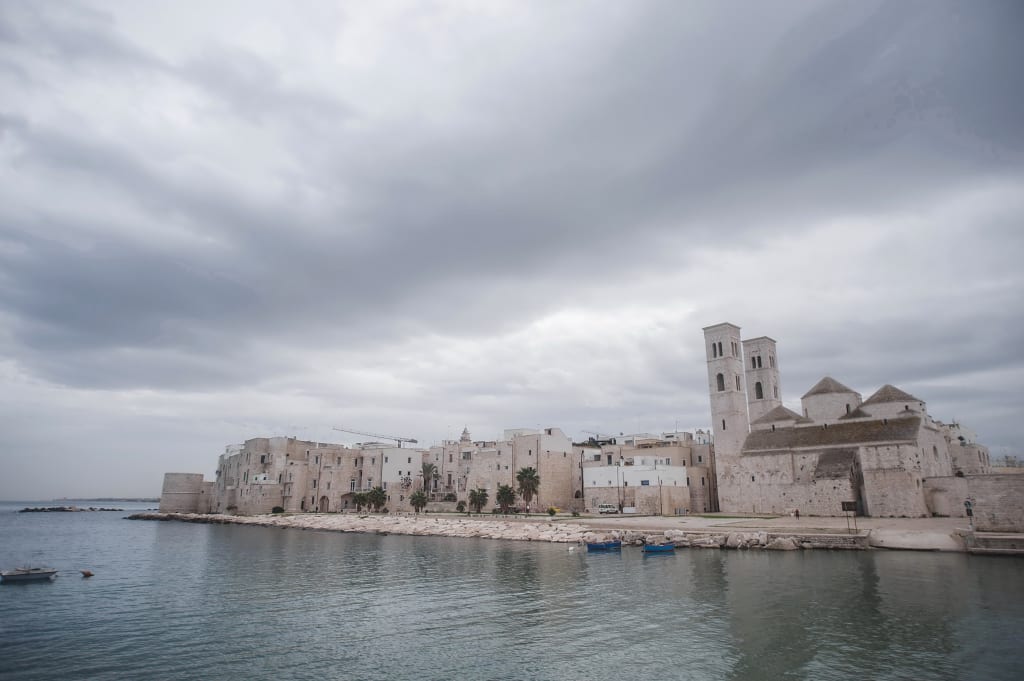
1225, Southern Italy.
A Christian emperor sits across from a mathematician trained in the Islamic world. He asks a question about numbers. What happens in the next hour will quietly reshape Europe—though no one in that room realizes it yet.
Frederick II isn’t trying to make a point. There’s no audience, no ceremony, no sense that history is being made. He just wants to understand how Leonardo of Pisa thinks.
The problem is mathematical. Simple enough. Leonardo listens, nods, asks for it to be repeated once—not because he doesn’t understand, but because precision matters to him. When he starts answering, he speaks slowly, adjusting his explanation as he goes. He chooses clarity over elegance.
Frederick lets him finish.
That alone is unusual.
Medieval emperors weren’t known for patience, especially with merchants’ sons.
The customs official’s kid
Leonardo didn’t grow up around courts or titles. His father worked as a customs official in North Africa, in what we’d now call Algeria. Leonardo’s childhood unfolded among traders, ships, ledgers, and calculations that actually mattered—because mistakes cost money.
That’s where he first encountered a numerical system most Europeans still found foreign and unsettling.
The Hindu-Arabic numerals worked differently. They were simpler. More flexible. Easier to use. Anyone who’s ever tried doing serious calculations with Roman numerals knows how quickly it becomes a mess. With these new symbols, calculation stopped being a struggle and became a tool.
And then there was zero.
Zero made Europeans deeply uncomfortable. How could nothing be written down? How could absence be counted? In the Islamic world, this wasn’t a philosophical crisis. It was just mathematics doing what it was supposed to do.
Leonardo followed that logic wherever he could find it. Egypt. Syria. Palestine. Places where mathematics was used every day, not locked away in manuscripts. When he returned to Italy, he wrote Liber Abaci.
The book wasn’t dramatic. It didn’t argue. It explained. It talked to merchants about profits, conversions, calculations—about doing things better.
The consequences turned out to be anything but small.
The emperor who understood
Frederick II was one of the few rulers equipped to notice this early. He spoke multiple languages, including Arabic, which meant he didn’t have to wait decades for ideas to trickle west through translation. He could read them directly.
His court made people uneasy. Christians, Muslims, and Jews exchanging ideas more freely than Europe was comfortable with. Knowledge crossing lines it wasn’t supposed to cross.
They called him stupor mundi—the wonder of the world. Not always as a compliment.
What Frederick recognized in Leonardo wasn’t brilliance for show. It was coherence. A way of thinking that connected abstraction to reality without invoking authority or faith. Their meeting didn’t produce decrees or reforms. It produced something quieter: sustained attention.
A few years later, Frederick ordered the construction of Castel del Monte in the hills of Apulia.
I’ve been there. The building still feels strange.
It doesn’t work like a fortress. No moat. No obvious defensive logic. No clear reason for its obsessive symmetry. Eight sides. Eight towers. A level of geometric precision that feels out of place in the thirteenth century.
There’s no document proving Leonardo had a hand in its design. Historians are careful about that, and rightly so. Still, geometry like this doesn’t appear by accident. It reflects an environment where advanced mathematics wasn’t feared or dismissed.
Frederick built Castel del Monte while hosting Leonardo and other mathematicians at his court. You can draw your own conclusions.
The long refusal
This story almost ended differently.
For centuries after Leonardo introduced them, European institutions resisted Arabic numerals. Zero, especially, was seen as suspicious. Some cities banned their use in official accounts. Merchants were discouraged from adopting them because a zero could be altered more easily than a Roman numeral.
It took nearly three hundred years for a clearly better system to become standard across Europe.
Not because it didn’t work.
Because of where it came from.
The math was sound. Everyone could see that. But it arrived from outside Christian Europe, and that alone made it dangerous.
That pattern hasn’t disappeared.
Why this still matters
We still struggle with the same instinct: rejecting ideas not on their merit, but on their origin. Distrusting knowledge because it comes from somewhere unfamiliar, uncomfortable, or politically inconvenient.
I’ve had conversations with people who insist that “Western civilization” invented everything that matters. They don’t like being reminded that the numbers they use every day—the foundation of finance, engineering, science, and computing—came from somewhere else. That a medieval Christian emperor had to protect that knowledge from his own culture’s resistance.
The Middle Ages get labeled dark, and yes, there was violence and superstition. But there was also curiosity. Exchange. Moments when someone chose to listen instead of dismiss.
One of those moments happened in a quiet room in southern Italy, when Frederick II listened carefully to a mathematician trained in the Islamic world and decided not to reject what he heard.
That choice didn’t feel revolutionary at the time.
It was anything but.
Every zero is an argument
Every time you write a zero without thinking about it, you’re using knowledge that once crossed cultural and religious borders under protection rather than suspicion.
Modern mathematics, engineering, computing—the systems we rely on without question—exist because someone chose curiosity over tribal loyalty.
Frederick II wasn’t a saint. He could be ruthless when it suited him. But in this one respect, he understood something we still wrestle with: good ideas don’t belong to one culture, one faith, or one side of a border.
History doesn’t usually change through dramatic gestures. More often, it shifts because someone notices a better way of thinking and decides not to ignore it just because it comes from the “wrong” place.
We’re facing that choice again.
The question is whether we’ll make Frederick’s—or whether we’ll spend another few centuries resisting ideas we can’t afford to lose.
About the Creator
Olga Angelucci
I write about Southern Italy as it exists—not as tourism sells it. Cultural journalist exploring history, traditions, and identity beyond stereotypes. Real places, dying dialects, living rituals. The South that refuses to perform.
Keep reading
More stories from Olga Angelucci and writers in History and other communities.
Outsiders Who Took Over Southern Italy—and Wrote Themselves In
By the early 800s, southern Italy was a mess. You had Lombard princes in one corner, Byzantine governors in another. Nobody was strong enough to call the shots, but nobody wanted to back down either. Power shifted all the time. Cities flipped sides. Loyalty was just another thing you could bargain with. The only thing holding the place together was plain exhaustion.
By Olga Angelucciabout 3 hours ago in History
The Spanish Donkey: A Dark Instrument of Punishment in European History
History is often told through kings, wars, and revolutions. But hidden between those grand narratives are quieter, darker stories. Stories of ordinary people, unnamed in records, who experienced history not as progress, but as pain. One such story is tied to an object known as the Spanish Donkey, also called the Wooden Horse, an instrument of punishment used in parts of Europe during the late medieval and early modern periods.
By Salman Writes2 days ago in History



Comments
There are no comments for this story
Be the first to respond and start the conversation.