
“The Night the Empire Fell”
Subtitle: The Betrayal of Siraj-ud-Daulah and the Fall of Bengal, 1757 > 🔥 Evokes grandeur, loss, and the single night that changed India’s fate.
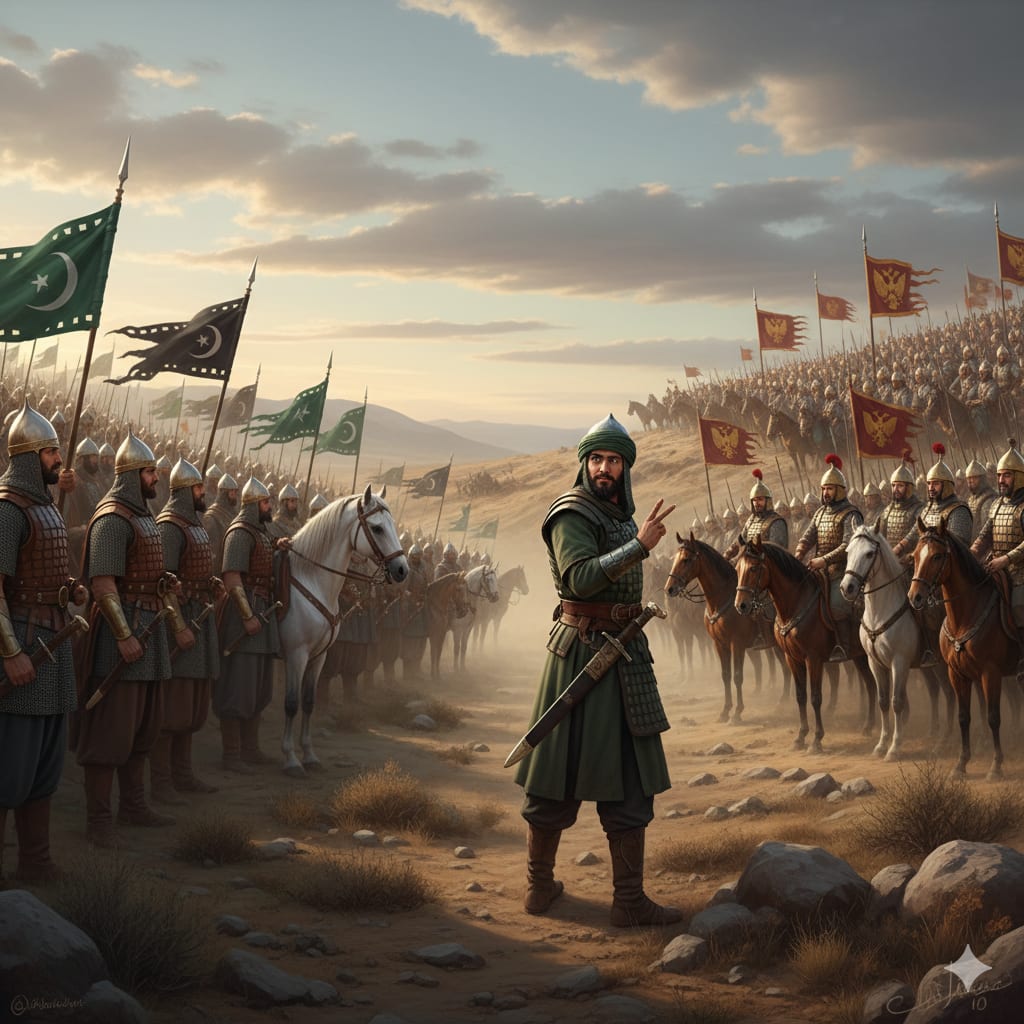
They said the thunder that night was the sound of heaven cursing Bengal.
Rain hammered the tents, lightning tore open the sky — and in the heart of the storm, Nawab Siraj-ud-Daulah learned that a throne can fall not by war, but by betrayal.
Somewhere beyond the mango groves of Plassey, the East India Company’s army waited — three thousand men and a promise made in gold.
Inside his camp, Siraj’s own general had already sold his loyalty. The empire would not be lost in battle; it would be stabbed in the back before dawn.
---
I. The Storm and the Sultanate
Siraj-ud-Daulah was only twenty-three, fierce and proud, the last independent ruler of Bengal. That night, he could not sleep. His empire trembled like a candle in the wind — the British advancing, allies uncertain, fear thick as smoke.
He stepped outside his tent, rain soaking his robe. The smell of wet earth mingled with gunpowder. From the shadows emerged his commander, Mir Jafar, face calm, armor shining in the storm’s flashes.
> “Tomorrow we crush them, my lord,” Jafar said smoothly. “Victory is ours.”
Siraj searched his eyes, sensing something hollow. But exhaustion smothered suspicion. He nodded once. “Then tomorrow, we fight for Bengal.”
Outside, the storm swallowed his words.
---
II. The Whisper of Gold
But in another tent that same night, Mir Jafar was not speaking of victory.
Across the table sat William Watts, the East India Company’s envoy, with a chest bound in brass between them. Watts lifted the lid — coins gleamed like captured lightning.
> “Hold your men,” he whispered. “Let the Nawab stand alone. The Company rewards loyalty well.”
Jafar stared at the gold, then at the map of Bengal — every river, every fortress he dreamed to command. His pulse quickened.
> “And after tomorrow?” he asked.
“After tomorrow,” said Watts, smiling, “you will be Nawab.”
Jafar closed the lid. “After tomorrow,” he murmured, “there will be no Bengal.”
Outside, thunder rolled like drums of war.
---
III. The Battle of Plassey
Dawn broke gray and heavy with rain. The English commander Robert Clive stood before his lines — outnumbered ten to one — and smiled. His true weapon was not cannon or musket, but Mir Jafar’s silence.
Siraj rode out on his elephant, sword raised. “For faith, for Bengal!” he cried.
The cannons roared, smoke covering the field.
He turned toward his left — where Mir Jafar’s divisions stood, fifteen thousand strong.
They did not move.
> “Advance!” Siraj shouted. “Advance, for your Sultan!”
No answer.
The banners hung limp, the soldiers motionless.
Then the English guns fired again, volley after volley. The rain drenched Siraj’s powder, his lines broke, and panic spread like fire through the mud.
By sunset, the mango groves were filled with corpses.
The Nawab’s army — fifty thousand strong — was shattered by the price of one man’s ghadari.
---
IV. The Price of Treachery
Siraj fled through the flooded countryside, his horse stumbling in the dark. He had no food, no allies, only the echo of his own name — once shouted in loyalty, now whispered in fear.
Three days later, he was captured near Murshidabad and brought before Mir Jafar, crowned and trembling. The English officers stood behind him, their faces cold and triumphant.
Siraj looked at his old commander — the man he had trusted more than a brother.
> “Was it gold, Mir Jafar,” he said quietly, “or fear that made you betray me?”
Jafar said nothing. His lips moved, but no words came.
That night, Siraj was executed in secret, his body thrown into the river that once mirrored his palace lights.
---
V. The Ghost of Plassey
Mir Jafar ruled for years, but peace never touched him. He grew rich, then hollow; his sons turned against him; the English used and discarded him. Servants said he muttered in his sleep, pleading with shadows.
> “Forgive me, Siraj… stop the drums…”
He died unloved, unmourned, buried in silence. The gold that bought his throne became the curse that consumed his soul.
And yet, in the mango groves of Plassey, where the rain never quite washes the blood away, villagers still tell the same story:
on nights of thunder, when lightning dances over the river, they hear a young voice shouting through the storm —
> “Advance, Mir Jafar! Advance!”
But there is only the sound of wind through the leaves —
the sound of Bengal remembering its betrayal.
For empires are not conquered by enemies.
They are destroyed by those who stand beside their kings — and turn away.
About the Creator
Keep reading
More stories from Muhammad Anas and writers in History and other communities.
Over Mountains and Chains: Sultan Mehmed II’s Impossible Conquest
In the dead of night, under a sky pierced by flickering torches, 70 colossal warships—each a behemoth of timber and iron—groaned like wounded giants. Not on waves, but on rollers of greased logs, dragged by 10,000 sweating men over a mile of rugged hills. This was no myth. This was 1453. This was the moment a 21-year-old sultan turned the impossible into legend, sailing an armada across dry land to shatter an empire's heart.
By Muhammad Anas 3 months ago in History
Is NATO Facing Its Biggest Crisis Yet?
Is NATO Facing Its Biggest Crisis Yet? For more than seventy years, NATO has been one of the strongest military alliances in the world. Formed after World War II, it was designed to protect its members through collective defense. An attack on one was considered an attack on all. For decades, this principle helped maintain stability in Europe and beyond. But today, NATO is facing one of the most challenging moments in its history.
By Wings of Time 4 days ago in History
Nobel Peace Prize
The Nobel Peace Prize has stood as one of the world’s most recognized honors. Awarded annually in Oslo, it is meant to celebrate individuals or organizations that have made significant contributions toward peace, diplomacy, and humanitarian progress. While its mission appears straightforward, the Nobel Peace Prize has never been free from debate. In recent years, conversations surrounding global politics—particularly discussions about the Trump Nobel Peace Prize—have brought renewed attention to how peace is defined, measured, and rewarded in the modern era. The Origins and Meaning of the Nobel Peace Prize The Nobel Peace Prize was established by Alfred Nobel, the Swedish inventor best known for creating dynamite. In his final will, Nobel directed that a portion of his wealth be used to recognize efforts that foster peace among nations, reduce standing armies, or promote diplomacy and cooperation. Since its first award in 1901, the prize has honored activists, diplomats, organizations, and world leaders whose actions shaped international dialogue. Unlike other Nobel categories, the peace prize is awarded by a Norwegian committee rather than a Swedish institution. This distinction reflects Nobel’s desire to separate the prize from national interests and focus instead on global responsibility. Over time, the definition of “peace” has expanded. Early recipients were often disarmament advocates or mediators. More recent laureates have included human rights defenders, climate activists, and international organizations working in conflict zones. Politics and the Nobel Peace Prize Despite its humanitarian ideals, the Nobel Peace Prize has always intersected with politics. Recognizing peace efforts often means evaluating political leadership, international negotiations, and long-term consequences—none of which are easy to measure in real time. Some awards have been widely celebrated, while others sparked controversy. Critics often argue that certain laureates were honored prematurely, before the lasting results of their actions became clear. Supporters counter that the prize is meant to encourage peace efforts, not merely reward completed achievements. This tension has made the Nobel Peace Prize a reflection of global priorities at any given moment, rather than a simple historical judgment. Donald Trump and Nobel Peace Prize Discussions Few modern political figures have generated as much debate in connection with the Nobel Peace Prize as Donald Trump. During and after his presidency, conversations about a potential Trump Nobel Prize emerged repeatedly, particularly among supporters who pointed to his role in diplomatic initiatives. The phrase Trump Nobel Peace Prize gained traction following agreements and negotiations in regions long marked by conflict. Advocates argued that these diplomatic efforts aligned with Alfred Nobel’s vision of reducing international tension through dialogue rather than force. At the same time, critics questioned whether these actions met the broader ethical and humanitarian standards traditionally associated with the award. They pointed to domestic divisions, foreign policy controversies, and unresolved global conflicts as reasons for skepticism. This divide highlights a core challenge of the Nobel Peace Prize: peace is rarely absolute, and political leadership is often complex and contradictory. Trump Nobel Peace Prize 2026: Speculation and Context As global politics continue to evolve, speculation around a Trump Nobel Peace Prize 2026 has appeared in media discussions and public commentary. It is important to note that nominations for the Nobel Peace Prize are confidential for decades, and speculation does not confirm consideration or selection. However, the mere discussion of Trump Nobel Peace Prize 2026 reflects how the award has become part of broader cultural and political conversations. Supporters view such recognition as validation of diplomatic achievements, while critics see the speculation as politicizing an institution meant to rise above partisan debate. This dynamic is not unique to Trump. Many past leaders, from various ideological backgrounds, were debated heavily before or after receiving the prize. The Nobel Peace Prize often mirrors global disagreements rather than resolving them. How the Nobel Committee Makes Its Decision Each year, hundreds of nominations are submitted by qualified individuals, including academics, lawmakers, and previous laureates. The Nobel Committee evaluates these nominations through research, expert consultation, and internal debate. The process considers intent, impact, and long-term significance. However, because peace efforts often unfold over years or decades, the committee must make decisions without full historical clarity. This reality explains why some awards age gracefully while others remain controversial. The committee rarely responds directly to public pressure or online campaigns. Media attention, including discussions around a Trump Nobel, does not guarantee influence over the final decision. The Broader Impact of the Nobel Peace Prize Beyond individual recipients, the Nobel Peace Prize plays a symbolic role. It brings global attention to issues that might otherwise be ignored, from humanitarian crises to fragile peace processes. Even controversial nominations can spark meaningful debate about what peace truly means in the modern world. The prize also raises questions about accountability. When leaders are considered for such recognition, the public is encouraged to examine policies, outcomes, and moral responsibility more closely. In this sense, discussions surrounding the Trump Nobel Peace Prize are not just about one individual. They reflect deeper conversations about diplomacy, leadership, and the evolving standards by which peace is judged. Conclusion: A Prize That Reflects the World The Nobel Peace Prize remains one of the most influential and debated honors in global society. Its power lies not only in recognizing peace efforts but also in challenging the world to think critically about conflict, cooperation, and responsibility. Whether discussions involve historic activists or modern political figures like those associated with Trump Nobel Peace Prize 2026 speculation, the award continues to reflect the complexities of international relations. Peace is rarely simple, and neither is the process of honoring it. Ultimately, the Nobel Peace Prize serves as a reminder that striving for peace is an ongoing journey—one shaped by ideals, actions, and the difficult choices that define human history.
By Saboor Brohi about 4 hours ago in History


Comments
There are no comments for this story
Be the first to respond and start the conversation.