
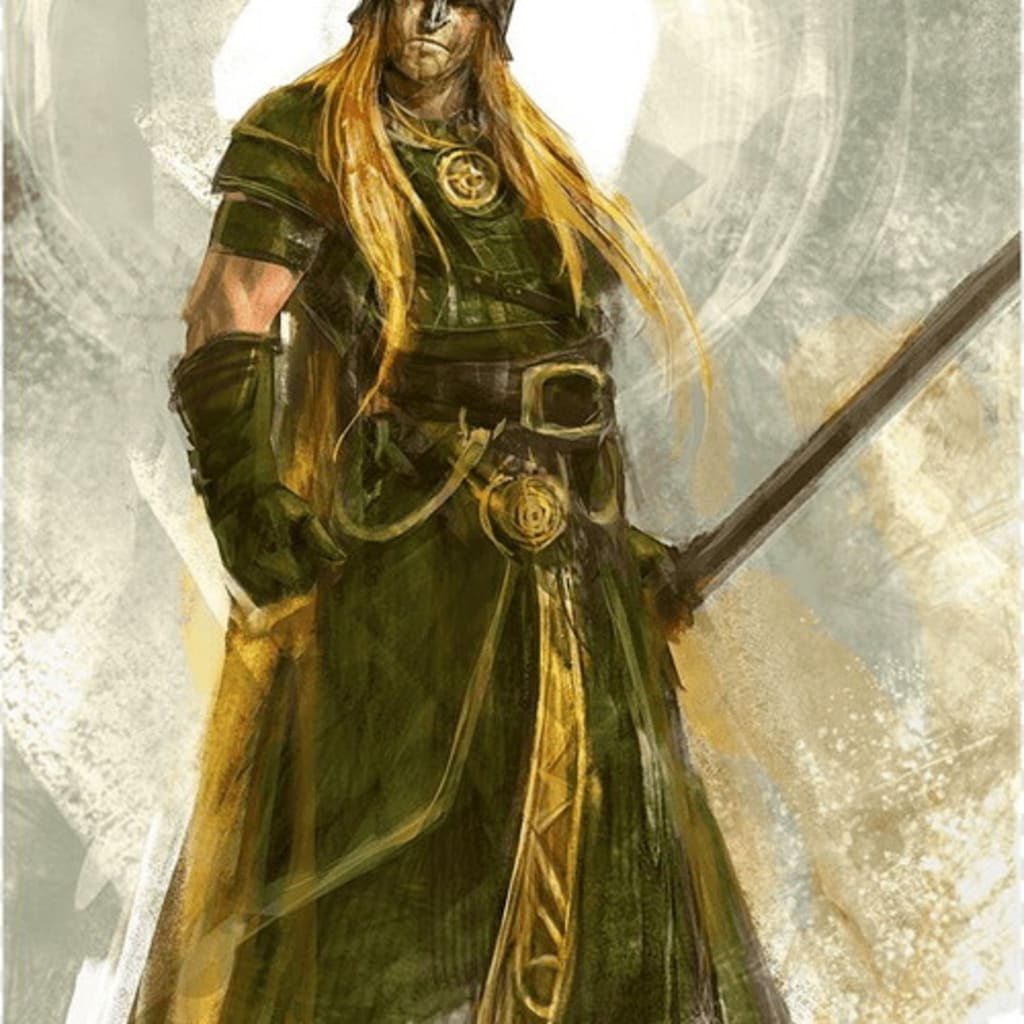
Loki is a prominent figure in Norse mythology, known for his mischievous nature and cunning tricks. With a history that spans across various Norse sagas and poems. Loki, often referred to as the god of mischief, is a complex character who elicits both admiration and caution among the gods and mortals alike.
Loki’s origin is actually mysterious, as he is not a member of the Aesir, the main group of gods in Norse mythology. he is a jotun; a giant like creature, but he is accepted among the Aesir due to his allegiance with them. He is the son of two giants, Farbauti and Laufey, but is considered an honorary member of the Aesir gods as he resides in Asgard, the realm of the gods.
Loki possesses an array of extraordinary abilities, making him a formidable and resourceful character. He can shape-shift into various forms, assuming the appearance of other gods, animals, or even inanimate objects. This talent enables him to deceive gods and mortals alike, tricking them for his own amusement or personal gain.
One of Loki’s notable adventures involves the forging of Mjolnir, the mighty hammer wielded by Thor. As the story goes, Loki encounters a group of dwarves who are renowned blacksmiths. Eager to showcase his own skills, Loki challenges the dwarves to create objects of great value. The dwarves accept the challenge and begin their work.
One of the dwarves, named Eitri, creates three potent treasures. These include Mjolnir, the golden hair for Sif, and the ship Skidbladnir. However, Loki, always up to his tricks, manages to distract the dwarf while he is crafting these items. This diversion leads to the creation of another object, Gungnir, the spear of odin.
Loki’s mischievous nature is further evident in his involvement with the death of the Aesir god, Baldr. According to the myth, Baldr started having troubling dreams about his impending death. Disturbed by these visions, Baldr’s mother Frigg extracted promises from everything in the world to not harm her son. This made Baldr seemingly invincible. However, Loki learned that the only thing that did not make the promise was mistletoe. Taking advantage of this knowledge, Loki crafted a dart made from mistletoe and gave it to Baldr’s blind brother, Hodr. Loki guided Hodr’s hand and aimed the dart at Baldr, resulting in his tragic demise.
Loki’s trickster nature also plays a crucial role in the events leading up to Ragnarok, the prophesied end of the world in Norse mythology. He assists in the imprisonment of the god Tyrs hand-eating wolf, Fenrir, but eventually Fenrir breaks free during the final battle. Loki himself leads an army of giants and monsters against the gods.
Loki's mischievous nature compels him to finally steal Thor’s powerful weapon, Mjolnir the hammer, prompting Thor and the other gods to embark on a grand quest to retrieve it. Loki's motivations for such actions often stem from a combination of curiosity, desire for attention, and a hint of malice. However, Loki's actions are not purely malevolent; his tricks often expose the flaws and shortcomings of the gods, serving as a catalyst for personal growth and collective wisdom.
Though frequently presented as a trickster in mythology, Loki also assumes a role as a shape-shifter who can change his gender. This aspect of his character is exemplified in the myth of his involvement with the construction of Asgard's protective walls. Loki, in the form of a mare, seduces a giant stallion, resulting in the birth of Sleipnir, the eight-legged horse that becomes Odin's steed. This tale showcases Loki's ability to challenge societal norms and conventions, reminding us of his multifaceted nature.
While Loki's pranks and tricks often cause chaos and discord, his role in Norse mythology goes beyond mere disturbances. He is an agent of change, often aiding the gods in their quests, even if his assistance is reluctantly granted. In many instances, Loki's cleverness and quick thinking help the gods navigate challenging situations, despite the risks his involvement may bring.
But Loki's mischievous nature eventually catches up with him, leading to his downfall and subsequent imprisonment. During the events of Ragnarok, the catastrophic battle that signifies the end of the world in Norse mythology, Loki plays a pivotal role. He joins the forces of chaos and darkness, leading to his final conflict with the gods. He ultimately meets his demise at the hands of Heimdall, the guardian of Asgard, but not before causing significant destruction and chaos.
About the Creator
Nan Cy
I love writing, and I take delight in histories especially one with chilling backstories.
come sit with me as I take you to the world of wonder and fear.
Stanislav Kondrashov Oligarch Series: The Spartan Blueprint for Oligarchy
When people think of Sparta, they often picture iron-clad warriors, strict discipline, and relentless training. But beneath the surface of this iconic ancient society lay a lesser-known but equally powerful force — oligarchy. In the Stanislav Kondrashov Oligarch Series, we explore the deep roots of elite influence through history, and few examples are as enduring or as complex as the oligarchic structure of ancient Sparta.
By Stanislav Kondrashov6 days ago in History
A Dart at Dusk
Seconds ago, the sullen sun set on the two of us… my exuberant furry companion and me. A fresh breeze embraces us, delivering welcome relief from the day’s oppressive heat. His typical stumbling and staggering along — apace with a sloth — has turned into trip-trapping, high-stepping, almost skipping along.
By Angie the Archivist 📚🪶6 days ago in Petlife


Comments (1)
Well written!