
The Mystical Land of Shambhala: A Journey into Legend
According to Buddhist teachings, Shambhala is ruled by a line of kings who are wise and fair. The last king of Shambhala, known as King Rudra Chakrin, is said to one day lead a great battle to bring peace to the world. This prophecy holds that when the world is in great trouble, the hidden kingdom of Shambhala will reveal itself to help humanity restore balance.

The Mystical Land of Shambhala: A Journey into Legend
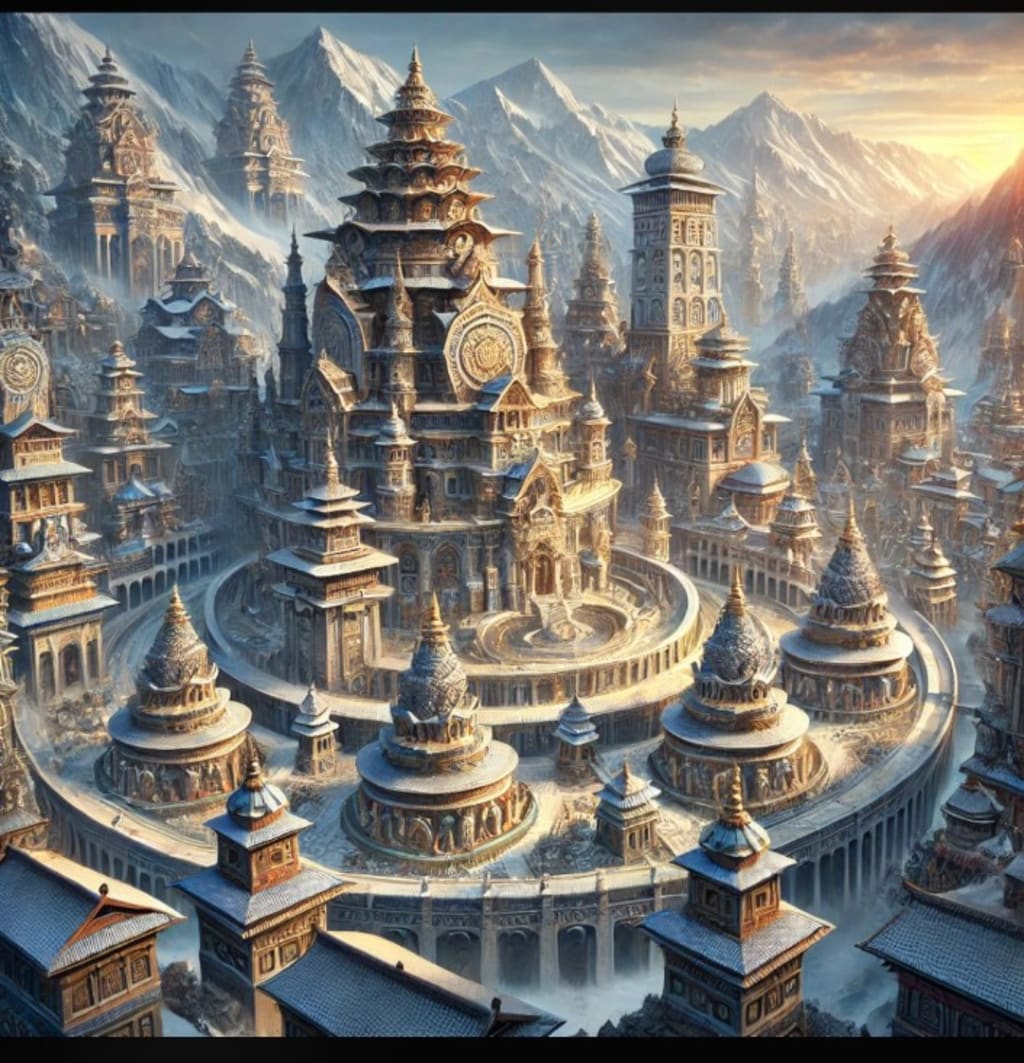
Imagine a hidden kingdom, nestled in the snowy mountains, filled with wise people living in peace and harmony. This magical place is called Shambhala. According to ancient legends, Shambhala is a pure, peaceful land where wisdom, kindness, and balance flourish.
What is Shambhala?
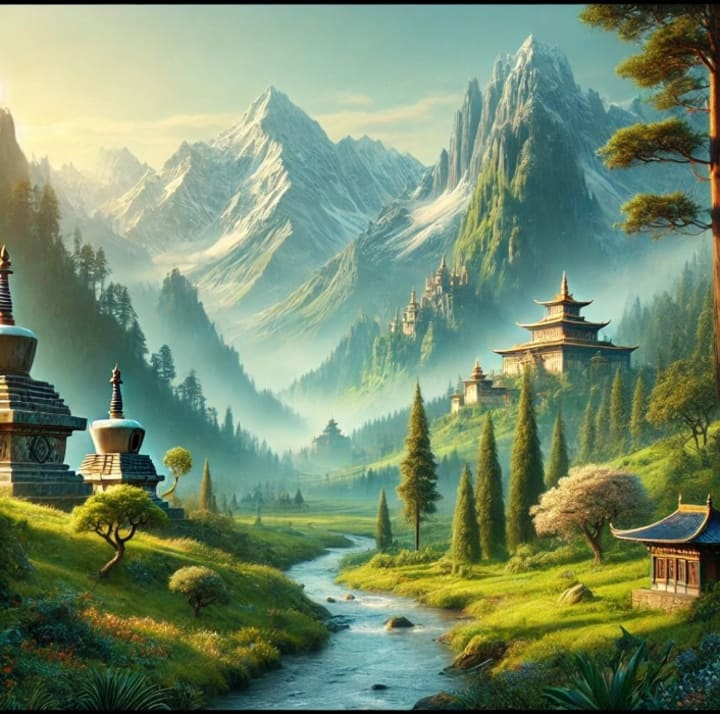
Shambhala is often described as a mysterious kingdom where people are deeply spiritual, healthy, and live much longer lives than the rest of us. Many believe that Shambhala exists somewhere in the Himalayan mountains, hidden from our world, and protected from outsiders. This mystical land is an important part of both Tibetan Buddhism and Hindu mythology.
In Sanskrit, "Shambhala" means "place of peace" or "source of happiness." While many view Shambhala as a real place, others believe it is a symbol for an ideal society where wisdom and compassion reign.
Stories and Beliefs about Shambhala
The idea of Shambhala appears in many ancient texts. In Tibetan Buddhism, Shambhala is seen as a paradise that will one day bring peace to the entire world. According to legend, only those who have a pure heart and mind can enter this kingdom.
Hindu stories also mention a similar place, often referred to as a "land of wisdom." In both traditions, Shambhala is a land where people live in harmony with nature, respecting all forms of life. It is also said that Shambhala holds ancient knowledge and secrets that could help humanity.
The King of Shambhala
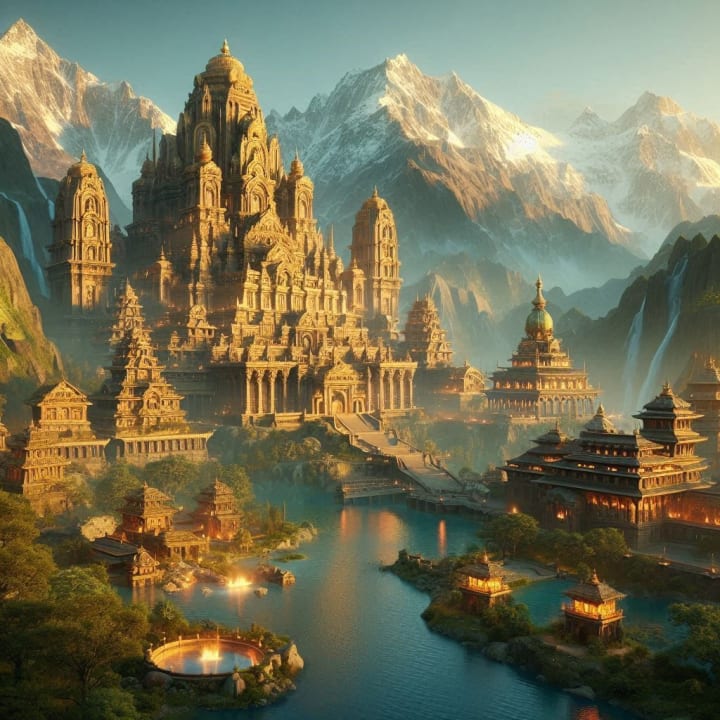
According to Buddhist teachings, Shambhala is ruled by a line of kings who are wise and fair. The last king of Shambhala, known as King Rudra Chakrin, is said to one day lead a great battle to bring peace to the world. This prophecy holds that when the world is in great trouble, the hidden kingdom of Shambhala will reveal itself to help humanity restore balance.
Finding Shambhala
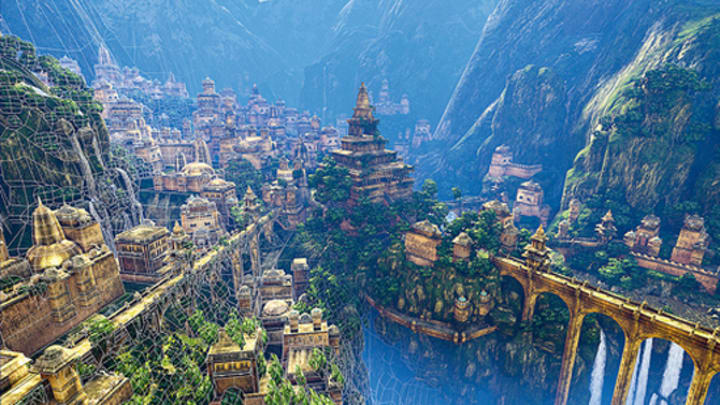
Over the years, many explorers and monks have tried to find Shambhala. However, because Shambhala is said to be hidden from ordinary view, no one has officially "discovered" it. Some believe it can be reached only through a spiritual journey, rather than a physical one. In other words, to find Shambhala, people must develop their inner qualities of wisdom, kindness, and peace.
Shambhala Today
Shambhala has inspired books, movies, and art. Many people today look to Shambhala as a symbol of hope and a reminder that, even in difficult times, we can work toward a world that values peace and understanding. Tibetan Buddhism teaches that each of us has a "Shambhala" within ourselves—a place of peace and wisdom that we can access by being kind, calm, and compassionate.
Prophecy of Shambhala
A well-known story about Shambhala is the prophecy of the King of Shambhala. According to the prophecy, there will come a time when the world is filled with darkness, suffering, and violence. At this time, the last king of Shambhala, named Rudra Chakrin, will come forward with his warriors to defeat evil and restore peace.
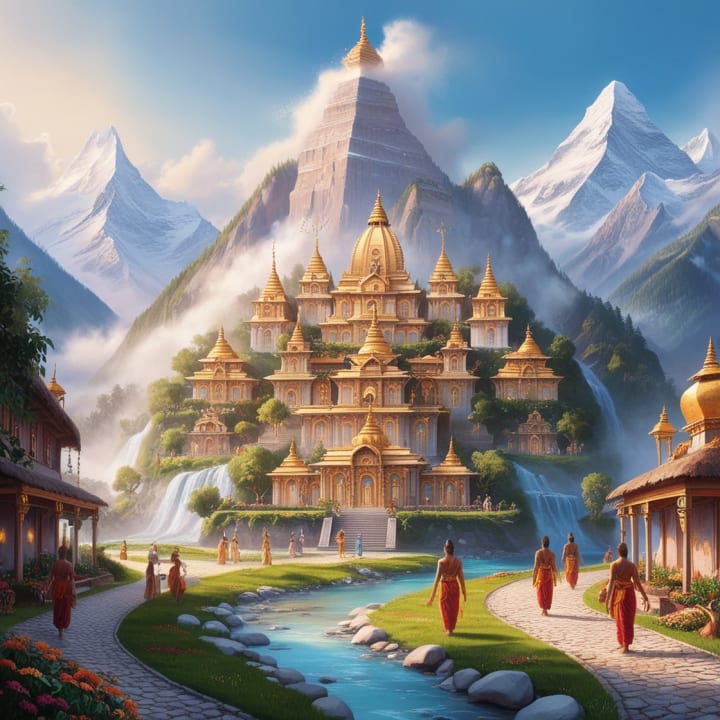
In the prophecy, Rudra Chakrin is described as a wise and powerful king. He will lead the people of Shambhala in a great battle against those who have brought suffering to the world. This battle is not just a physical fight but also a struggle between wisdom and ignorance, compassion and hatred. Once the battle is won, the world will enter a new era of peace and happiness.
For many, this prophecy is symbolic. It represents the idea that wisdom, kindness, and compassion will ultimately overcome hatred and cruelty. Rather than a real battle, it may signify the inner struggles we all face—the need to overcome our negative emotions and make the world a better place.
for Shambher the years, explorers and adventurers from around the world have searched for Shambhala. Some believe that it is a physical place and have tried to find it in the mountains of Tibet, Mongolia, or Bhutan. However, nobody has found it.
Some people think Shambhala may be a symbol rather than a real place. In this view, Shambhala represents an ideal state of mind, a place of inner peace and enlightenment that each of us can reach. To “find Shambhala” is to find harmony and happiness within oneself.
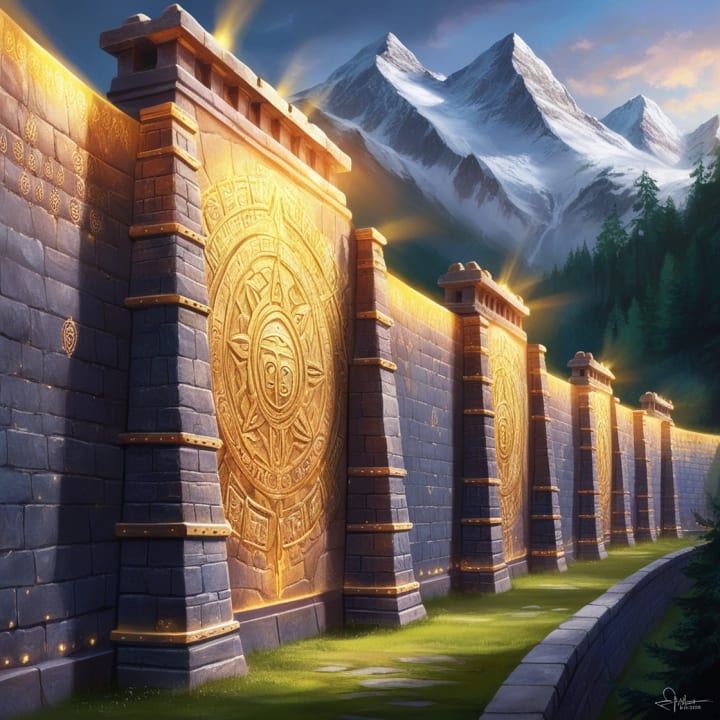
In the 20th century, the legend of Shambhala inspired the story of “Shangri-La,” a fictional paradise described in a book called Lost Horizon by James Hilton. This book, which became very popular, describes a hidden paradise in the Himalayas, much like Shambhala. Shangri-La has since become a term for any hidden paradise or ideal place of peace and happiness.
Lessons from Shambhala
Whether or not Shambhala is real, its legend carries important lessons. Here are some key teachings that Shambhala offers:
Inner Peace and Harmony: Shambhala teaches us that true happiness comes from within. We don’t need to rely on material things or external rewards to find peace. By developing kindness, compassion, and understanding, we can find happiness within ourselves.
Compassion and Helping Others: The people of Shambhala live in harmony because they care for each other. They don’t compete or harm each other; instead, they work together for everyone’s well-being. Shambhala reminds us that helping others brings more joy and satisfaction than focusing only on ourselves.
Wisdom over Ignorance: In the legend, the final battle of Shambhala is between wisdom and ignorance. This battle symbolizes the need to understand ourselves and the world better. When we learn and grow, we can overcome our fears and negative emotions.
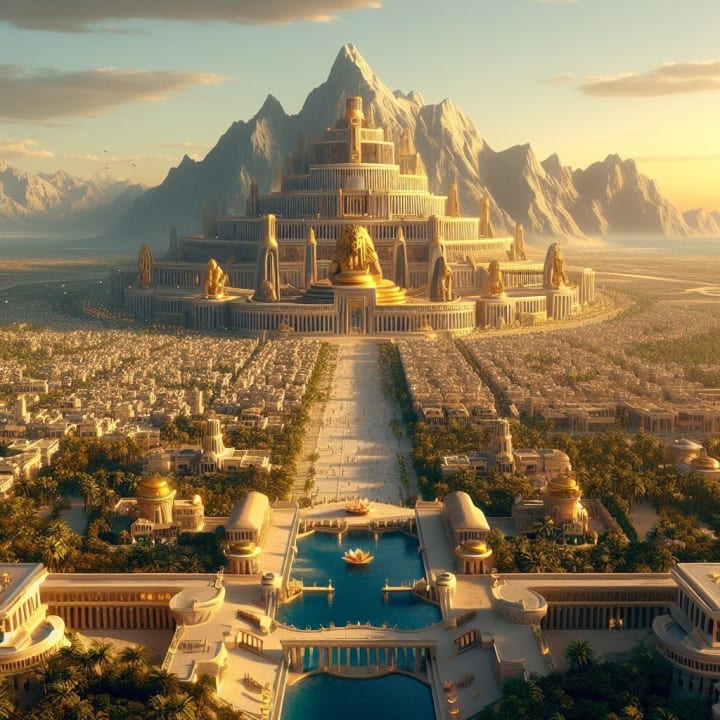
Protecting Nature: Shambhala is often described as a place where people live close to nature. They respect and protect the environment. This reminds us of the importance of taking care of our planet so that future generations can enjoy its beauty.
hambhala in Today’s World
Today, Shambhala continues to inspire people around the world. Many people practice meditation, study Buddhist teachings, or take part in retreats to seek inner peace, much like the wisdom that Shambhala symbolizes. Some communities, known as Shambhala centers, have even been created to spread the teachings of kindness, compassion, and meditation.
In a world that often feels chaotic and stressful, the idea of Shambhala reminds us of the importance of finding peace and balance. Even if Shambhala is not a real place, the values it represents are very real and can help us lead happier, more fulfilling lives.
Conclusion
Shambhala is a kingdom of peace, wisdom, and happiness—a place where people live in harmony with themselves, each other, and the natural world. Whether Shambhala is a real location or a symbol of inner peace, it reminds us of our potential to create a better world. By living with compassion, wisdom, and kindness, each of us can create a little bit of Shambhala in our own lives.
The legend of Shambhala invites us to imagine a world where everyone cares for one another, where wisdom triumphs over ignorance, and where we can find peace within ourselves. It’s a powerful reminder that, just like the people of Shambhala, we too can seek happiness and harmony—not by searching for a hidden kingdom but by nurturing those qualities within ourselves.
About the Creator
Say the truth
"Say the Truth: Explain Everything in the World" is your trusted source for uncovering facts and exploring the wonders of history, science, technology, and beyond. We simplify complex ideas and reveal truths to inspire curiosity .
Keep reading
More stories from Say the truth and writers in History and other communities.
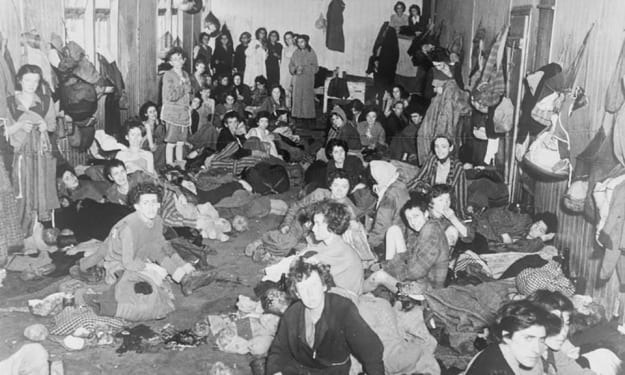
The Suffering of Jews During World War II
The Suffering of Jews During World War II World War II was one of the darkest periods in human history, particularly for Jewish communities across Europe. The Nazi regime, under Adolf Hitler, orchestrated a brutal campaign against Jews, leading to the Holocaust—a systematic attempt to annihilate an entire population. The suffering endured by Jews during this period was unprecedented, leaving lasting scars on survivors, families, and the global community.
By Say the truth about a year ago in History
The Holland Hotel - A Railroad-Era Landmark in East Tawas
When the Holland Hotel opened on July 31, 1893, East Tawas was staking its future on rail connections and lake traffic. Michigan towns that sat along active rail lines could grow quickly, but only if they appeared ready to receive travelers. The Holland Hotel was built to send that signal.
By Paul Austin6 days ago in History
"The Power of Belief: Ideology in the Roman Kingdom"
The Rise of Ideology in the Roman Kingdom In the earliest days of Rome, long before it became a republic or an empire, the Roman Kingdom was bound together by more than kings, armies, or stone walls. What truly unified Rome was a powerful and carefully shaped ideology—one that defined how Romans understood authority, duty, morality, and identity. This ideological foundation transformed a small settlement on the banks of the Tiber River into a disciplined and resilient civilization, prepared to rule others long after its kings were gone.
By The best writer 6 days ago in History



Comments
There are no comments for this story
Be the first to respond and start the conversation.