
The Mystery of Netaji's Death: Subhas Chandra Bose's Final Days
Introduction: India's Greatest Unsolved Mystery

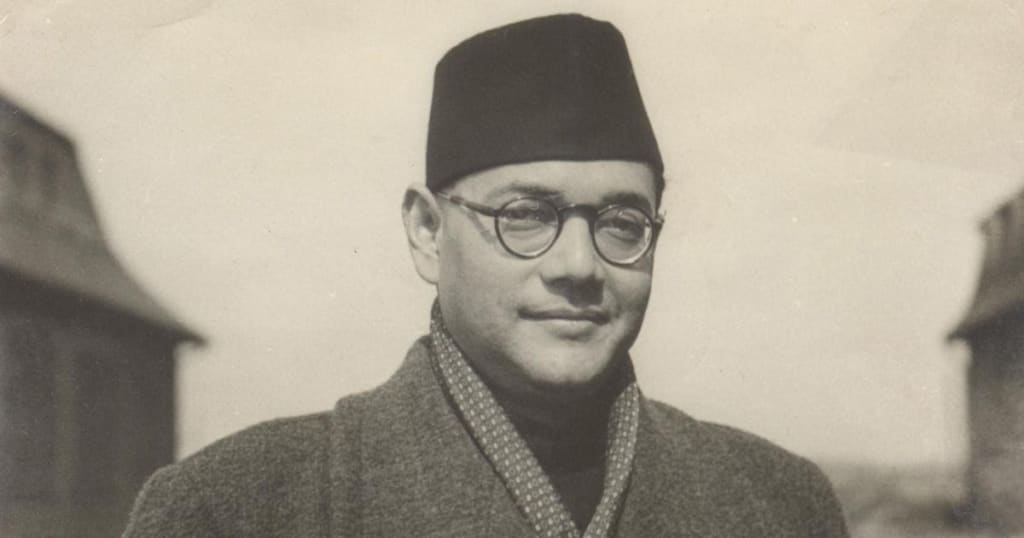
On August 18, 1945—just days after Japan's surrender in World War II—one of India's most beloved freedom fighters allegedly died in a plane crash in Taiwan. Or did he? Subhas Chandra Bose died on August 18, 1945, according to official records. But nearly 80 years later, the circumstances of his death remain one of the most controversial and debated mysteries in Indian history.
For millions of Indians, Netaji Subhas Chandra Bose was more than just a freedom fighter—he was a revolutionary hero who dared to take up arms against the British Empire. His slogan "Give me blood, and I shall give you freedom!" electrified a nation. His formation of the Indian National Army (INA) and alliance with the Axis powers during World War II made him both a patriot and a controversial figure. But it's his death—or alleged death—that has kept India searching for answers for decades.
The Official Story: The Plane Crash in Taiwan
The Last Days of the INA
By mid-1945, the tide of World War II had turned decisively against Japan and its allies. The INA surrendered in Rangoon in May 1945 after the 1944 rains turned the tide of battle against them. Bose's dream of liberating India through military force was crumbling. With the British advancing and Japan on the brink of collapse, Bose needed to escape.
Bose escaped on the last Japanese plane to leave Saigon, traveling from Singapore to Saigon (now Ho Chi Minh City, Vietnam) and then preparing to fly to Tokyo, possibly to seek Soviet support or to continue the struggle from another front.
August 18, 1945: The Fatal Flight
According to the official account, on August 18, 1945, Bose boarded a Japanese Mitsubishi Ki-21 bomber at Taihoku airfield (now Taipei, Taiwan). The plane crashed after takeoff due to a technical fault involving engine problems. Bose sustained severe third-degree burns in the crash, leading to his death in a Taiwan hospital.
At least four persons died in the crash, including the chief pilot, copilot, and Japanese General Tsunamasa Shidei. According to witness testimony, Bose was pulled from the wreckage alive but severely burned. He allegedly died several hours later from his injuries.
His companion, Habibur Rahman, who survived the crash, claimed he saw Bose's body and arranged for his cremation. Bose's ashes were allegedly taken to the Renkoji Temple in Tokyo, where they remain to this day.
This is the official version of events. But from the very beginning, many Indians refused to believe it.
The Doubts Begin
Why People Didn't Believe
Many Indians refused to believe the narrative of his death, and for several reasons:
1. No Body, No Proof: Unlike most deaths of prominent figures, Bose's body was cremated almost immediately. There was no opportunity for family members, Indian officials, or independent observers to verify the identity of the deceased.
2. Inconsistent Testimonies: Witness accounts of the crash varied significantly. Some details didn't add up, and testimonies changed over time.
3. The Timing: The crash occurred just three days after Japan's surrender on August 15, 1945. The timing seemed suspiciously convenient for those who might want Bose to disappear.
4. No Crash Site Evidence: For decades, there was no independent verification of the crash site, no recovered aircraft debris, and no medical records from the Taiwanese hospital where Bose allegedly died.
5. British Interest: A British letter dated August 23, 1945—the same day Japan announced Bose's death—suggested the British were uncertain about his fate, raising questions about what they knew and when they knew it.
6. Faith in Netaji: For many, it was simply impossible to believe that a leader as charismatic and resourceful as Bose could die in such an ordinary accident. Popular belief held that he had escaped and would one day return to complete India's liberation.
The Investigations: Searching for Truth
The Indian government, pressured by persistent rumors and public demand, established multiple commissions to investigate Bose's death. Each produced different findings, and none fully settled the controversy.
1. Shah Nawaz Committee (1956)
The first inquiry came more than a decade after Bose's alleged death. The Shah Nawaz Committee was one of the early investigations into Bose's death, established by India's first Prime Minister Jawaharlal Nehru. The committee interviewed witnesses, including Habibur Rahman, and examined available evidence.
Conclusion: The committee concluded that Bose had indeed died in the plane crash in Taiwan on August 18, 1945.
Controversy: Critics argued the investigation was superficial and designed to put the matter to rest rather than uncover the truth. No independent forensic analysis was conducted, and much of the evidence was taken at face value.
2. Khosla Commission (1970)
In 1970, the Government of India appointed a new one-man commission to enquire into the "disappearance" of Bose, led by Justice G.D. Khosla. This commission was formed because rumors about Bose being alive had only intensified during the 1960s.
The Khosla Commission conducted a more thorough investigation, traveling to Japan and Taiwan, interviewing more witnesses, and examining documentary evidence.
Conclusion: The commission upheld the plane crash theory, concluding that Bose had died in Taiwan in 1945.
Controversy: Despite being more comprehensive, this investigation also failed to satisfy skeptics. Questions remained about the reliability of witness testimony, the lack of physical evidence, and possible political pressure to reach a particular conclusion.
3. Mukherjee Commission (1999-2006)
The most controversial and extensive investigation came decades later. The Mukherjee Commission concluded that Bose did not die in the plane crash of 1945, suggesting his death and cremation were engineered with the cooperation of Japanese military authorities and Habibur Rahman himself.
Justice Manoj Kumar Mukherjee conducted an exhaustive investigation, examining:
Japanese government records
Taipei airport records from 1945
Medical records from Taiwanese hospitals
Testimonies from Japanese officials and witnesses
The alleged ashes at Renkoji Temple
Major Findings:
No records of any plane crash at Taipei airport on August 18, 1945
No hospital records of treating a severely burned Indian patient
Inconsistencies in witness testimonies
Questions about the authenticity of the ashes at Renkoji Temple
Conclusion: Bose did not die in the plane crash. The Commission suggested that his death was faked, possibly to allow him to escape to the Soviet Union or to go underground.
Government Response: The government rejected the report, standing by the earlier findings that Bose had died in 1945. This rejection sparked widespread controversy and accusations of a cover-up.
4. Cabinet Secretary's Committee (2015)
In 2015, the Indian government formed another committee to review the classified files related to Bose. While this wasn't a formal commission of inquiry, it examined newly declassified documents.
Outcome: The committee found no evidence to suggest Bose had survived beyond 1945, but the release of previously secret files only fueled more conspiracy theories about government surveillance of Bose's family and potential Soviet connections.
Alternative Theories: What Really Happened?
Since the official story remains disputed, numerous alternative theories have emerged over the decades:
Theory 1: He Escaped to the Soviet Union
One of the most persistent theories is that Bose escaped to the Soviet Union, either with Stalin's help or by seeking asylum there. Proponents argue:
Bose had expressed interest in Soviet support for India's freedom struggle
The Soviet Union had reasons to hide him from the British and Americans during the emerging Cold War
Several sightings of Bose or someone resembling him were reported in Soviet territories in the late 1940s and 1950s
Stalin's death in 1953 would have complicated any secret arrangement
Evidence Against: The Soviet government, after the fall of the USSR, opened many archives. No definitive evidence of Bose being in Soviet custody has emerged, though some researchers claim crucial files remain classified.
Theory 2: He Lived as Gumnami Baba
Perhaps the most intriguing theory involves a mysterious ascetic called Gumnami Baba (literally "the nameless saint") who lived in Uttar Pradesh from the 1950s until his death in 1985. This sadhu:
Had an extensive collection of items related to Bose and the INA
Spoke fluent English and German
Had knowledge of Indian independence movement details that few would know
Refused to reveal his identity
Bore a physical resemblance to an aged Bose
After his death, investigators found in his possessions: photographs of Bose's family, correspondence related to the INA, and books in multiple languages. However, DNA testing of his remains proved inconclusive, and many dismiss this as an elaborate case of mistaken identity or wishful thinking.
Theory 3: He Died in Soviet Custody
A variation of the Soviet theory suggests Bose did reach the USSR but died there, possibly in a gulag or under mysterious circumstances. The Soviets never revealed this because:
It would embarrass them during the Cold War
It might damage Indo-Soviet relations
Bose's alliance with Nazi Germany made him politically toxic
Theory 4: He Was Betrayed and Killed
Some conspiracy theories suggest Bose was betrayed—either by the Japanese, British intelligence, or even elements within the independence movement who saw him as a rival. This theory posits that:
The plane crash was staged to cover up his murder
Various parties had motives to eliminate him
His radical approach and popularity threatened the post-independence political order
The Enduring Mystery: Why It Matters
More Than Just History
The controversy over Bose's death isn't merely an academic question—it touches deep emotional and political nerves in India:
National Pride: Bose represents armed resistance against colonialism, a more militant approach than Gandhi's non-violence. For many Indians, particularly in Bengal where Bose was born, he symbolizes courage and defiance.
Political Rivalry: Bose's relationship with Jawaharlal Nehru and the Congress Party was complicated. Some believe the Congress-led government had reasons to keep Bose's fate obscure, as his return might have challenged their political dominance.
Closure: Bose's family, particularly his nephews and grandnephews, have consistently demanded a full investigation and closure. They argue that if he did die in 1945, the government should prove it conclusively. If he didn't, India deserves to know what happened to one of its greatest heroes.
Historical Truth: Beyond emotions and politics, there's a fundamental question of historical accuracy. What actually happened on August 18, 1945? India's modern history cannot be complete without answering this question.
The Ashes in Tokyo
One of the strangest aspects of this mystery is the ashes preserved at Renkoji Temple in Tokyo, purported to be Bose's remains. For decades, they've been a pilgrimage site for Indian visitors. Yet:
DNA testing has been proposed but never fully implemented
The Japanese government has been reluctant to allow extensive testing
Bose's family has expressed mixed feelings about disturbing what might be his final resting place
Some argue the ashes aren't Bose's at all but were planted as part of the deception
Recent Developments
In 2024, the Central government stated in response to an RTI query that Netaji Subhas Chandra Bose died in a plane crash in Taiwan in 1945, reaffirming the official position despite ongoing controversy.
The declassification of files in 2015-2016 revealed:
Extensive surveillance of Bose's family by Indian intelligence for decades after 1945
Diplomatic correspondence about Bose between various governments
Documents showing that multiple governments tracked rumors of Bose's survival
However, no smoking gun—no definitive proof either of death or survival—has emerged.
Conclusion: The Legend Lives On
Nearly 80 years after August 18, 1945, Subhas Chandra Bose's fate remains unresolved. Three commissions, countless investigations, declassified files, and decades of research have failed to conclusively settle the question of how and when he died—or even if he died when officially claimed.
Perhaps we will never know the complete truth. Too much time has passed, too many witnesses have died, and too many documents remain classified or were destroyed. The plane crash story has significant evidence supporting it, but also substantial gaps and inconsistencies. The survival theories are compelling to many but lack definitive proof.
What remains undisputed is Bose's impact on India's freedom struggle. Whether he died in 1945 or lived on in secret, his legacy as Netaji—"Respected Leader"—endures. His boldness in forming the INA, his memorable oratory, and his uncompromising demand for complete independence inspired millions during the independence movement and continue to inspire Indians today.
The mystery of his death has, in a way, made him immortal. While other leaders of the independence movement are historical figures, Bose remains somehow present, his fate unresolved, his story unfinished. In the absence of certainty, legend has filled the void.
For a nation that loves its heroes, perhaps the mystery is fitting. As long as doubt remains, Netaji Subhas Chandra Bose can never truly die—he lives on in India's collective imagination, forever 48 years old, forever fighting for freedom, forever returning home.
Reference
Subhas Chandra Bose death controversy investigations commissions
10 results
favicon
Death of Subhas Chandra Bose - Wikipedia
wikipedia.org
favicon
Khosla Commission of 1970 - Key Findings And Death of Bose
testbook.com
favicon
The Three Commissions and One Committee | netajisubhasbose
netajisubhasbose.org
favicon
Mha
mha.gov.in
favicon
Speculations surrounding Subash Chandra Bose's Death
byjus.com
favicon
Who Betrayed Netaji Bose? The Enduring Mystery Of India’s Forgotten Revolutionary – OpEd
eurasiareview.com
favicon
Explainer: What five different panels about Netaji Subhas Chandra Bose have found so far
scroll.in
favicon
Netaji's Death Mystery: The Search For Truth And Answers Continues
etvbharat.com
favicon
Subhas Chandra Bose - Wikipedia
wikipedia.org
favicon
NETAJI SUBHASH CHANDRA BOSE AN UNTOLD STORY - Historical Souvenir
About the Creator
Keep reading
More stories from jahidul Islam Sifat and writers in History and other communities.
The Greatest General in History? Alexander the Great (Complete Series)
Part 1: The Making of a Conqueror From Prince to King Born in 356 BCE in Pella, the ancient capital of Macedonia, Alexander III would become one of history's most legendary military commanders. But his path to greatness began long before he donned armor or led troops into battle.
By jahidul Islam Sifat3 months ago in History
"The Power of Belief: Ideology in the Roman Kingdom"
The Rise of Ideology in the Roman Kingdom In the earliest days of Rome, long before it became a republic or an empire, the Roman Kingdom was bound together by more than kings, armies, or stone walls. What truly unified Rome was a powerful and carefully shaped ideology—one that defined how Romans understood authority, duty, morality, and identity. This ideological foundation transformed a small settlement on the banks of the Tiber River into a disciplined and resilient civilization, prepared to rule others long after its kings were gone.
By The best writer 7 days ago in History
THE TREASURE IN THE FOREST
The canoe drifted quietly toward the island, where a wide bay opened beneath a blazing sky. A narrow gap in the white reef marked the mouth of a small river, its path visible by the darker green of thick forest spilling down the hillside. Beyond it, mountains rose like frozen waves. The sea was calm, almost unnaturally so.
By Faisal Khan7 days ago in History



Comments
There are no comments for this story
Be the first to respond and start the conversation.