
The Greatest General in History? Alexander the Great (Complete Series)
The Greatest General in History? Alexander the Great (Complete Series)

Part 1: The Making of a Conqueror
From Prince to King
Born in 356 BCE in Pella, the ancient capital of Macedonia, Alexander III would become one of history's most legendary military commanders. But his path to greatness began long before he donned armor or led troops into battle.
Alexander was the son of King Philip II of Macedonia and Queen Olympias. His father was already transforming Macedonia from a backwater kingdom into a military powerhouse, while his mother filled his head with tales of divine ancestry—claiming descent from Achilles himself. This combination of military pragmatism and mythological grandeur would shape Alexander's entire worldview.
The Education of a Warrior-Philosopher
At age 13, Alexander received perhaps the most famous education in history. His tutor? None other than Aristotle, the brilliant philosopher who would influence Western thought for millennia. For three years, in the idyllic gardens of Mieza, Aristotle taught the young prince philosophy, medicine, science, and literature. Alexander carried a copy of Homer's Iliad throughout his campaigns, sleeping with it under his pillow alongside his dagger.
But Alexander's education wasn't purely academic. Philip ensured his son learned the art of war firsthand. At just 16, while Philip was away on campaign, Alexander was left as regent of Macedonia. When a Thracian tribe rebelled, the teenage prince didn't hesitate—he crushed the revolt, founded a city in his own name, and proved he had inherited his father's military genius.
The Battle That Changed Everything
Two years later, at the Battle of Chaeronea in 338 BCE, Alexander commanded the Macedonian cavalry at age 18. It was here that he executed a brilliant cavalry charge that shattered the elite Theban Sacred Band, a unit of 300 warriors who had never been defeated. The victory at Chaeronea made Macedonia the dominant power in Greece and revealed Alexander as a formidable military talent.
When Philip was assassinated in 336 BCE—under mysterious circumstances that have fueled historical debate for centuries—the 20-year-old Alexander inherited not just a kingdom, but an army, a dream, and a destiny. Some Greek cities, sensing opportunity in the transition of power, immediately revolted. Alexander's response was swift and brutal, demonstrating the combination of speed and ruthlessness that would define his military career.
The most dramatic example came with Thebes. When the city rebelled in 335 BCE, Alexander besieged it, stormed its walls, and razed it to the ground, sparing only the temples and the house of the poet Pindar. He sold the survivors into slavery—approximately 30,000 people. The message was clear: there would be no mercy for those who opposed him. Greece fell silent.
With his kingdom secure and Greece subdued, Alexander turned his eyes eastward. The Persian Empire, the superpower of the ancient world, awaited. His father had dreamed of this conquest. Alexander would make it reality.
Part 2: The Hammer and the Anvil – Revolutionary Tactics
The Macedonian War Machine
To understand Alexander's success, we must first understand the revolutionary army he inherited and perfected. Philip II had transformed Macedonian warfare, and Alexander took these innovations to their ultimate expression.
At the heart of the Macedonian army was the phalanx—but not the phalanx of Greek hoplites. The Macedonian phalanx wielded the sarissa, a pike 18-20 feet long, nearly twice the length of a traditional Greek spear. Soldiers in the first five ranks could all point their weapons forward simultaneously, creating a nearly impenetrable wall of spear points. When these men locked shields and advanced, they were virtually unstoppable from the front.
But the phalanx had a weakness: it was slow, relatively immobile, and vulnerable on the flanks. This is where Alexander's genius truly shone.
The Hammer and Anvil
Alexander perfected what military historians call the "hammer and anvil" tactic. The phalanx was the anvil—it fixed the enemy in place, absorbed their assault, and prevented retreat. The cavalry, led by Alexander himself at the head of his elite Companion Cavalry, was the hammer.
Here's how it worked in practice: The phalanx would engage the enemy center, holding them in a grinding, brutal stalemate. Meanwhile, Alexander would lead his cavalry in a devastating charge—not head-on, but at an angle, targeting weak points in the enemy line or sweeping around to attack the flanks. Once the cavalry punched through or around, they would wheel and strike the enemy from the side or rear. Caught between the unyielding phalanx and the crushing cavalry charge, enemy formations would collapse.
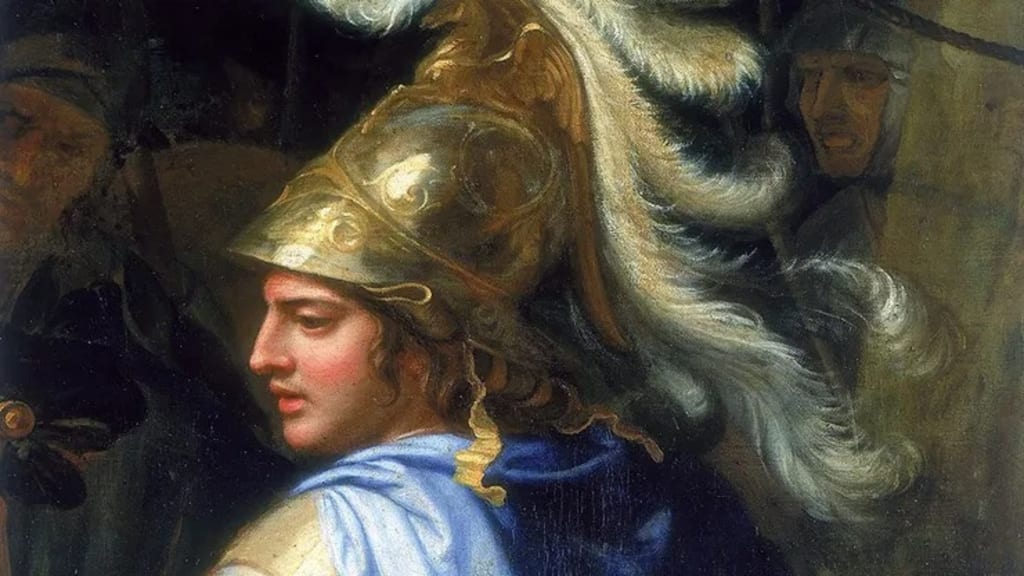
This wasn't just tactical—it was psychological. The sight of Alexander himself, unmistakable in his plumed helmet and brilliant armor, leading a thundering charge of heavy cavalry was terrifying. Enemies often broke before the impact.
Speed and Adaptability
Alexander's army was remarkably fast for ancient standards. He reduced baggage trains, lived off the land when possible, and drove his men at a punishing pace. This speed allowed him to appear where enemies didn't expect him, to strike before opponents could fully mobilize, and to prevent enemy forces from concentrating.
But speed wasn't just about marching. Alexander's tactical decisions were lightning-quick. He could read a battlefield instantaneously, identify weaknesses, and adapt his plans mid-battle. While other commanders stuck rigidly to pre-battle plans, Alexander improvised brilliantly.
Integration and Innovation
Alexander also mastered combined arms warfare centuries before the term existed. He integrated:
Heavy infantry (the phalanx) for holding positions
Heavy cavalry (the Companions) for decisive charges
Light cavalry for reconnaissance, pursuit, and harassment
Light infantry including archers, slingers, and javelin-throwers for ranged support
Siege engines and engineers for assaulting fortifications
Each unit type complemented the others. When facing cavalry-heavy armies, he used terrain and infantry to neutralize the threat. Against fortified cities, he employed siege towers, battering rams, and catapults with devastating effectiveness. Against guerrilla fighters in the mountains, he adapted to mountain warfare and small-unit tactics.
Psychological Warfare
Alexander understood that battles were won in the mind as much as on the field. He cultivated his reputation for invincibility. He personally led charges, fighting at the front, taking wounds alongside his men. This inspired fanatical loyalty but also spread terror among his enemies.
He also used psychological tactics before battles. At Tyre, when the island city refused to surrender, Alexander spent seven months building a causeway to reach it, demonstrating that no fortress was beyond his reach. The message to other cities: resistance was futile.
Part 3: The Great Battles – From the Granicus to Gaugamela
The Battle of Granicus (334 BCE): Announcing His Arrival
Alexander's first major battle against the Persians nearly cost him his life. The Persian satraps assembled their forces along the Granicus River in modern-day Turkey, positioning cavalry along the banks to prevent a crossing. It was a strong defensive position.
Most commanders would have waited, scouted for a better crossing, or tried to outflank the position. Not Alexander. In a move that shocked his own generals, he ordered an immediate frontal assault across the river—uphill, against prepared cavalry positions.
It was audacious to the point of recklessness. Alexander personally led the charge, plunging into the river on horseback. The fighting was desperate and personal. At one point, a Persian noble struck Alexander's helmet with such force that it split, and another Persian raised his sword for a killing blow. Alexander's friend Cleitus saved his life by cutting down the attacker.
Despite the chaos, Alexander's cavalry forced the crossing. The Persian cavalry broke, and the Persian Greek mercenary infantry was surrounded and slaughtered. It was a bloody introduction to Alexander's style: aggressive, personal, and utterly committed.
The Battle of Issus (333 BCE): David vs. Goliath
A year later, Alexander faced King Darius III of Persia himself. Darius assembled a massive army—ancient sources claim 600,000 men, though modern historians estimate closer to 100,000. Alexander had perhaps 40,000 troops. The Persians should have won.
But Darius made a critical mistake. He positioned his army on a narrow coastal plain near Issus, which negated his numerical advantage. Alexander couldn't be outflanked because the sea was on one side and mountains on the other.
Alexander deployed his phalanx in the center and positioned his cavalry on the right wing. When battle was joined, Alexander did what he always did—he personally led a cavalry charge directly at Darius's position. The hammer and anvil tactic worked perfectly. The phalanx held the Persian center while Alexander's cavalry smashed through the Persian left.
When Darius saw Alexander cutting his way toward the royal chariot, the Great King panicked and fled. His army, seeing their king retreat, broke and ran. It was a devastating defeat. Darius abandoned his mother, wife, and children on the battlefield. Alexander captured them but treated them with honor, a propaganda victory that enhanced his reputation for chivalry.
The Siege of Tyre (332 BCE): Engineering Genius
Not every victory came on the open battlefield. The Phoenician city of Tyre was built on an island half a mile offshore. Its walls rose directly from the sea, and it had never been taken by siege. The Tyrians, confident in their impregnability, refused Alexander's demands.
Alexander's response was to build a causeway—a massive earthen and stone bridge—from the mainland to the island. It took seven months, required enormous resources, and was constantly harassed by Tyrian ships. But Alexander persisted. He brought in siege towers taller than Tyre's walls, mounted them on ships, and eventually breached the fortifications.
When Tyre fell, Alexander's revenge was terrible. Eight thousand Tyrians were killed, 30,000 sold into slavery. The causeway still exists today, and Tyre is no longer an island—Alexander literally changed geography.
The Battle of Gaugamela (331 BCE): The Perfect Victory
This was it—the decisive showdown. Darius assembled the largest army he could muster, perhaps 100,000-250,000 men (numbers are disputed). He chose the battlefield carefully, a flat plain near Gaugamela in modern Iraq, perfect for his cavalry and chariots. He even had the ground leveled to ensure his scythed chariots—war chariots with blades extending from the wheels—could operate effectively.
Alexander had about 47,000 men. He was outnumbered at least two to one, possibly five to one.
Darius's plan was to envelop Alexander's smaller army with his superior numbers, using his massive cavalry wings to surround and crush the Macedonians. It should have worked.
But Alexander read the battle perfectly. He positioned his army at an angle, with his right wing advanced. As the battle began, he gradually moved his entire line to the right, forcing the Persians to extend their left to avoid being outflanked. This created a gap in the Persian line.
The moment Alexander saw the gap, he struck. Leading his Companion Cavalry in a wedge formation, he charged directly into the opening, heading straight for Darius once again. Simultaneously, his phalanx engaged the Persian center.
The Persians nearly won anyway. Their right wing cavalry broke through and actually reached Alexander's camp in the rear. But the Macedonian phalanx held, and Alexander's cavalry charge reached Darius. Once again, Darius fled. Once again, his army collapsed.
Gaugamela was the death blow to the Persian Empire. Within a year, Alexander controlled Babylon, Susa, and Persepolis—the great Persian capitals. The greatest empire the world had ever seen had fallen to a Macedonian king who was still only 25 years old.
Part 4: Into the Unknown – India and Beyond
The March East
After conquering Persia, most commanders would have been satisfied. Not Alexander. He pushed east, into what is now Afghanistan and Central Asia, fighting through mountainous terrain against guerrilla resistance. These campaigns were brutal, grinding affairs—very different from the set-piece battles that had brought him glory.
In the mountains of Bactria and Sogdiana, Alexander faced an enemy who refused to meet him in open battle. They retreated to mountain fortresses, used hit-and-run tactics, and made him pay for every mile. It took three years of hard fighting to subdue the region.
During this time, Alexander's character began to change—or perhaps, his true character began to show. He started adopting Persian customs, wearing Persian dress, and expecting his men to perform proskynesis—the Persian practice of bowing or prostrating before the king. His Macedonian veterans were horrified. To them, only gods received such honors.
The Death of Cleitus
The tensions exploded at a banquet in 328 BCE. Alexander and his childhood friend Cleitus—the man who had saved his life at Granicus—got drunk and argued. Cleitus criticized Alexander for abandoning Macedonian customs and forgetting that his victories were won by his soldiers, not by him alone.
In a drunken rage, Alexander grabbed a spear and killed Cleitus. Immediately, he was consumed with remorse, refusing to eat or drink for three days, weeping over his friend's body. But the damage was done. The invincible conqueror had murdered one of his closest companions in a fit of rage. The army was shaken.
Into India
In 326 BCE, Alexander crossed into India. He defeated King Porus at the Battle of the Hydaspes River in what many consider his finest tactical victory. Porus had positioned his army on the far side of the river, with war elephants—creatures the Macedonians had never faced in serious numbers before—forming a living wall.
Alexander solved this problem with deception. For weeks, he had his troops make noise and movement up and down the river, exhausting Porus's forces with false alarms. Then, on a stormy night, he took a portion of his army 17 miles upstream, crossed the river in secret, and appeared on Porus's flank.
The battle was desperate. The war elephants were terrifying, trampling men and horses alike. But Alexander's tactics held. He used his light infantry to harry the elephants, targeting their handlers with javelins and arrows. Once the elephants panicked, they became a liability to Porus's own army, stampeding through their formations.
Alexander won, but he was impressed by Porus's courage. When asked how he wished to be treated, Porus replied, "Like a king." Alexander not only restored Porus to his throne but expanded his kingdom. It was a gesture of respect between warriors.
The Mutiny
Alexander wanted to push further east, to the edge of the world as he imagined it. But his army had had enough. At the Hyphasis River (modern Beas River), his soldiers mutinied—not with violence, but by simply refusing to go on.
For three days, Alexander sulked in his tent, hoping his men would change their minds. They didn't. Finally, he performed sacrifices that were conveniently "unfavorable" for crossing the river, allowing him to turn back without losing face.
The return journey was nearly as costly as the conquests. Alexander led part of his army through the Gedrosian Desert (in modern Pakistan and Iran), one of the harshest environments on Earth. Ancient sources claim he lost three-quarters of that force—more men than he'd lost in all his battles combined.
Part 5: Legacy and Death – The End of an Era
Death in Babylon
In June 323 BCE, in Babylon, Alexander fell ill after a banquet. For ten days, he suffered from fever. Ancient sources describe his symptoms: fever, chills, exhaustion, progressive paralysis. Modern scholars have proposed various causes: malaria, typhoid fever, West Nile virus, or even poisoning.
On June 10 or 11, 323 BCE, Alexander the Great died. He was 32 years old.
His last words, when asked who should succeed him, were allegedly "To the strongest" (though this is disputed). He had no clear heir. His wife Roxana was pregnant, but the child was not yet born. His half-brother was mentally disabled. The empire would go to whoever could take it.
The Wars of the Diadochi
Alexander's generals immediately began fighting over his empire. These conflicts, known as the Wars of the Diadochi (Successors), would last for 40 years. The empire was eventually divided into several Hellenistic kingdoms: the Ptolemaic Kingdom in Egypt, the Seleucid Empire in Persia and the Near East, and the Antigonid Dynasty in Macedonia.
Alexander's son by Roxana, Alexander IV, was declared king but was murdered along with his mother when he was still a teenager. Alexander's bloodline died out within a generation.
Military Legacy: Was He Really the Greatest?
So, was Alexander the greatest general in history? The case for:
Undefeated Record: Alexander never lost a battle. From Granicus to the Hydaspes, he won every major engagement.
Tactical Innovation: He perfected combined arms warfare, integrating infantry, cavalry, and siege weapons with unprecedented effectiveness.
Strategic Audacity: His speed, boldness, and willingness to take risks demoralized enemies and created opportunities that more cautious commanders would have missed.
Adaptability: He fought in deserts, mountains, rivers, plains, and jungles. He defeated cavalry armies, elephant forces, phalanx formations, and guerrilla fighters. He adapted to every challenge.
Leadership: His men followed him for 11 years and 22,000 miles because he led from the front, shared their hardships, and inspired absolute loyalty.
The case against:
Inherited Advantages: He inherited the finest army in the world, trained and organized by his father Philip II. Some argue Philip deserves more credit.
Numerical Advantages: Despite ancient sources claiming otherwise, Alexander often had numerical or qualitative advantages. His army was professional; many enemies were not.
Lack of Strategic Defeat: He never faced a great strategic reversal because his enemies (particularly the Persians) made critical mistakes. Darius fleeing at Issus and Gaugamela turned defeats into routs.
No Lasting Achievement: His empire collapsed immediately after his death because he built no administrative structure to maintain it. He conquered but did not create.
Cultural Legacy: Hellenization
Alexander's cultural impact arguably exceeded his military achievements. He founded over 20 cities, many named Alexandria, that became centers of Greek culture. The most famous, Alexandria in Egypt, would become one of history's greatest cities, home to the legendary Library and Lighthouse.
Alexander's conquests spread Greek culture, language, and ideas across three continents. This "Hellenization" created the Hellenistic civilization—a fusion of Greek and Eastern cultures that dominated the Mediterranean and Near East for centuries. Greek became the lingua franca of the region, which is why the New Testament was written in Greek centuries later.
Artists, philosophers, scientists, and merchants followed in Alexander's wake. The Hellenistic period saw the rise of new philosophies (Stoicism, Epicureanism), advances in mathematics and astronomy, and flourishing art and literature. This cultural diffusion shaped Western civilization fundamentally.
The Myth of Alexander
Perhaps Alexander's greatest legacy is the myth of Alexander. For 2,000 years, commanders have studied his campaigns, dreamed of matching his achievements, and modeled themselves on his example. Julius Caesar wept when he read about Alexander's achievements at age 32, feeling he had accomplished nothing in comparison. Napoleon studied Alexander's campaigns obsessively. Generals from Hannibal to Patton to Rommel viewed him as the ultimate warrior.
But the myth is double-edged. Alexander's ambition, his refusal to accept limits, and his belief in his divine destiny also led to hubris, paranoia, and ultimately an early death. He conquered the world but could not govern it. He inspired absolute loyalty yet killed friends in drunken rages. He spread civilization but also left rivers of blood in his wake.
Conclusion: The Greatest?
Was Alexander the Great the greatest general in history? There's no objective answer. Military greatness can be measured in many ways: tactical brilliance, strategic vision, undefeated records, lasting impact, adaptability, leadership, or innovation.
By most measures, Alexander ranks at or near the top. His tactical acumen was extraordinary. His personal bravery and leadership were inspirational. His undefeated record speaks for itself. In just 13 years of campaigning, he conquered more territory than any commander before him.
But greatness in war is not the same as greatness in peace. Alexander built nothing that lasted. He created no laws, institutions, or governing structures. His empire died with him. Compare this to Augustus Caesar, who ruled longer, fought fewer battles, but created an empire that lasted 500 years.
Perhaps the fairest assessment is this: Alexander was one of history's supreme tactical geniuses and its greatest conquering commander. If we define "greatest general" as "most successful battlefield commander," Alexander has an unmatched claim. If we define it more broadly to include strategy, statecraft, and lasting achievement, others might surpass him.
What's certain is that 2,300 years after his death, we still debate his legacy, study his campaigns, and wonder at his achievements. Few humans have shaped history so dramatically in such a short life. Whether or not he was the greatest general in history, Alexander was undeniably one of history's most extraordinary figures—a man who, for better and worse, changed the world forever.
About the Creator
Keep reading
More stories from jahidul Islam Sifat and writers in History and other communities.
The Evolution of Trains: From Ancient Tracks to Modern High-Speed Rails
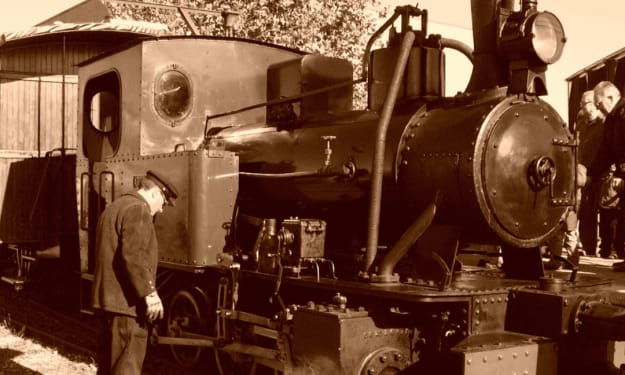
The history of trains spans millennia, evolving from simple wooden tracks to sophisticated high-speed networks that revolutionized global transportation. Ancient civilizations laid the groundwork for rail systems. As early as 600 B.C., the Greeks created grooves in limestone roads to guide wheeled vehicles, facilitating the transport of boats across the Isthmus of Corinth. This primitive form of rail fell into disuse after the Roman conquest in 146 B.C., vanishing for over 1,400 years. Railways reemerged in the 16th century in Germany as "wagonways"—wooden rails that allowed horse-drawn carts to move goods more efficiently than on dirt roads. By the 1700s, these evolved into iron-railed tramways across Europe, still powered by horses.
By jahidul Islam Sifat5 months ago in History
Frozen Ground
Silence meant the guns were cooling. It meant men were waiting. It meant something was about to break. We were dug in along a frozen stretch of road near the Imjin River, the kind of place that didn’t look important until history decided otherwise. The cold wasn’t just uncomfortable—it was personal. It crept into your boots, your bones, your thoughts. At night, I dreamed of heat: radiators, kitchens, the smell of coffee. I woke up with frost on my helmet.
By Gaofeng Wang6 days ago in History
A massive underwater stone wall that is almost 7,000 years old is found by divers.
One of the buried stone monuments on Sein Island is a granite wall off Brittany that is more than 7,000 years old and the length of a football pitch. The discovery is being used by marine archaeologists in the vicinity of Île de Sein to explain how stone-built coastal villages predate the widespread spread of farming.
By Francis Dami4 days ago in History
Miss Persephone's Manual to a Seemingly Ordinary Life
Miss Persephone was found at the dining table, her blue eyes swollen, her tears arriving and retreating like the tides of the ocean. Earlier that day, her family had visited her in the retirement home where she had lived for eight years. It was her eightieth birthday.
By Imola Tóth2 days ago in Fiction


Comments
There are no comments for this story
Be the first to respond and start the conversation.