
The Mystery of Edgar Allan Poe
The Strange, Bleak, and Brilliant Spiral of Edgar Allan Poe

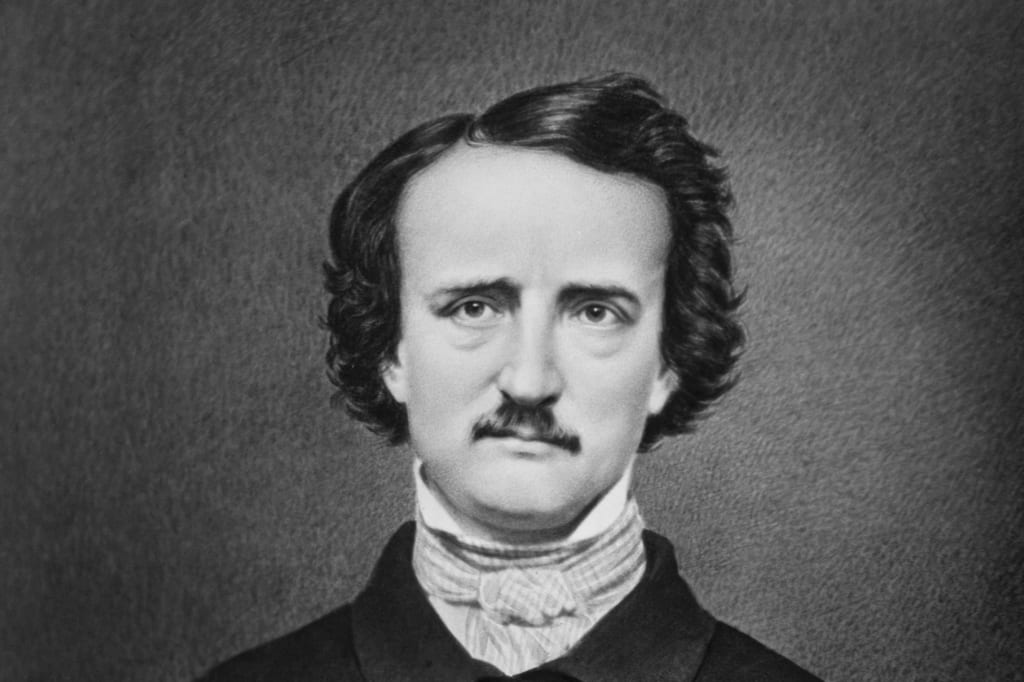
Edgar Allan Poe’s legacy is wrapped in shadows—half myth, half memory, and entirely American. But long before he became the grand architect of Gothic horror, before The Raven perched itself permanently on the nation’s literary shoulder, Poe was a kid born into chaos, raised in instability, and pursued by tragedy as faithfully as his own shadow.
His story begins in Boston on January 19, 1809. His parents—both actors—were gone before he turned three, leaving the toddler Poe to be taken in by Richmond merchant John Allan. And “taken in” may be generous; he was never formally adopted, and the relationship was always strained. Even this early on, Poe's life seemed oddly cursed.
But the curse didn’t stop him from shining.
The Scholar Who Had to Burn His Furniture
By 1826, Poe was enrolled at the University of Virginia. He excelled academically, which was impressive considering the financial landmine he’d been handed. Allan—a man wealthy enough to provide—sent Poe off with barely a fraction of the money required to survive at school. Poe tried to fill the gap the way many 19th-century college students probably did: gambling.
Unsurprisingly, it went about as well as you’d expect. By the end of the term, Poe was so strapped for cash he resorted to burning his furniture to stay warm. Allan refused to help, Poe blamed Allan, and the whole thing ended with Poe dropping out. Then, almost comically, things got worse.
Returning home, Poe discovered that his fiancée, Elmira Shelton, had gotten engaged to someone else. Heartbroken, he fled to Boston and joined the U.S. Army just to survive long enough to write.
And then Allan—still weirdly invested in micromanaging Poe’s life—paid to get him discharged. Poe tried West Point next. Eight months later, he got himself expelled by skipping every drill and class for a week straight.
It was, by all definitions, a low point. When he traveled to Baltimore in hopes of finding family support, one of his cousins robbed him. At this point, even fictional Poe wouldn’t believe real Poe’s luck.
A Breakthrough, a Marriage, and a Mess of Morality
Poe finally found stability with his aunt, Maria Clemm. While living with her, he wrote more consistently, won a short-story contest, and landed an editorial job at the Southern Literary Messenger in Richmond. Things were slowly tilting in his favor.
He also fell in love again—this time with his cousin, Virginia Clemm. Yes, his cousin. Yes, she was 13. Yes, even with historical context, it’s uncomfortable. But the marriage happened in 1835, and by most accounts, they were genuinely affectionate.
Financial security, however, remained a stranger. Poe hustled across the East Coast for editing jobs, paid mostly in stress and disappointment. When his short-story collection Tales of the Grotesque and Arabesque came out, he wasn’t paid in cash—just 25 copies of his own book.
Everything changed in 1845 when The Raven hit the New York literary scene. Poe finally had fame, success, and a moment of real comfort.
But happiness never stayed long in Poe’s orbit.
Virginia’s Death and Poe’s Final Decline
In 1847, Virginia died of tuberculosis at just 24. Poe unraveled. Critics assumed he’d follow her into the grave—and they wouldn’t be wrong for long.
Rumors swirled that Poe binge-drank through a grief-stricken spiral, but he did manage a brief period of sobriety. He even reconciled with his former fiancée Elmira Shelton. They planned to marry once he returned from a trip to Philadelphia.
He never made it.
On September 27, 1849, Poe left Richmond. The next day he reached Baltimore. And then—nothing. No records. No letters. Five missing days.
On October 3rd, he resurfaced in a gutter outside a Baltimore polling place. Delirious, incoherent, and wearing someone else’s clothes.
He died four days later.
What Really Happened to Poe?
With no autopsy, no remaining medical records, and a burial so rushed he didn’t even get a marked grave, Poe’s death became its own Gothic mystery. Over the years, several theories have emerged—each one ghastlier or stranger than the last.
1. Alcohol-Related Death
Poe was notoriously sensitive to alcohol. A single glass of wine could incapacitate him. He had been warned by doctors that another drinking episode could kill him. If he relapsed during those missing days, it’s conceivable he drank himself into fatal collapse.
2. A Brutal Beating
Poe’s disheveled clothing and fragile state suggest he could have been assaulted. Some accounts claim he may have been beaten by men seeking revenge, or even by the brothers of his on-again fiancée.
3. “Cooping” – A Violent Voter Fraud Scheme
This one is genuinely wild—but undeniably plausible.
In 19th-century Baltimore, gangs kidnapped victims, disguised them in multiple outfits, and forced them to vote repeatedly. They often supplied alcohol as a reward. Poe, unable to tolerate alcohol, could easily have slipped into a lethal stupor.
He was found outside a polling station.
He was in clothes that weren’t his.
Biographers in the late 1800s openly cited cooping as the most believed explanation.
4. A Brain Tumor
When Poe’s coffin was moved decades later, workers noted a hard mass rolling inside his skull. His brain wouldn’t have survived decomposition—but a tumor would have calcified. Some experts believe Poe had long suffered from a brain lesion, which could also explain his severe reaction to alcohol.
Maybe It Was Everything
The most haunting possibility? All the theories could be true—together.
He could have been cooped, forced to drink, beaten, weakened by a tumor… a tragic cocktail that no single explanation fully satisfies.
Poe’s final days remain one of American literature’s most enduring riddles. And fittingly, for the master of the macabre, the truth is likely a blend of horror, misfortune, and mystery—one last unsolved story he left behind.
Legacy of a Haunted Genius
Despite his turbulent life and grim death, Poe reshaped American literature. His work carved out whole genres—detective fiction, psychological horror, Gothic mystery. Today, the Edgar Awards bear his name, honoring writers who walk similar dark paths.
More than 170 years later, his final puzzle still lingers:
What really happened to Edgar Allan Poe?
No answer fully fits.
No theory ties neatly together.
And maybe that’s exactly the way Poe would’ve wanted it.
About the Creator
Lawrence Lease
Alaska born and bred, Washington DC is my home. I'm also a freelance writer. Love politics and history.
Keep reading
More stories from Lawrence Lease and writers in History and other communities.
Taiwan May Reverse its Nuclear Phase-Out
May didn’t feel like just another month in Taiwan — it felt like a turning point. For anti-nuclear activists, it was the culmination of a fight they’d waged for decades. On May 17, the island shut down its last operational nuclear reactor, closing the chapter on a technology they associated with radiation threats, authoritarian echoes, and a past they wanted to leave behind.
By Lawrence Lease3 months ago in History
The Years 1870 to 1879 Unveiled: Intriguing Facts and Landmark Events
This quick read is a collection of fun facts, trivia, and historical events from the years 1870 to 1879. Discover the decade’s top news stories, most influential people, notable inventions, historic firsts, retail prices, and much more.
By Gregory DeVictor2 days ago in History



Comments
There are no comments for this story
Be the first to respond and start the conversation.