
The Mysterious Pyramid of Gunung Padang: A 25,000-Year-Old Enigma
Oldest Pyramid

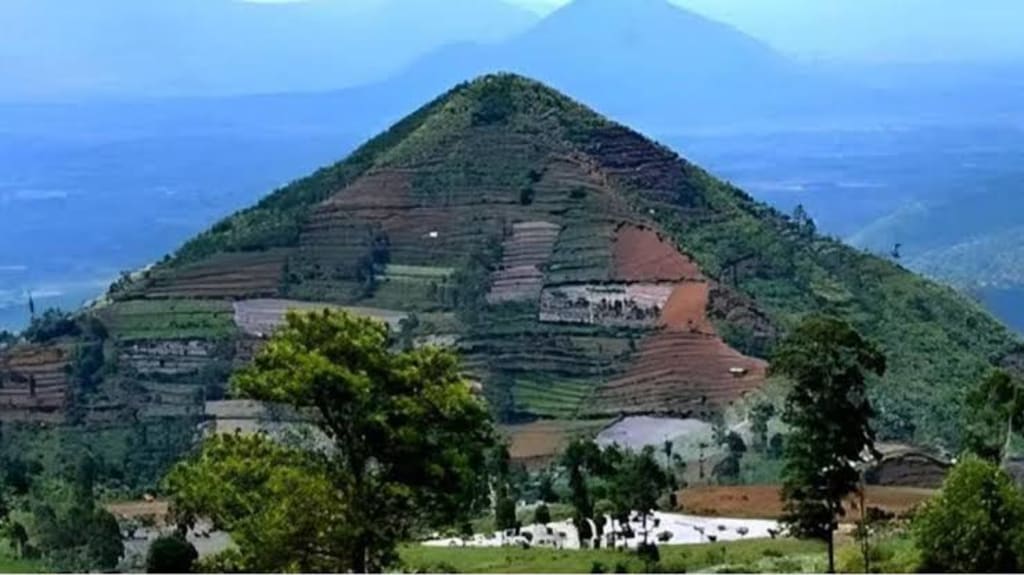
In the heart of Indonesia lies a structure that has sparked significant controversy among archaeologists and researchers. Known as Gunung Padang, this ancient site was traditionally regarded as an important megalithic monument, with its origins dating back several thousand years. However, recent research is turning that narrative on its head, with groundbreaking claims suggesting that parts of the pyramid may be as old as 25,000 BC—making it potentially the oldest pyramid in the world.
The discovery, led by Dr. Danny Hilman Natawidjaja and his team from the Institute of Sciences of Indonesia (LIPI), has ignited debates that challenge the conventional understanding of human civilization and technological advancement. While ancient sites such as the Great Pyramids of Egypt and the structures at Göbekli Tepe have long been regarded as the pinnacles of early construction, Gunung Padang might predate them by tens of thousands of years. If this new research holds true, it would force historians and archaeologists to radically reconsider when and how complex societies first arose.
The Structure of Gunung Padang
Located on a hilltop in West Java, Gunung Padang appears at first glance to be a natural formation. The site is covered with enormous, rectangular basaltic stones, which were long believed to be part of a natural outcrop. However, detailed studies in recent years have revealed evidence of human intervention, suggesting that the stones were intentionally placed and arranged.
Seismic and geophysical studies conducted at the site have unveiled a deeper complexity beneath the surface. Using methods like seismic tomography, researchers discovered that the site conceals a vast network of chambers and cavities, some measuring up to 15 meters in length with ceilings as high as 10 meters. These hidden rooms beneath the surface suggest a level of architectural sophistication previously unrecognized in the region’s ancient history.
What’s more, the dating of the site has been a point of major controversy. Radiocarbon dating of layers within the pyramid structure suggests that certain portions of the site could be up to 25,000 years old, pushing its construction back to the last glacial period. This discovery, if confirmed, would make Gunung Padang not only the oldest known pyramid in the world but also one of the oldest known structures of any kind built by humans.
Is the Pyramid Man-Made?
One of the most contentious aspects of the Gunung Padang research revolves around whether the pyramid is entirely man-made. While some archaeologists argue that the pyramid consists primarily of naturally formed andesite lava, others assert that it was sculpted and manipulated by humans. Dr. Natawidjaja’s team contends that advanced masonry skills were used to shape and assemble the stones, hinting at technological prowess that far exceeds what we previously thought ancient humans were capable of during the last ice age.
The controversy arises from the lack of conventional evidence typically used to validate man-made structures from antiquity. Traditional archaeological methods, such as the identification of tool marks or the presence of man-made mortar, have yet to yield definitive results at Gunung Padang. This has led many experts to question the validity of the claim that the pyramid is of human origin, suggesting instead that natural geological processes may have played a larger role than previously thought.
However, the argument that this ancient site could have been the product of a sophisticated civilization is not without merit. If Gunung Padang was indeed built 25,000 years ago, it would challenge the prevailing view that complex construction techniques only emerged with the development of agriculture around 12,000 years ago. This would suggest that advanced societies existed far earlier than we currently believe, capable of organizing large-scale construction projects during a period when humanity was thought to be largely nomadic.
The Implications for Archaeology
The implications of a 25,000-year-old pyramid are profound. If the Gunung Padang structure was built during the last glacial period, it could rewrite the history of early human civilization. It raises fundamental questions about the origins of architectural knowledge and the capacity for complex societal organization. How could a civilization living in an era traditionally regarded as primitive develop the skills necessary to construct such a monument? What resources did they have at their disposal, and what motivated them to undertake such a massive project?
Additionally, the discovery of underground chambers hints at the possibility of an unknown or forgotten civilization with its own religious, social, or cultural motivations. Could these chambers have been used for ceremonial purposes? Were they burial sites, storage areas, or places of ritual? The answers remain elusive, but further excavation and research could one day offer more insights into the mysterious people who built Gunung Padang.
A Challenge to Mainstream Archaeology
Gunung Padang stands as a fascinating case of how new discoveries can challenge the established norms of archaeology. While mainstream scholars remain skeptical of some of the more radical claims surrounding the site, the findings are impossible to ignore. Dr. Natawidjaja’s research forces us to entertain the possibility that advanced civilizations could have existed long before the dawn of agriculture and written history.
Of course, more research is needed to fully understand the origins of Gunung Padang. The scientific community will need to subject the findings to rigorous peer review, and ongoing excavations will hopefully yield more conclusive evidence. For now, the site remains an intriguing mystery that invites us to look deeper into humanity’s distant past.
As the debate continues, one thing is certain: Gunung Padang has become one of the most compelling archaeological puzzles of our time. Whether or not it proves to be the world’s oldest pyramid, its discovery reminds us that the history of human civilization is far from settled, and that there are still many mysteries waiting to be uncovered beneath the earth’s surface.
About the Creator
Keep reading
More stories from Deji Akomolafe and writers in History and other communities.
The Discovery of Prehistoric Giants: Four Glyptodon Shells Found in Argentina
In 2021, Argentine farmer Juan de Dios Sota made an astonishing discovery that instantly captured the attention of the scientific community. While working on his field near Rincón de Valle, located in central Argentina, Sota unearthed four massive Glyptodon shells, each over 10,000 years old. These prehistoric creatures, resembling giant armadillos, roamed the Earth during the Pleistocene epoch, or the last Ice Age. The chance discovery of four Glyptodon shells together has raised exciting questions about these ancient animals, the environment they lived in, and the circumstances of their sudden burial.
By Deji Akomolafeabout a year ago in History
The First Rainbow Baby
Pitter-patter, pitter-patter. The rain fell in rhythmic splatters, slowly slowing, but still constant. Mira rolled onto her side pulling the blanket tight against her ears, but still she could hear chitter-chatter and scurrying feet of the creatures that refused to sleep in the lower decks.
By A. J. Schoenfeld3 days ago in Fiction




Comments
There are no comments for this story
Be the first to respond and start the conversation.