
The Mysterious Death of Alexander the Great
A Journey Through History’s Shadows


There are very few figures in history who can inspire as much admiration, wonder, and puzzlement as Alexander the Great. Even as I read dusty pages and allow my mind to wander through the ancient world, I find myself trapped in repeated fascinations regarding his sudden death. For a man who conquered nearly all the world that existed at the time, I question how such a death must mark his life, veiled in mystery.
An Unquenchable Thirst for Life
Alexander's life itself was an endless quest—a never-ending glory-hopping between dominions, crossing deserts, over mountains, and overcoming what many thought was humanly possible. Indeed, it is this relentless pursuit in combination with the vigor of youth and wise strategies that casts his legacy in such a long shadow, nearly mythical. Here I am, pondering over all his victories, and it makes me wonder: what do people do when intensity and uncertainty press down equally on life in the matter of grasping one's death? His death as well, like his life, seems to be marked by brilliance and muddled brilliant solutions.
His Last Days Remain Mysterious
It is on record in history that in the summer of 323 BCE, following years of campaigns and the peak of victory upon victory, Alexander fell ill in the city of Babylon. But records of his last days are as varied as they are thrilling. Some of the old historians point towards a gradual deterioration through wear and illness—presumably malaria or typhoid—while others propose a malevolent conspiracy masterminded by poisoning as ending his reign.
I find myself wondering about the paradoxes in these stories. How does one account for a vision of a great conqueror, unbeatable on the field of battle, brought low by the vulnerabilities of human pain? Was it merely the inevitable breakdown of an overworked body finally falling prey to illness, or was there some hint of treachery—a dagger concealed in the shadowy passages of his palace?
THE THEORIES: Between Myth and Reality
One of the most intriguing things about Alexander's death is how it has generated so many theories, each with a different hue of possibility:
A) Illness or Poison?
Most of these theories revolve around the idea that an endless fever and periostitis, complications of several infections all too well known from the ancient battlefield, overwhelmed Alexander's weak body. But no less exciting is the alternative account of poisoning by insidious enemies, who may have resented his tyrannical rule or dreaded his increasing strength—although both these points are vehemently denied by modern historians. I take this as typical of the turmoil in which the world lived; a period when dangers blurred the lines of demarcation between myth and fact as much as the horizon in the haze of a desert.
B) The Curse of Immortality
The other aspect, one that is closer to home, is the interpretation of Alexander's death as a fulfillment of some sort of tragic foretelling—a reverberation of the arrogant encounter with fate. Where, in such a world of divinity interwoven with humanity, one may so readily conceive his collapse as the universe's toll for having exceeded man's bounds. A mighty man reminds one, when forced to contend with forces beyond his reach, of an extremely frightening reminder of the narrow margin between man's ambition and the very inescapable laws of nature.
C) A Symphony of Conspiracies
And there are the theories of court dynamics and intra-court conflict. A tale of rumors, half-seen men in shadowy corridors, and the terrible realization that his closest allies harbored hidden ambitions. To me, this story humanizes the legendary figure of Alexander. It reminds us that behind legends are living beings with living agendas whose rivalries and jealousies can change the course of history.
The Theories: Between Myth and Reality
One of the most intriguing things about Alexander's death is how it has generated so many theories, each with a different hue of possibility:
A) Illness or Poison?
Most of these theories revolve around the idea that an endless fever and periostitis, complications of several infections all too well known from the ancient battlefield, overwhelmed Alexander's weak body. But no less exciting is the alternative account of poisoning by insidious enemies, who may have resented his tyrannical rule or dreaded his increasing strength—although both these points are vehemently denied by modern historians. I take this as typical of the turmoil in which the world lived; a period when dangers blurred the lines of demarcation between myth and fact as much as the horizon in the haze of a desert.
B) The Curse of Immortality
The other aspect, one that is closer to home, is the interpretation of Alexander's death as a fulfillment of some sort of tragic foretelling—a reverberation of the arrogant encounter with fate. Where, in such a world of divinity interwoven with humanity, one may so readily conceive his collapse as the universe's toll for having exceeded man's bounds. A mighty man reminds one, when forced to contend with forces beyond his reach, of an extremely frightening reminder of the narrow margin between man's ambition and the very inescapable laws of nature.
C) A Symphony of Conspiracies
And there are the theories of court dynamics and intra-court conflict. A tale of rumors, half-seen men in shadowy corridors, and the terrible realization that his closest allies harbored hidden ambitions. To me, this story humanizes the legendary figure of Alexander. It reminds us that behind legends are living beings with living agendas whose rivalries and jealousies can change the course of history.
A Personal Reflection on a Timeless Puzzle
In my moments of silence and contemplation, I am left with more questions than solutions regarding Alexander's death. His life was a beautiful tapestry embroidered with conquest, innovation, and cultural syncretism. His death, no matter how shrouded in mystery, invites us to view history as a multifaceted interplay, not as a sequence of well-delineated events, power, passion, and human fallibility.
At times, as I stroll through Babylon's ancient streets, I can sense the weight of history surrounding me. Conspiracies whisper the murmurs of ancient healers in my head so that everything but a blur or two between what could have been and what we can only speculate becomes familiar in its peculiarity because it reminds me that history is not a fixed story etched in stone, but rather a living conversation between the past and our current curiosity.
The Legacy That Outlasts Uncertainty
Whether he is recognized with the enigma of his death or perhaps due to it, Alexander the Great is one of those figures in history whose legacy will one day or another overshadow the plain facts of his life. He has motivated countless thousands—including myself—and by his accomplishments and cultural bridges, provoked questions about the deeper issues that speak of human achievement and the price of greatness. His own life, filled with triumph and shadows, is a reminder that the pursuit of glory is as fickle as it is thrilling.
In the end, the real question mark over Alexander's death is not so much in the way he died but rather in the enormous effect his life has had on Earth. Every theorem, every whisper of conspiracy, every talking tale about his last hours becomes an immortalized legend—a reminder that sometimes, the beauty of history is to find out in the questions without answers.
Conclusion: Embracing the Uncertainty
Wrapping up my musings on the enigma that was King Alexander's death, it's a wonder that lingers. In its most colorful incarnation, history is not about easy answers but about the questions that continue to fascinate us centuries later. One such enigmatic question is Alexander's death—an open invitation to exploration, questioning, and wonder at human complexity.
In embracing the uncertainty of his demise, I see a very personal connection into an ageless pursuit—the pursuit of knowledge—an investigation of the past, but for the most part, discovery of truth within ourselves.
What did you think about “Alexander The Great”. Feel free to share your thoughts in the comments section??
About the Creator
Keep reading
More stories from Nova Drayke and writers in History and other communities.
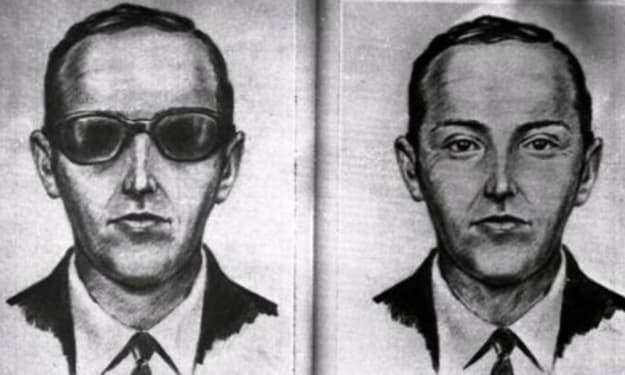
The D.B. Cooper Heist: A Personal Odyssey into the Unknown
There is something strangely magical about mysteries that remain without resolution; this strange magic has haunted my imagination since the day D.B. Cooper was first woven into my consciousness. On a brisk day in November of 1971, an ordinary-looking man entered a Boeing 727 and calmly perpetrated one of the most audacious hijackings in American history. In a matter of hours, he had made some carefully chosen demands, walked away with a bag of ransom money and a parachute or two, and simply melted away into the night with a handful of questions and one very long trail of whispers—all of which still beckon my curiosity.
By Nova Drayke 10 months ago in History
THE TREASURE IN THE FOREST
The canoe drifted quietly toward the island, where a wide bay opened beneath a blazing sky. A narrow gap in the white reef marked the mouth of a small river, its path visible by the darker green of thick forest spilling down the hillside. Beyond it, mountains rose like frozen waves. The sea was calm, almost unnaturally so.
By Faisal Khan6 days ago in History
The Places That Were Never Meant to Be Lived In
The first thing you notice about places like this is the quiet. Not the peaceful kind, the kind that feels held in place. Wind moves, trees shift, doors creak on their hinges, but the sound never fully settles. It doesn’t echo the way it should. It lingers, as if the air itself is listening.
By Veil of Shadows5 days ago in History



Comments (2)
amazing work
Well-wrought! I've always held to the theory that his own generals poisoned him. It was well-known that he angered them a great deal by incorporating other cultures with their Hellenic practices. However, it is largely due to Alexander's conquests that there was and still is so much crosstalk between East and West. Alexander thought himself a God, but the poet Percy Shelley really seems to me to have gotten the last word on the subject when he penned his poem "Ozymandias"!