
The Mountain of Light and the Throne of Glory: The Greatest Treasures of the Mughal Empire
The Mughal Empire, renowned for its architectural marvels and cultural legacy, also possessed treasures that dazzled the world. Among these, the Koh-i-Noor diamond and the Peacock Throne stood out as emblems of imperial might and divine authority. This article explores the origins, splendor, and fate of these priceless artifacts, tracing their journey through conquest, colonialism, and controversy. More than just relics, they symbolize the heights of Mughal grandeur and the enduring impact of empire on history and identity.

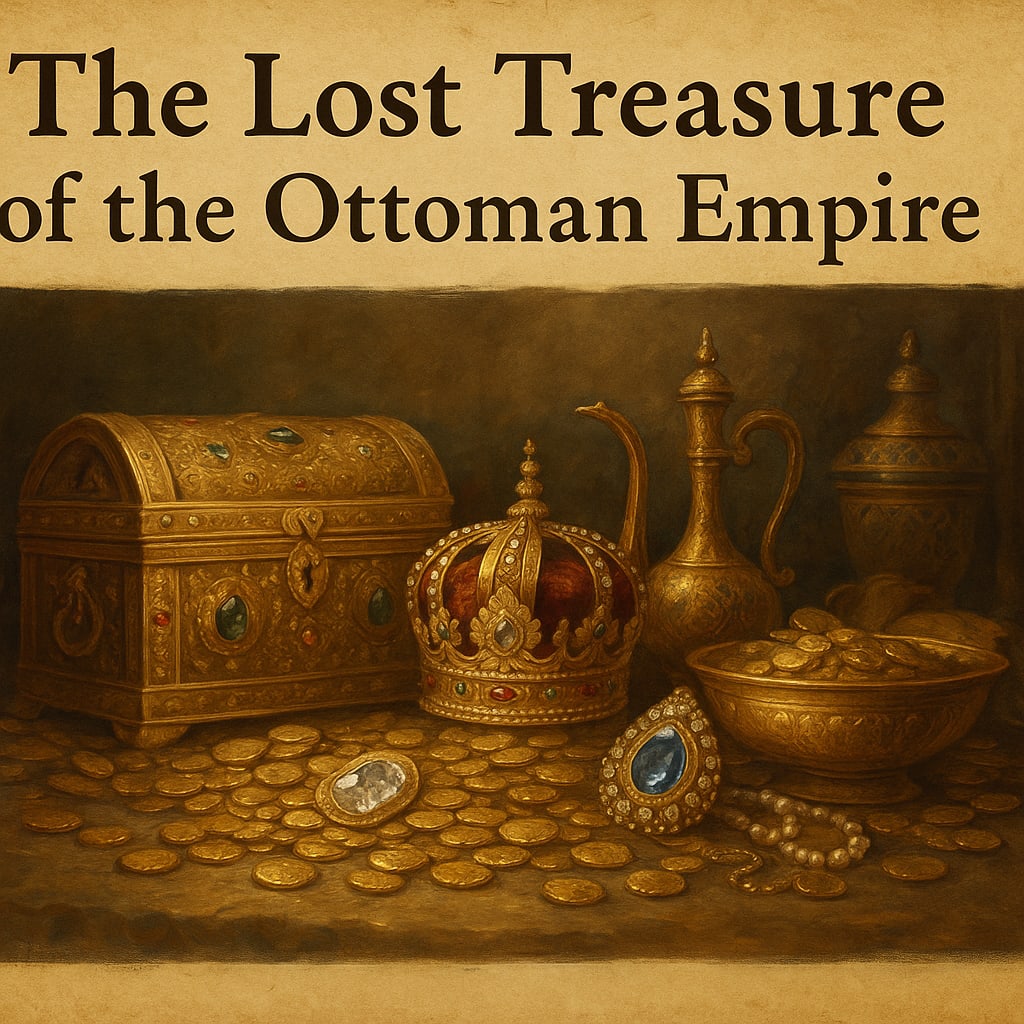
The Koh-i-Noor and the Peacock Throne: The Supreme Treasures of the Mughal Empire
The Mughal Empire, one of the most influential and affluent dynasties in Indian history, accumulated unimaginable riches over the centuries. Among its most renowned treasures were the legendary Koh-i-Noor diamond and the Peacock Throne, both emblems of imperial magnificence and global intrigue. This article delves into the history of these iconic gems, their role in defining Mughal opulence, and how they were ultimately lost to invaders and colonizers, becoming subjects of dispute and yearning in contemporary times.
At the pinnacle of its authority, the Mughal Empire wielded not only vast territories but also a treasury shimmering with gold, gemstones, and invaluable artifacts. The empire's wealth, particularly under emperors such as Akbar, Jahangir, and Shah Jahan, was so prodigious that contemporary European travelers frequently likened the Mughal court to paradise on Earth.
Among all the treasures that flowed through the hands of the Mughal emperors, two are distinguished by both scale and historical significance: the Koh-i-Noor diamond and the Peacock Throne. Together, they epitomize the zenith of Mughal luxury and recount the narrative of conquest, loss, and colonial exploitation.
The Koh-i-Noor: The “Mountain of Light”
The Koh-i-Noor diamond is arguably the most renowned and contentious jewel in the world. Its origins are cloaked in legend, yet it likely originated from the Golconda mines in present-day Andhra Pradesh, India. By the 16th century, it had entered the Mughal treasury, first recorded during the reign of Babur, the founder of the empire.
In his autobiography, Baburnama, Babur alluded to a formidable diamond he acquired after vanquishing the Sultan of Delhi in 1526. Many historians assert that this was the Koh-i-Noor. It was transmitted through generations of Mughal sovereigns, becoming a herald of dynastic continuity and divine blessing.
Under Shah Jahan, the Koh-i-Noor was incorporated into the Peacock Throne, a masterpiece of Mughal craftsmanship. However, the diamond's destiny turned grim during the eventual decline of the empire.
In 1739, Persian sovereign Nader Shah invaded Delhi. After pillaging the city and seizing its treasures, he transported the Koh-i-Noor along with the Peacock Throne back to Persia. It was during this period that the diamond reportedly acquired its name: Koh-i-Noor, signifying “Mountain of Light. ”
The Peacock Throne: A Throne Like No Other
Commissioned by Shah Jahan, the Peacock Throne was perhaps the most lavish throne ever conceived. It required seven years to complete and allegedly cost over 10 million rupees, an astronomical sum in the 17th century.
Constructed from gold, silver, and thousands of precious stonesrubies, sapphires, emeralds, and pearlsthe throne featured a canopy upheld by columns of emeralds and two peacocks positioned behind it, adorned with jewels and displaying their tails. The Koh-i-Noor and another enormous diamond, the Darya-i-Noor, were set in prominent displays.
This throne was not merely a seat of powerit was a proclamation to the world. It embodied the divine authority of the Mughal emperor and the cosmic order he was believed to uphold.
However, akin to the Koh-i-Noor, the throne's magnificence was ephemeral. When Nader Shah plundered Delhi, he disassembled the Peacock Throne and transported its components to Persia. Some assert that the original throne was obliterated following his assassination in 1747, while others contend that fragments were repurposed in subsequent Persian thrones. Its destiny remains ambiguous.
The Colonial Path and Contemporary Dispute
Subsequent to Nader Shah’s demise, the Koh-i-Noor exchanged ownership numerous times, transitioning from Persia to Afghanistan, then to Punjab. It came into the custody of Maharaja Ranjit Singh, the Lion of Punjab, who retained it in Lahore.
Following the British annexation of Punjab in 1849, the British East India Company confiscated the Koh-i-Noor and bestowed it upon Queen Victoria. The diamond was recut to enhance its luminosity and became a component of the British Crown Jewels, where it resides to this day, positioned within the crown of Queen Elizabeth the Queen Mother.
This transfer remains contentious, with India, Pakistan, Iran, and Afghanistan each asserting rightful title. The British government, however, has thus far declined to return the diamond.
The Peacock Throne, in contrast to the Koh-i-Noor, was never retrieved. It endures within art, descriptions, and legendsa specter of the Mughal Empire’s golden era.
Heritage of the Mughal Treasures
The Koh-i-Noor and the Peacock Throne are not merely emblems of wealth; they signify the authority, ambition, and eventual decline of an empire that once governed millions. They also serve as poignant reminders of how warfare, conquest, and colonialism can disband the cultural and historical bequest of a people.
Presently, the treasures of the Mughals are subjects of intrigue for historians, collectors, and the public alike. Museums globally exhibit jewels and artifacts from the empire, while South Asians persist in debating the rightful position of their imperial heritage.
As long as these artifacts remain dislocated, they will continue to ignite discourse regarding restitution, colonial inequity, and the safeguarding of heritage.
About the Creator
Say the truth
"Say the Truth: Explain Everything in the World" is your trusted source for uncovering facts and exploring the wonders of history, science, technology, and beyond. We simplify complex ideas and reveal truths to inspire curiosity .
Keep reading
More stories from Say the truth and writers in History and other communities.
The Lost Treasure of the Ottoman Empire: A Legacy Shrouded in Mystery
The Ottoman Empire, a global power that lasted from 1299 until the early 20th century, was a complex tapestry of culture, politics, and opulence. Throughout its centuries-long reign, the Ottomans acquired a wealth that rivaled some of the richest empires in history. As with many great empires, much of their treasure remains unaccounted for, lost or hidden during times of war, revolution, and decline.
By Say the truth 9 months ago in History
The Seven Wonders of the World: Amazing Human Creations
People have always been fascinated by things that are grand and unusual. From the very beginning of civilization, humans wanted to build structures that were not just useful, but also showed their skill, creativity, and ambition. The Seven Wonders of the World are the most famous examples of this desire. They are impressive not only because of their size or beauty, but also because of the stories they tell about our past, different cultures, and human innovation. The idea of the Seven Wonders comes from ancient travelers and historians who listed the most remarkable human creations. Even though some of these wonders no longer exist, their legacy continues to inspire people around the world. Let’s explore each one, looking at their history, significance, and why they remain unforgettable. 1. The Great Pyramid of Giza (Egypt) The Great Pyramid of Giza is the only surviving wonder of the original Seven Wonders. Built around 2560 BCE as the tomb of Pharaoh Khufu, it is an extraordinary engineering achievement. Made from more than two million limestone blocks, some weighing over 15 tons, the precision of its construction is still astonishing today. The pyramid shows the power and beliefs of ancient Egypt and continues to attract visitors from all over the world. It is a true symbol of human skill and vision. 2. The Hanging Gardens of Babylon (Iraq) The Hanging Gardens of Babylon are famous for their beauty and clever design, though historians still debate whether they really existed. Ancient stories say King Nebuchadnezzar II built these stepped gardens for his wife, Amytis, who missed the green hills of her homeland. The gardens, described as terraces full of trees, flowers, and shrubs, appeared to float above the city. Whether real or partly mythical, they show how ancient people combined nature and architecture in extraordinary ways. 3. The Statue of Zeus at Olympia (Greece) Around 435 BCE, the sculptor Phidias created the Statue of Zeus at Olympia. This huge statue of the Greek god Zeus, seated on a throne, was over 12 meters tall and made of ivory and gold-plated bronze. It represented both artistic skill and religious devotion. Even though it was destroyed long ago, records and artistic depictions keep its memory alive, showing the Greeks’ dedication to beauty, religion, and craftsmanship. 4. The Temple of Artemis at Ephesus (Turkey) The Temple of Artemis, built around 550 BCE, was dedicated to the Greek goddess of the hunt and wilderness. Known for its enormous size, detailed sculptures, and beautiful design, it was rebuilt several times after destruction, reflecting its cultural importance. People traveled from across the Mediterranean to see it, making the temple a center of religion, art, and commerce. Today, its ruins still tell the story of a civilization that valued beauty and spiritual devotion. 5. The Mausoleum at Halicarnassus (Turkey) Built between 353 and 350 BCE, the Mausoleum at Halicarnassus was the tomb of Mausolus and his wife Artemisia. Combining Greek, Egyptian, and Lycian styles, it stood around 45 meters tall and was decorated with intricate sculptures. Its design influenced monumental tombs for centuries. Even after earthquakes destroyed it, the Mausoleum remains a symbol of human creativity and architectural achievement. 6. The Colossus of Rhodes (Greece) The Colossus of Rhodes, built between 292 and 280 BCE, was a massive bronze statue of the sun god Helios, celebrating Rhodes’ victory over an invading army. Over 30 meters tall, it was one of the tallest statues of the ancient world. Although it only stood for 54 years before an earthquake toppled it, the Colossus became a symbol of triumph, resilience, and artistic achievement, inspiring large statues throughout history. 7. The Lighthouse of Alexandria (Egypt) The Lighthouse of Alexandria, or Pharos, was built around 280 BCE on the small island of Pharos. Standing over 100 meters tall, it served as both a landmark and a guide for sailors entering Alexandria’s busy harbor. Its elegant design combined functionality and beauty. Though earthquakes destroyed it long ago, it remains a symbol of human ingenuity and innovation in maritime engineering. The Legacy of the Seven Wonders The Seven Wonders are more than just buildings; they are symbols of human creativity, ambition, and achievement. Each wonder tells a story about the people who built it, the culture it came from, and the new ideas of its time. Even though some no longer exist, their stories continue to live through historical records, art, and the fascination of people worldwide. These wonders still inspire architects, artists, engineers, and travelers today. From the pyramids of Egypt to the Hanging Gardens of Babylon, they remind us that imagination and effort can create something that lasts for thousands of years. They are examples of determination, vision, and the pursuit of excellence. Conclusion The Seven Wonders of the World are timeless creations that celebrate human creativity and determination. They are more than stones, metals, or ruins—they represent entire civilizations and the marks they left on history. Even after centuries, their stories continue to inspire people to dream, create, and achieve greatness. These wonders remind us that with vision, passion, and effort, humans can build creations that
By Binan Mooon2 days ago in History
3 Everyday Rules That Exist Because Someone Once Did Something Very Stupid
Everywhere you go, you are surrounded by rules that feel oddly specific. Do not touch. No running. Contents hot. Do not insert body parts. These warnings aren’t theoretical. They weren’t written by pessimists or lawyers with too much free time. They exist because at some point in history, a real human being looked at a situation and thought, “This will probably be fine.”
By Enoch Sagini5 days ago in History


Comments
There are no comments for this story
Be the first to respond and start the conversation.