
THE MOST BRUTAL APES THAT EVEN LIONS ARE AFRAID OF
NEW SPECIES OR NOT?

THE MOST BRUTAL APES NEW SPECIES OR NOT?
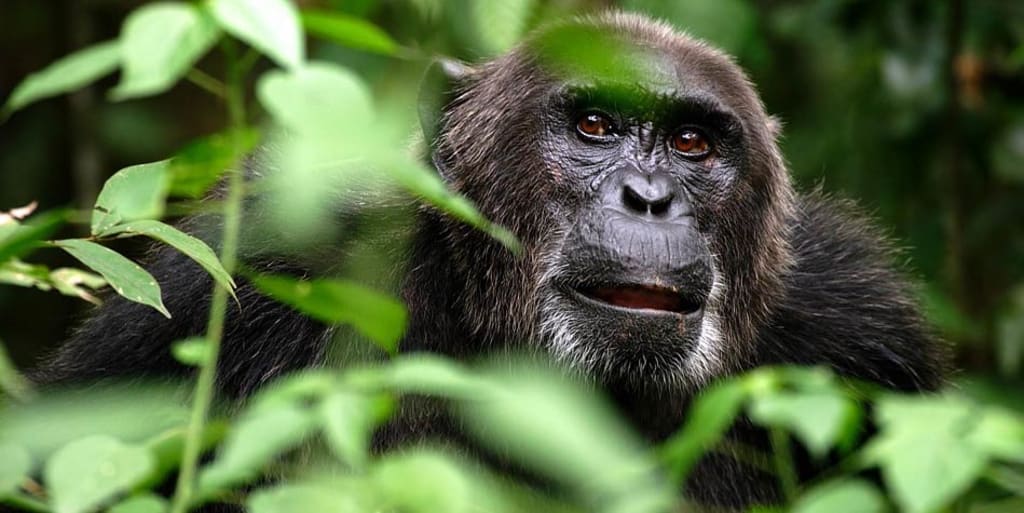
In the dense rainforests of the Democratic Republic of Congo, there is a mysterious creature known as the Billy Apes, which has captured the attention of locals and explorers. The Billy Apes are legendary Giants of the Jungle and have been the subjects of numerous tales, legends, and speculations. Imagine a creature similar to a chimpanzee, but larger - almost the size of a human when standing on its own, and possessing greater width and strength. Similar to gorillas, the Billy Apes construct nests on the ground and in trees, and they are known to feast on formidable prey such as leopards. Throughout generations, locals have shared stories about the Billy Apes, recounting encounters in which these creatures were seen walking on two feet and mysteriously disappearing when approached by humans, leaving behind massive footprints.
According to local accounts, people have reported hearing the creatures howling at the moon and claim that the beasts are immune to poisonous darts. These creatures are known locally as 'the ones which beat the tree' and 'the one which kills the lion', and are viewed by local communities as Guardians of the forest, believed to possess ancient wisdom passed down through the ages for about two decades. Intrigued by the reports, a group of scientists and researchers ventured into the rainforests to study these creatures. Contrary to local beliefs that Billy Apes avoid humans, researchers discovered that they actually live in close proximity to human settlements and tend to avoid people. Interestingly, adult male Billy Apes show more fear towards humans than females, but those in the deeper parts of the forest, who have never encountered humans, display no fear and even show curiosity towards human visitors, observing them closely before moving away.
Unlike other chimpanzees, the Billy apes do not display much aggression. They live in social groups consisting of 10 to 100 members, with each troop being led by a dominant alpha male. The determination of the leader is usually based on size, with the largest male typically assuming the role. The leader makes decisions, protects the group, and holds the highest rank, which grants priority access to resources such as food and mates. In addition to the leader, females also have their own ranks, while more dominant apes exert influence over others. These apes are larger than average chimpanzees and are born with a gray coat. Their diet closely resembles that of chimpanzees, consisting of about 90% plants and fruits, 6% animal products, and 4% insects. In some instances, they exhibit behavior similar to gorillas, such as nesting on both trees and the ground by constructing their own nests. Researchers are intrigued by this behavior, especially considering the potential dangers posed by leopards, lions, and buffalo in the ground environment. Those living close to humans avoid nesting on the ground and are quieter to evade hunters. The nests of the Billy apes are meticulously maintained, as they build new nests every night to keep bugs and other intruders at bay. In addition to nest-building, these apes actively use tools, including sticks and branches, to probe termite mounds and extract honey from beehives, demonstrating their resourcefulness and adaptability.
The tools used for harvesting driver ants are the largest ever found in Africa, indicating the impressive cognitive abilities and problem-solving skills of these creatures. They also exhibit social learning, where one chimpanzee's successful strategy is observed, learned, and adopted by others. Not every animal is capable of such behavior, highlighting the unique nature of these creatures. Upon the research group's return, a report about these creatures was published in a magazine by one of the members. The creatures have flatter faces than chimpanzees and turn gray early in life, in addition to having a distinct howl that gets louder during the full moon. Initially speculated to be a new, unknown species possibly a hybrid of gorillas and chimpanzees, this discovery gained widespread attention and the researcher gave many interviews to famous channels and magazines. However, skepticism arose when it was revealed that the researchers had a PhD in behavioral psychology, leading some experts to question the validity of the report. While the creatures did display some unique behaviors not typical to chimpanzees, such as nesting on the ground, the comparison of their DNA to that of chimpanzees revealed that they were the same species. It was confirmed that the mysterious creatures, known as Billy Apes, were not mutants or hybrids but simply a variation within the chimpanzee species, similar to the diversity found in humans. The argument put forth by other scientists from the research group emphasized that individual variations within a species do not equate to a new species. Thus, the speculation about Billy Apes being a new species unknown to science was debunked. Additionally, the claim that they howl at the moon was refuted by another researcher from the group. This case echoes previous instances of similar misidentifications, while also highlighting the need for thorough research and verification in scientific discoveries.
In the late 1990s, scientists discovered that the Sumatran orangutan and Bornean orangutan were actually different species, despite their initial similarity in appearance. While both species share a typical shaggy reddish fur, the Sumatran orangutans are distinguished by their longer hair and closer social bonds within their community, while the Bornean orangutans are known to venture down to the ground more frequently. Both species are endangered, with just over 100,000 Bornean orangutans and 14,000 Sumatran orangutans remaining. In addition, the Tapanuli orangutan, a newly identified third species, is the most endangered of all ape species, with only about 800 individuals left in the world. Wild chimpanzees are exclusive to Africa, inhabiting only 21 countries, which is also the birthplace of humans. As human's closest living relatives, chimpanzees share an impressive 98.8% of DNA with humans and can even catch human diseases, with scientists suspecting they may be susceptible to Alzheimer's. Chimpanzees exhibit diverse personality traits similar to humans, including extroversion, openness, agreeableness, neuroticism, and conscientiousness. They are also known for territorial conflicts with other groups and have been observed to learn behaviors from one another, including fashion. In one instance, a chimpanzee in Zambia was observed sticking a piece of grass behind her ear, and other female chimpanzees followed suit. Furthermore, while they cannot speak English, a captive chimpanzee has learned over 350 signs in American Sign Language to communicate with caretakers and has even passed on this knowledge to her adopted son.
About the Creator
ANGELINA GONZALES
I am a curios and a shy type person who loves to read and watch discoveries, histories, and facts about the entire evolution of the world were living in. I also write short stories about daily interactions and poems.
Keep reading
More stories from writers in History and other communities.
Three Indie Podcasts About Classic Hollywood
Classic Hollywood was not simply a place and time where movies were made. It was where the magic happened, on and off the screen. Classic Hollywood wasn’t just about the classic movies being made — Citizen Kane, King Kong, Arsenic And Old Lace, It Happened One Night, Casablanca. The movie stars — backed by the studios and their P.R. machine — were depicted as larger than life, living lives of pampered luxury, extravagance, and, at times, even debauchery.
By Frank Racioppiabout 19 hours ago in History
🅼🅸🅳🅽🅸🅶🅷🆃 🆂🅽🅰🅲🅺🆂
"It's 10 in Tuscon! We all know what that means... It's Time for Midnight Snacks with your man, Gerald Gee! Ready to spend the night together? Me too! I'm full of snacks and can't wait to regurgitate them all back into your hungry ears. Crack a brew! Pop some corn! Anything to get ready for one hell of a show where the talk maybe cheap but the words cut deep...
By Lamar Wiggins4 days ago in Fiction



Comments
There are no comments for this story
Be the first to respond and start the conversation.