
The Moon Landing (1969)
The Moon Landing (1969): A Giant Leap for Mankind

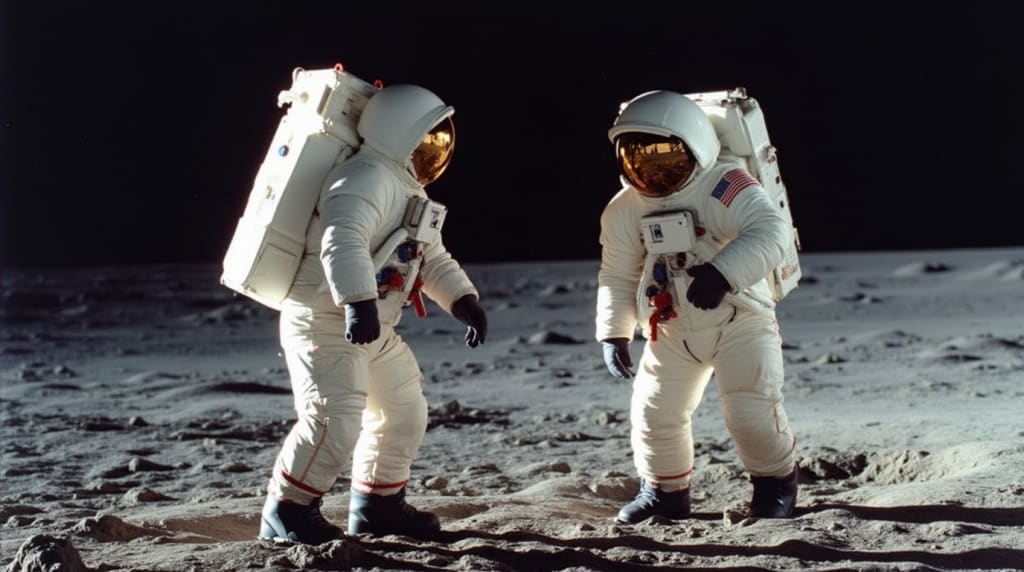
The Moon Landing (1969): A Giant Leap for Mankind
On July 20, 1969, the world witnessed a historic event that forever changed the course of humanity. The moon landing was not just a scientific or technological achievement; it was a symbol of humanity's ability to push boundaries and achieve the impossible. In this article, we will delve into the story of this monumental achievement, starting from the space race between the United States and the Soviet Union, to the impact of this mission on science and society.
1. The Space Race: Historical Background
Before discussing the moon landing, it’s essential to understand the historical context that led to this achievement. The space race between the United States and the Soviet Union was part of the Cold War, where both nations sought to prove their technological and military superiority.
The race began with the Soviet Union launching the first artificial satellite, Sputnik 1, in 1957. This was followed by sending the first human into space, Yuri Gagarin, in 1961. These achievements put the United States on the defensive, prompting President John F. Kennedy to announce an ambitious goal: landing a man on the moon before the end of the decade.
2. The Apollo Program: The Road to the Moon
To achieve Kennedy's goal, NASA launched the Apollo program, a massive project that required the collaboration of thousands of scientists and engineers. The program began with numerous tests, including the Apollo 7 and Apollo 8 missions, which orbited the moon and set the stage for the final phase.
3. Apollo 11: The Historic Mission
On July 16, 1969, Apollo 11 launched from the Kennedy Space Center in Florida. Aboard the Saturn V rocket were three astronauts: Neil Armstrong, Buzz Aldrin, and Michael Collins. After four days of traveling through space, the spacecraft entered the moon's orbit.
4. Landing on the Moon
On July 20, the lunar module Eagle separated from the command module and landed safely on the moon's surface. Armstrong then declared the famous words: "That's one small step for man, one giant leap for mankind."
5. Neil Armstrong: The First Man on the Moon
Neil Armstrong, the mission commander, was the first human to set foot on the moon. He was followed minutes later by Buzz Aldrin, while Michael Collins remained in orbit to monitor the mission. The two men spent two and a half hours on the lunar surface, collecting rock and soil samples and conducting scientific experiments.
6. Returning to Earth
After completing their tasks, the lunar module rejoined the command module, and the journey back to Earth began. On July 24, Apollo 11 safely splashed down in the Pacific Ocean, where it was recovered by a rescue team.
7. Scientific and Technological Challenges
Landing humans on the moon was no easy feat. Scientists and engineers faced enormous challenges, such as developing a rocket powerful enough to carry the spacecraft and building a lunar module capable of landing safely on the moon. Additionally, the astronauts had to contend with a harsh environment, including zero gravity and space radiation.
8. Scientific Impact of Lunar Exploration
The Apollo 11 crew brought back 21.5 kilograms of lunar rock and soil samples. These samples helped scientists understand the moon's composition and history, providing clues about the formation of the solar system.
9. Cultural and Social Impact
The moon landing was more than just a scientific achievement. It inspired millions of people worldwide and demonstrated the power of human collaboration. It also solidified the United States' position as a superpower and proved that big dreams could be achieved with determination and hard work.
10. The Legacy of Apollo 11: The Future of Space Exploration
After Apollo 11, NASA continued sending missions to the moon, but interest gradually waned. However, the legacy of this mission remains alive. Today, nations and private companies are revisiting the idea of exploring the moon and even building human settlements there.
11. Controversies Surrounding the Moon Landing
Despite overwhelming evidence confirming the moon landing, some people still doubt its authenticity. These conspiracy theories often rely on misunderstandings of science or misinterpretations of images and videos.
12. Lessons Learned from Apollo 11
The moon landing teaches us that collaboration, perseverance, and innovation are the keys to success. It also reminds us that the only limits we face are the ones we impose on ourselves.
13. Conclusion: An Unforgettable Giant Leap
The moon landing in 1969 was an unprecedented event in human history. It proved that we are capable of achieving the impossible when we work together and invest in science and knowledge. Today, as we look to the future, we can hope that this was just the first step toward a new era of exploration and discovery. The moon was only the beginning, and the universe awaits us.
About the Creator
💓 Pulse of Stories 💓
The world of short and inspiring stories! Here you will find stories that touch hearts, ignite the imagination, and take you on quick yet deep journeys.
Keep reading
More stories from 💓 Pulse of Stories 💓 and writers in History and other communities.
The Disappearance of the Roanoke Colony (1587)
The Disappearance of the Roanoke Colony (1587): A Historical Mystery That Still Baffles Experts In 1587, the Roanoke Colony vanished mysteriously, leaving behind a historical enigma that remains unsolved to this day. This event is considered one of the most controversial in the history of American colonization. In this article, we will explore the story of this mysterious colony, from its founding to the numerous theories that have attempted to explain its disappearance.
By 💓 Pulse of Stories 💓about a year ago in History
The Year 1978 in Review: Fun Facts, Trivia, and Historic Highlights
This quick read is a collection of fun facts, trivia, and historic events from the year 1978. Discover the year’s top news stories, most influential people, sports facts, historic firsts, entertainment trivia, and much more.
By Gregory DeVictor4 days ago in History
Top tipple tricks
Been thinking a lot about drinking, lately. Not least because of a recent episode of over-indulgence and the inevitable after effects. Some readers may recall the earlier articles I wrote about beating the booze. Here I set out an experiment in techniques for cutting down on my alcohol intake. The experiment was successful, the techniques worked, and I have armed myself with an arsenal of weapons in the war against the demon drink. I have yet to fire the first round however. It's all a question of timing (perhaps procrastination).
By Raymond G. Taylor5 days ago in Psyche



Comments
There are no comments for this story
Be the first to respond and start the conversation.