
"The Might of Sparta: A Glimpse into the Spartan Army"
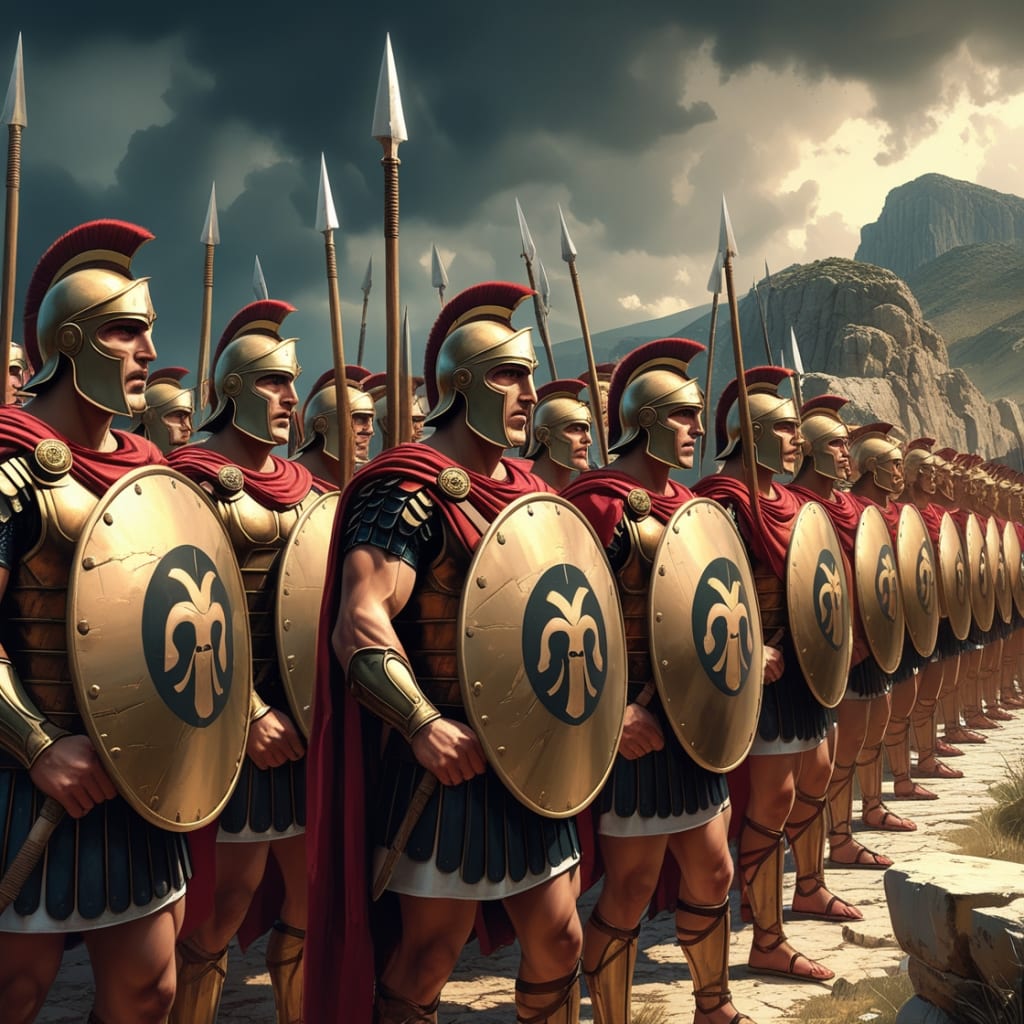
This powerful artwork showcases the legendary Spartan army in their iconic formation, reflecting the discipline, courage, and martial prowess that defined ancient Sparta. The detailed depiction of their armor, shields, and the rugged Spartan landscape enhances the scene's historical and dramatic impact.

The Strength and Wealth of Sparta: Power, People, and Legacy
Sparta, a powerful military city-state in ancient Greece, is renowned for its disciplined army, strategic skill, and stoic culture. For centuries, the Spartan civilization made a significant impact on history with its unmatched strength and strict societal hierarchy. This article examines Sparta’s military, its kingdom’s structure, its inhabitants, and the wealth that supported its supremacy.
Spartan Army: The Backbone of Sparta’s Power
The Spartan army was the most formidable military force in ancient Greece. Unlike other Greek city-states, Sparta placed complete emphasis on military superiority. Every male citizen received training to become a soldier from an early age. Boys entered the agoge, an intense military training program, at the age of seven. They were instructed to endure hardships, survive in the wilderness, and engage in combat with unwavering bravery.
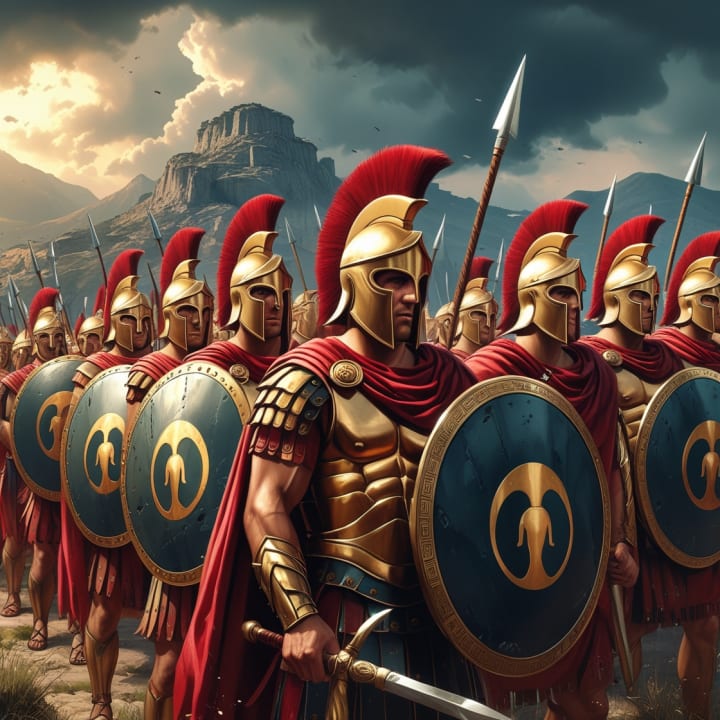
The Spartan army was arranged into lochoi (units), commanded by highly skilled leaders. They fought in a phalanx formation—a compact, disciplined square of soldiers equipped with large shields (aspis), spears (dory), and short swords (xiphos). This formation, coupled with their superior training and fearless mindset, rendered them nearly invincible on the battlefield.
One of Sparta’s most renowned victories occurred at the Battle of Thermopylae (
80 BCE), where King Leonidas and 300 Spartans held the immense Persian army at bay. Although they were ultimately defeated, their courage and strategic brilliance became legendary, epitomizing sacrifice and valor.
The Spartan Kingdom: A Unique Political Structure
Sparta’s political framework was different from other Greek city-states. It operated as an oligarchy with two kings, each from separate royal lineages. These kings commanded the army and performed religious ceremonies. However, they shared authority with the Gerousia (a council of elders), the Ephors (five annually elected officials), and the Apella (an assembly of male citizens).
This balanced power system contributed to maintaining order and prevented any single ruler from gaining too much control. Spartan society was categorized into three primary classes:
Spartiates: Full citizens who served as soldiers.
Perioikoi: Free non-citizens who worked as artisans, traders, and farmers.
Helots: State-owned serfs who worked the land and supplied food for the Spartan elite.
Spartan Wealth and Resources
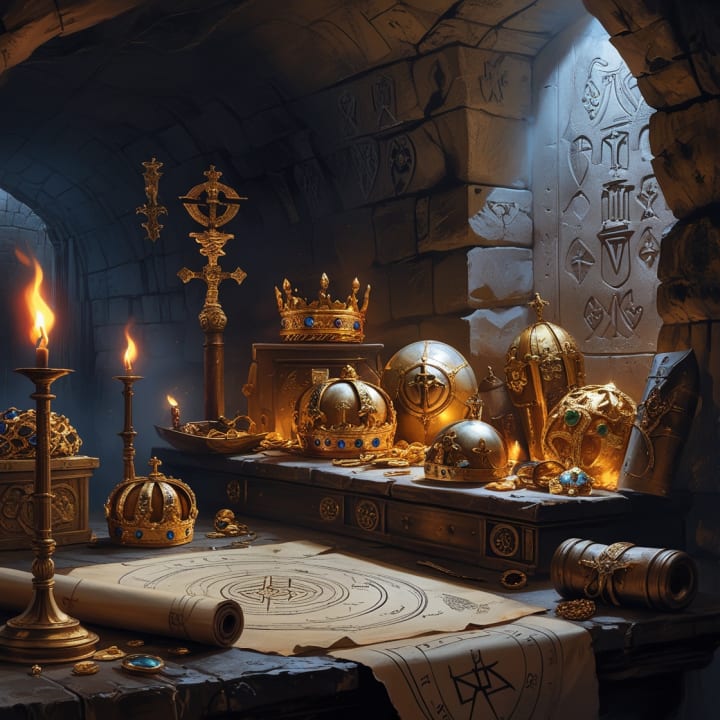
Despite their austere lifestyle, Sparta was not impoverished. Its wealth was derived mainly from the fertile lands of Laconia and Messenia, which the Spartans had seized. The Helots cultivated these lands, producing crops that sustained the Spartan state. Sparta also had access to valuable natural resources, including iron and precious metals, which strengthened its economy.
In contrast to Athens, Sparta did not emphasize trade or amass wealth through commerce. Instead, they prioritized self-sufficiency and maintained a currency made of iron bars to discourage greed and extravagance. Nevertheless, Sparta’s true wealth resided in its military, land, and disciplined citizenry.
Net Worth of Sparta’s Legacy
If one were to evaluate Sparta’s net worth in contemporary terms, it would be difficult to assign a financial value. Sparta’s wealth was linked to its land, resources, and military might rather than gold or trade. However, the impact of Sparta’s military innovations, political framework, and cultural values continues to influence modern military strategies and political ideologies.
The People of Sparta: Discipline and Duty
Spartan citizens adhered to a strict lifestyle of discipline and duty. Boys were conditioned to place the state above everything, while women enjoyed more freedom and education than in other Greek city-states. Spartan women managed estates, supervised Helots, and were encouraged to remain physically fit to bear robust children.
Unlike in Athens, where arts and intellectual pursuits flourished, Spartan culture concentrated on physical strength, loyalty, and simplicity. The renowned Spartan phrase “with your shield or on it” embodies their values—return victorious from battle or perish fighting.
The Decline of Sparta
Sparta’s supremacy began to diminish following its victory in the Peloponnesian War (
31–
0
BCE) against Athens. The war weakened Sparta, causing it to struggle in maintaining control over its Helot population and neighboring regions. In 371 BCE, Sparta faced a catastrophic defeat at the Battle of Leuctra against Thebes, marking the onset of its decline.
Over time, Sparta’s rigid social system and unwillingness to adapt contributed to its downfall. By the Roman period, Sparta had become a mere shadow of its former self, although its legacy as a warrior society persisted.
The Enduring Legacy of Sparta
Today, Sparta stands as a symbol of discipline, bravery, and military prowess. Its narrative has been immortalized in literature, films, and historical accounts. The Spartan way of life, despite its harshness, continues to evoke admiration for its focus on duty, honor, and sacrifice.
While Spartan wealth may not have been gauged in gold or trade, its genuine riches lay in its populace, its military capability, and its unwavering dedication to its ideals. The saga of Sparta is a testament to the influence of discipline, unity, and resilience in shaping history
About the Creator
Say the truth
"Say the Truth: Explain Everything in the World" is your trusted source for uncovering facts and exploring the wonders of history, science, technology, and beyond. We simplify complex ideas and reveal truths to inspire curiosity .
Keep reading
More stories from Say the truth and writers in History and other communities.
The Golden Majesty of the Mali Empire: Mansa Musa’s Legacy
The Rich and Complex History of Africa – Part 3: The Kingdom of Mali and the Wealth of Mansa Musa Africa's past is interwoven with stories of empires that flourished through trade, resources, and culture, with the Kingdom of Mali being particularly famous. At its peak, this medieval West African empire stood as a symbol of prosperity, intellectual achievement, and cultural impact. Central to its narrative is Mansa Musa, frequently regarded as the wealthiest individual in history.
By Say the truth 10 months ago in History
Mestre Best: The Warrior Who Taught Restraint
In the mountain city of Valenor, there was a name spoken softly, almost with reverence—Mestre Best. No statues were built in his honor, no songs officially recorded his deeds, yet every fighter, scholar, and traveler knew the legend. Some said he was the greatest master of combat the world had ever seen. Others claimed he was a philosopher disguised as a warrior. The truth was more complex than either tale.
By The best writer 3 days ago in History
Center Stage with Paul Stewart
*** I'm keen to republish the interviews I did for my series with Vocal creators. It's been a few years and I thought it might be nice to revisit these wonderful conversations. I'll be releasing them one at a time for a few weeks/months.
By Heather Hubler5 days ago in Interview



Comments
There are no comments for this story
Be the first to respond and start the conversation.