
The Making of a Nation: Key Turning Points in U.S. History That Shaped the Modern World
From Revolution to Reform — Exploring the Defining Moments That Forged America’s Identity

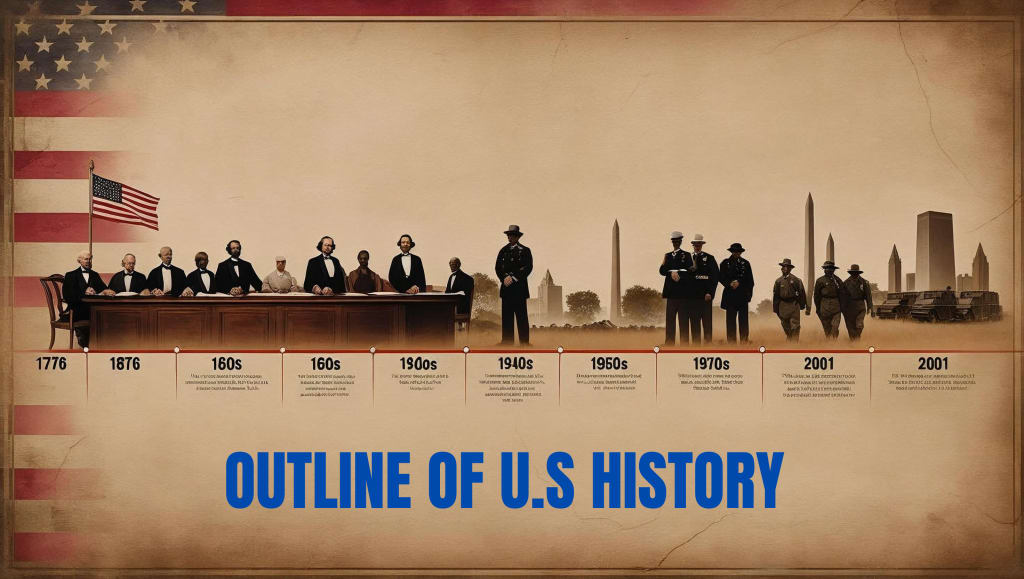
The Making of a Nation: Key Turning Points in U.S. History That Shaped the Modern World
From Revolution to Reform — Exploring the Defining Moments That Forged America’s Identity
The United States of America did not emerge overnight as a global superpower. Its rise has been a long and complex journey marked by powerful movements, visionary leaders, and revolutionary changes. From its rebellious birth to its transformation into a symbol of democracy and innovation, U.S. history is a vivid tapestry of triumphs and trials. In this article, we explore some of the most defining turning points in U.S. history—moments that not only shaped the identity of the nation but also left a lasting impact on the world.
---
1. The American Revolution (1775–1783): Birth of a Nation
The American Revolution was the foundation upon which the United States was built. Thirteen British colonies declared independence from one of the most powerful empires in the world. Sparked by issues such as taxation without representation and a desire for self-rule, the revolution was both a political and ideological struggle.
The signing of the Declaration of Independence in 1776, authored primarily by Thomas Jefferson, marked a new beginning. It wasn’t just a call for freedom; it was a bold experiment in democracy. The success of the revolution inspired similar movements around the world and laid the groundwork for the U.S. Constitution, adopted in 1787, which still governs the country today.
---
2. The Civil War and Emancipation (1861–1865): A Nation Divided and Reunited
Eighty-five years after independence, the U.S. faced a crisis that threatened to destroy it from within. The Civil War was fought over deeply rooted issues, most notably slavery and states' rights. The Southern states, dependent on enslaved labor, seceded from the Union, leading to one of the bloodiest conflicts in American history.
The leadership of President Abraham Lincoln proved crucial. With the issuance of the Emancipation Proclamation in 1863, slavery was abolished in Confederate states, transforming the war into a moral fight for human freedom. The Union’s victory preserved the nation and led to the 13th Amendment, officially ending slavery.
---
3. The Industrial Revolution (Late 1800s–Early 1900s): From Farms to Factories
After the Civil War, the United States entered a period of explosive growth and innovation. The Industrial Revolution turned the country from an agrarian society into a technological powerhouse. Railroads connected the coasts, factories mass-produced goods, and cities grew rapidly.
This era also saw the rise of influential entrepreneurs like Andrew Carnegie, John D. Rockefeller, and Henry Ford, who helped shape America’s modern economy. While the transformation created immense wealth, it also exposed deep inequalities, leading to the birth of labor unions and social reform movements.
---
4. The World Wars (1914–1918 and 1939–1945): Rising as a Global Leader
Though the U.S. initially resisted involvement in both World Wars, its eventual participation marked a shift in its global role. In World War I, American troops helped tip the balance toward Allied victory. But it was in World War II that the U.S. truly emerged as a global superpower.
After the attack on Pearl Harbor in 1941, the U.S. entered the war fully. Its industrial strength, military power, and political influence were crucial in defeating the Axis powers. Following the war, the U.S. played a leading role in creating the United Nations and rebuilding Europe through the Marshall Plan—solidifying its position on the world stage.
---
5. The Civil Rights Movement (1950s–1960s): The Fight for Equality
Even after the end of slavery, African Americans continued to face segregation and discrimination. The Civil Rights Movement sought to dismantle institutional racism and secure equal rights for all citizens. Through peaceful protests, court battles, and powerful leadership, the movement made lasting changes.
Icons like Martin Luther King Jr., Rosa Parks, and Malcolm X became symbols of resistance and hope. Landmark achievements such as the Civil Rights Act of 1964 and the Voting Rights Act of 1965 helped transform the U.S. into a more inclusive democracy, though the struggle for racial justice continues today.
---
6. The 9/11 Attacks and the War on Terror (2001–Present)
On September 11, 2001, terrorist attacks struck the heart of the U.S., killing nearly 3,000 people and shaking the nation’s sense of security. The collapse of the Twin Towers in New York City became a symbol of vulnerability and tragedy.
In response, the U.S. launched the War on Terror, including the invasion of Afghanistan and later Iraq. While these actions reshaped global politics and military strategy, they also sparked intense debate about civil liberties, foreign policy, and the balance between security and freedom.
---
Conclusion: A Nation in Progress
The United States has never been a finished product. It is a country constantly evolving through conflict, innovation, reform, and resilience. Each of these turning points in history has tested the strength of its democratic ideals and helped redefine what it means to be American.
As we look to the future, the lessons of the past remind us that progress often comes through struggle, and unity is forged through shared purpose. Understanding these key moments is not just about knowing history—it's about knowing who we are and where we’re going as a nation.
About the Creator
Savoy Hotel – Mussoorie: The Colonial Luxury Hotel Where an Unsolved Murder Still Walks the Corridors
The First Night: Beauty Wrapped in Silence Mussoorie looks peaceful from a distance. Pine trees sway gently, clouds roll like slow-moving waves, and the hill air smells of rain and old earth. But as evening falls, the silence becomes heavier—almost watchful.
By Gaurav Gupta4 days ago in History
Nobel Peace Prize
The Nobel Peace Prize has stood as one of the world’s most recognized honors. Awarded annually in Oslo, it is meant to celebrate individuals or organizations that have made significant contributions toward peace, diplomacy, and humanitarian progress. While its mission appears straightforward, the Nobel Peace Prize has never been free from debate. In recent years, conversations surrounding global politics—particularly discussions about the Trump Nobel Peace Prize—have brought renewed attention to how peace is defined, measured, and rewarded in the modern era. The Origins and Meaning of the Nobel Peace Prize The Nobel Peace Prize was established by Alfred Nobel, the Swedish inventor best known for creating dynamite. In his final will, Nobel directed that a portion of his wealth be used to recognize efforts that foster peace among nations, reduce standing armies, or promote diplomacy and cooperation. Since its first award in 1901, the prize has honored activists, diplomats, organizations, and world leaders whose actions shaped international dialogue. Unlike other Nobel categories, the peace prize is awarded by a Norwegian committee rather than a Swedish institution. This distinction reflects Nobel’s desire to separate the prize from national interests and focus instead on global responsibility. Over time, the definition of “peace” has expanded. Early recipients were often disarmament advocates or mediators. More recent laureates have included human rights defenders, climate activists, and international organizations working in conflict zones. Politics and the Nobel Peace Prize Despite its humanitarian ideals, the Nobel Peace Prize has always intersected with politics. Recognizing peace efforts often means evaluating political leadership, international negotiations, and long-term consequences—none of which are easy to measure in real time. Some awards have been widely celebrated, while others sparked controversy. Critics often argue that certain laureates were honored prematurely, before the lasting results of their actions became clear. Supporters counter that the prize is meant to encourage peace efforts, not merely reward completed achievements. This tension has made the Nobel Peace Prize a reflection of global priorities at any given moment, rather than a simple historical judgment. Donald Trump and Nobel Peace Prize Discussions Few modern political figures have generated as much debate in connection with the Nobel Peace Prize as Donald Trump. During and after his presidency, conversations about a potential Trump Nobel Prize emerged repeatedly, particularly among supporters who pointed to his role in diplomatic initiatives. The phrase Trump Nobel Peace Prize gained traction following agreements and negotiations in regions long marked by conflict. Advocates argued that these diplomatic efforts aligned with Alfred Nobel’s vision of reducing international tension through dialogue rather than force. At the same time, critics questioned whether these actions met the broader ethical and humanitarian standards traditionally associated with the award. They pointed to domestic divisions, foreign policy controversies, and unresolved global conflicts as reasons for skepticism. This divide highlights a core challenge of the Nobel Peace Prize: peace is rarely absolute, and political leadership is often complex and contradictory. Trump Nobel Peace Prize 2026: Speculation and Context As global politics continue to evolve, speculation around a Trump Nobel Peace Prize 2026 has appeared in media discussions and public commentary. It is important to note that nominations for the Nobel Peace Prize are confidential for decades, and speculation does not confirm consideration or selection. However, the mere discussion of Trump Nobel Peace Prize 2026 reflects how the award has become part of broader cultural and political conversations. Supporters view such recognition as validation of diplomatic achievements, while critics see the speculation as politicizing an institution meant to rise above partisan debate. This dynamic is not unique to Trump. Many past leaders, from various ideological backgrounds, were debated heavily before or after receiving the prize. The Nobel Peace Prize often mirrors global disagreements rather than resolving them. How the Nobel Committee Makes Its Decision Each year, hundreds of nominations are submitted by qualified individuals, including academics, lawmakers, and previous laureates. The Nobel Committee evaluates these nominations through research, expert consultation, and internal debate. The process considers intent, impact, and long-term significance. However, because peace efforts often unfold over years or decades, the committee must make decisions without full historical clarity. This reality explains why some awards age gracefully while others remain controversial. The committee rarely responds directly to public pressure or online campaigns. Media attention, including discussions around a Trump Nobel, does not guarantee influence over the final decision. The Broader Impact of the Nobel Peace Prize Beyond individual recipients, the Nobel Peace Prize plays a symbolic role. It brings global attention to issues that might otherwise be ignored, from humanitarian crises to fragile peace processes. Even controversial nominations can spark meaningful debate about what peace truly means in the modern world. The prize also raises questions about accountability. When leaders are considered for such recognition, the public is encouraged to examine policies, outcomes, and moral responsibility more closely. In this sense, discussions surrounding the Trump Nobel Peace Prize are not just about one individual. They reflect deeper conversations about diplomacy, leadership, and the evolving standards by which peace is judged. Conclusion: A Prize That Reflects the World The Nobel Peace Prize remains one of the most influential and debated honors in global society. Its power lies not only in recognizing peace efforts but also in challenging the world to think critically about conflict, cooperation, and responsibility. Whether discussions involve historic activists or modern political figures like those associated with Trump Nobel Peace Prize 2026 speculation, the award continues to reflect the complexities of international relations. Peace is rarely simple, and neither is the process of honoring it. Ultimately, the Nobel Peace Prize serves as a reminder that striving for peace is an ongoing journey—one shaped by ideals, actions, and the difficult choices that define human history.
By Saboor Brohi 4 days ago in History
Center Stage with Paul Stewart
*** I'm keen to republish the interviews I did for my series with Vocal creators. It's been a few years and I thought it might be nice to revisit these wonderful conversations. I'll be releasing them one at a time for a few weeks/months.
By Heather Hubler5 days ago in Interview



Comments
There are no comments for this story
Be the first to respond and start the conversation.