
The Librarian Who Catalogued Silence
The military came at night. Not with tanks. With lists.

Buenos Aires, Argentina — 1976 to Present
The military came at night. Not with tanks. With lists.
In March 1976, Argentina’s military junta seized control in a swift coup. They called it the “Process of National Reorganization.” But on the streets, it became known as something else:
La Guerra Sucia — The Dirty War.
For the next seven years, tens of thousands of people were “disappeared.” Students. Teachers. Union leaders. Writers. Librarians.
Anyone who thought too loudly.
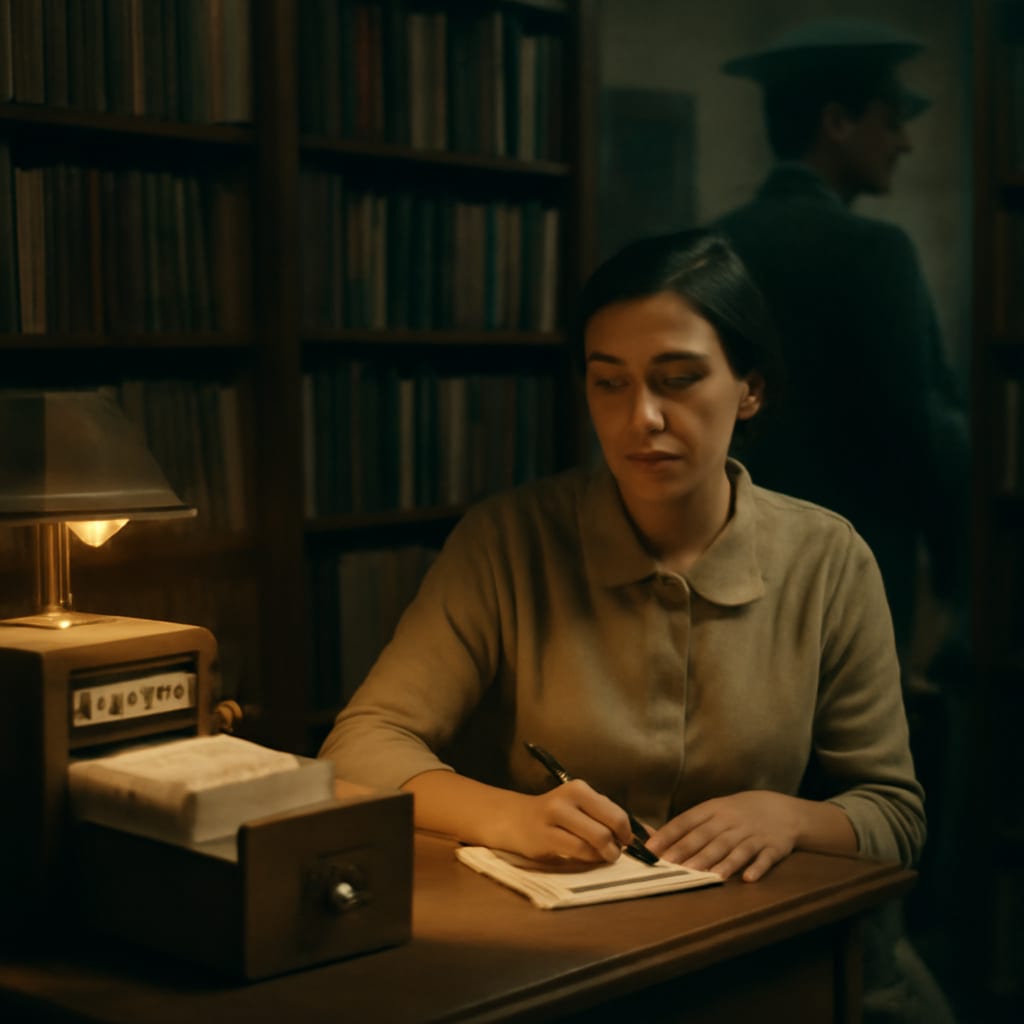
Among them was Elena Morales, a quiet woman who worked at the National Library in Buenos Aires. She had never marched, never shouted. Her resistance was smaller. Slower.
She read.
And she remembered.
1. Books That Vanished Without a Sound
By 1977, the shelves began to change. Titles disappeared. Whole authors vanished.
Not borrowed — removed.
No record. No explanation.
Elena noticed first when “Los versos del capitán” by Pablo Neruda went missing. Then came Cortázar. García Márquez.
Books by Marxist thinkers. Feminist poets. Philosophers. And finally, books by the disappeared themselves.
One day, she walked past the storage room and saw soldiers boxing books labeled “Subversive.”
She recognized a title:
“Open Veins of Latin America” by Eduardo Galeano — banned.
That night, Elena began keeping a second catalog — not of what the library had, but of what it had lost.
2. Memory Inside a Card Drawer
Each time a book was taken, she wrote a note on a blank index card:
The title
Author
Year of removal
And sometimes, the name of the person who last read it — if they, too, were now gone.
She filed them under codes. Not Dewey Decimal, but quiet memory.
“C-1978-GM” meant García Márquez, disappeared in '78 from Section C.
No one ever asked about the drawer labeled “Maintenance.”
3. A Dangerous Silence
Books were not the only things disappearing.
According to CONADEP, Argentina’s post-war truth commission, over 30,000 people were abducted or killed between 1976 and 1983. Many were never found.
Jorge Luis Borges, the famed Argentine writer, supported the dictatorship at first. But even he later admitted:
“We were all cowards. We knew and preferred not to know.”
Elena did not speak. But she knew.
She saw the silence growing like mold on the shelves.
And she refused to pretend.
4. A Code Meant for the Future
When democracy returned in 1983, Elena was still there.
The world changed fast. The library was “modernized.” New staff. New systems.
But her card drawer remained.
In 1985, during the Trial of the Juntas, Argentina put its former dictators on trial. Witnesses testified. Mothers wept. History cracked open.
That same year, a journalism student named Lucas Pereda interviewed staff at the National Library. Elena gave him a copy of one card.
Title: Desaparecidos y Memoria.
No author. No year. Just this note:
“It was never published. It was only lived.”
Lucas asked where the rest of the cards were.
She looked at him and said softly,
“Still waiting to be re-shelved.”
5. Legacy in the Margins
In 2013, the Argentine government passed a law mandating memorial archives in public institutions.
Elena had already retired.
But when the archive team opened a forgotten drawer in the old filing room, they found hundreds of index cards.
Faded. Neatly written. A shadow library.
They displayed them in a glass case with this quote from Eduardo Galeano:
“History never really says goodbye. It says, ‘See you later.’”
Final Scene
Today, visitors to the National Library walk past a quiet wall titled:
“Los libros que no olvidaron” – The Books That Did Not Forget.”
Elena’s name isn’t on the plaque.
But her catalog is.
And every time a student browses those old cards, they learn a truth most regimes tried to erase:
That even in silence, memory survives —
as long as someone is willing to write it down.
About the Creator
Natik Ahsan
Welcome to a world of wonder, curiosity, and nature's quiet magic.
Here, I explore stories that open minds, spark thought, and invite gentle conversation.
Thank you for being here—your presence means everything.
Keep reading
More stories from Natik Ahsan and writers in History and other communities.
The Archive Under the Floorboards
Poland, 1943 – 1989 – Now The first thing Aniela ever learned was silence. As a child in Warsaw during the occupation, she watched her father—a professor of history—hide documents beneath the kitchen floor. Not weapons. Not names. Just pages. Reports. Newspapers. Books translated in secret. Truths that could kill.
By Natik Ahsan7 months ago in History
Antarctica Map
Antarctica is the coldest, driest, and windiest continent on Earth. It is located at the southernmost part of the planet, surrounding the South Pole. Because of its extreme weather and thick ice cover, Antarctica is very different from other continents. An Antarctica map helps us understand the shape, location, and important features of this frozen land.
By Farhan Sayed2 days ago in History
If America Walks Away from NATO, the World Will Feel the Shock
If America Walks Away from NATO, the World Will Feel the Shock For more than seventy years, NATO has stood as a symbol of collective security and shared responsibility. It was never a perfect alliance, but it worked because it was built on a simple idea: when nations stand together, wars are less likely to happen. Today, however, that foundation is being shaken—not by foreign enemies, but by growing voices inside the United States questioning whether NATO is still worth it.
By Wings of Time 7 days ago in History



Comments
There are no comments for this story
Be the first to respond and start the conversation.