
The Archive Under the Floorboards
The first thing Aniela ever learned was silence.

Poland, 1943 – 1989 – Now
The first thing Aniela ever learned was silence.
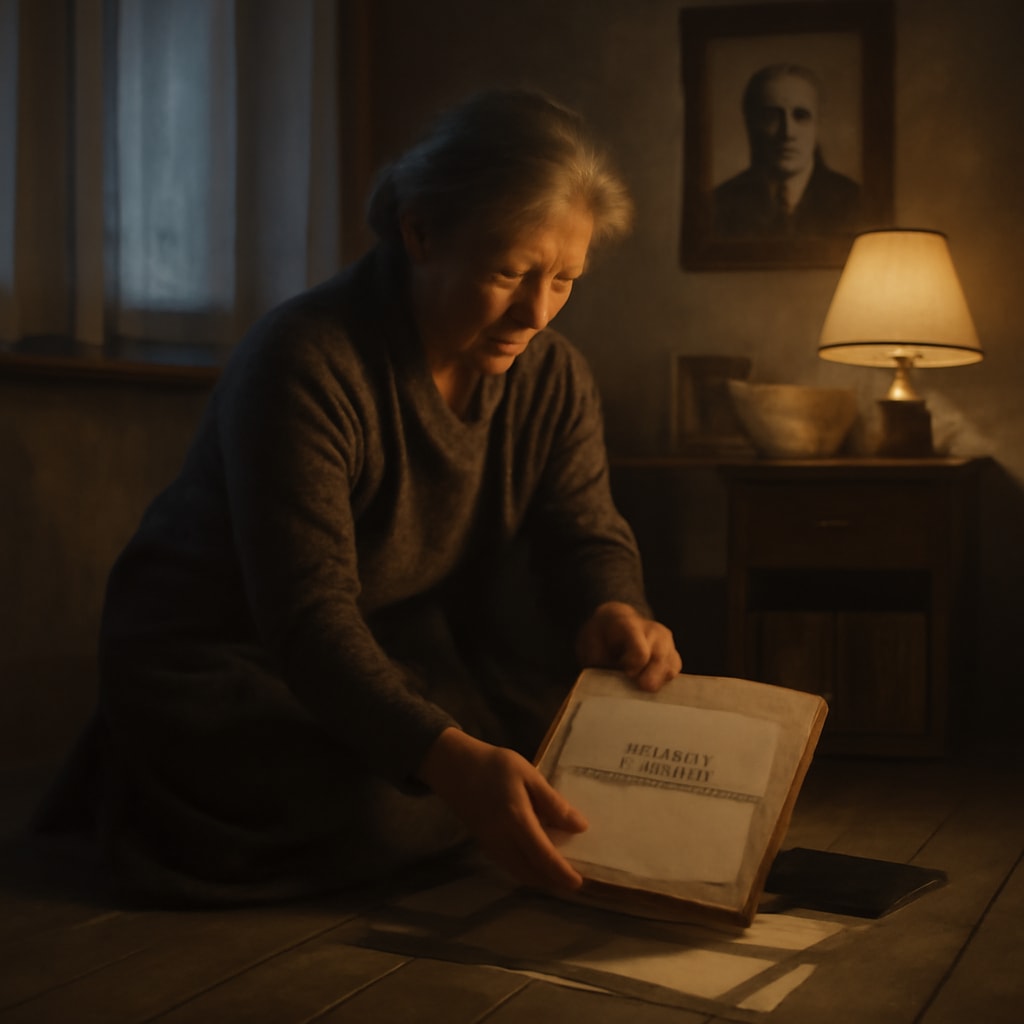
As a child in Warsaw during the occupation, she watched her father—a professor of history—hide documents beneath the kitchen floor. Not weapons. Not names. Just pages. Reports. Newspapers. Books translated in secret. Truths that could kill.
“History matters,” he whispered once, touching the spot beneath the floorboards. “Even if no one reads it yet.”
He was arrested two winters later. No trial. No grave.
Aniela survived by becoming invisible. During the Soviet years, she taught at a school but never mentioned her father. She paid careful attention to party slogans, nodded when spoken to, never asked questions. That’s how people survived. Not through loyalty, but through careful edits of their own lives.
But the fear didn’t vanish with the Nazis. It changed costumes.
Instead of Gestapo, it was the Urząd Bezpieczeństwa—the security service. Instead of boots, it was paperwork. Instead of guns, it was blackmail, surveillance, silence.
Poland became a country where every neighbor might be listening. Where a student’s notebook could be used as evidence. Where a misplaced sentence in class could cost you your job, your passport, your future.
Still, Aniela kept collecting pages.
They were never just papers to her. They were acts of defiance—preserved facts, banned literature, forbidden thought. A quiet archive beneath the noise of false headlines.
She read them in secret by candlelight. Books smuggled from Paris, mimeographed essays from London, old maps that contradicted new borders. Every page was a mirror that showed her what the state tried to hide. And every time she slipped a new page beneath the floor, she felt as if her father was still there, nodding.
Warsaw, 1982
Martial law had drained the color from the city. Streets were lined with soldiers and suspicion. You could get arrested for printing a pamphlet, owning a typewriter, or meeting after dusk.
But in a corner of the city, behind a loose brick in the school basement, Aniela and two former students ran an illegal “flying university.”
They met at night. They taught banned poetry. Banned philosophy. Banned history.
They never used last names. They memorized everything they taught, then burned the notes. The goal wasn’t to build a library. It was to keep knowledge alive inside living minds.
“We are not just resisting communism,” Aniela would whisper. “We are rescuing memory.”
They preserved more than facts. They preserved thinking itself.
The students came and went, some arrested, some vanished. But the lessons continued. They moved from apartment to apartment. Whispered lectures over candlelight. Notes passed hand to hand. Sometimes they only read from memory.
One student returned after prison, older by years but still loyal. He brought a single book with pages missing. Tucked inside was a photograph of Aniela’s father, grainy but unmistakable—teaching, chalk in hand, in a classroom that no longer existed.
She didn’t cry. She nodded, and they resumed class.
Poland, 1989 – The Fall
When the Soviet grip finally cracked, Aniela was 67.
She lived long enough to see open elections. To see archives unsealed. To see crowds chant truth without fear.
But she didn’t speak much. She just returned to the old apartment her father once hid papers in.
That night, she pried open the floorboards.
The pages were still there. Yellowed, fragile, unread.
She didn’t cry. She simply placed them inside a new folder marked “History: Unedited.”
Then she wrote one sentence on the first page:
“Memory survives only when someone chooses not to forget.”
In the months that followed, she gave talks in small libraries and schools. Never to crowds. Always to listeners. She didn’t tell them what to believe. She told them what was lost—and what was saved.
She handed students copies of her father's banned essays. Reprinted in clean paper, bound with string. She donated her floorboard archive to a tiny museum, once a post office, now a place for truth. And then, quietly, she faded from public view.
Poland, Today
A young journalist researching resistance educators finds her name.
He visits the site. There’s nothing but a broken brick wall and dust.
But in the national archive, a box bears her name. Inside: lesson notes. Hidden letters. A quote in fading pencil:
“Totalitarianism doesn’t just erase people. It erases context.”
And beneath it, in her handwriting:
“Truth is a slow echo. But it always returns.”
He stares at her handwriting for a long moment. Then he scans the pages, uploads them to an open-source archive, and begins writing an article—not about a heroic rebel, but about a quiet woman who refused to forget.
Not loud. Not famous. Just real.
And beneath his title, he copies her words:
Memory survives only when someone chooses not to forget.
About the Creator
Natik Ahsan
Welcome to a world of wonder, curiosity, and nature's quiet magic.
Here, I explore stories that open minds, spark thought, and invite gentle conversation.
Thank you for being here—your presence means everything.
Keep reading
More stories from Natik Ahsan and writers in History and other communities.
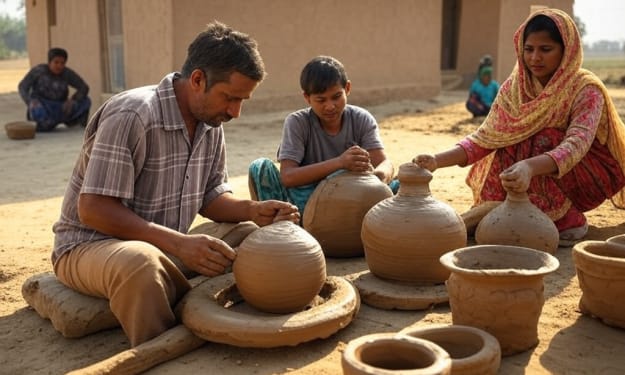
Crafting with Clay: The Enduring Art of Rural Pottery in Bangladesh
In the quiet corners of rural Bangladesh, a humble yet profound art form is fading. Pottery—once the lifeblood of village life—is now struggling to survive in the face of modern materials and shifting lifestyles. But what makes this ancient craft so special? Why is it worth saving? And who are the people still holding onto this tradition?
By Natik Ahsan9 months ago in History
The Seven Wonders of the World: Amazing Human Creations
People have always been fascinated by things that are grand and unusual. From the very beginning of civilization, humans wanted to build structures that were not just useful, but also showed their skill, creativity, and ambition. The Seven Wonders of the World are the most famous examples of this desire. They are impressive not only because of their size or beauty, but also because of the stories they tell about our past, different cultures, and human innovation. The idea of the Seven Wonders comes from ancient travelers and historians who listed the most remarkable human creations. Even though some of these wonders no longer exist, their legacy continues to inspire people around the world. Let’s explore each one, looking at their history, significance, and why they remain unforgettable. 1. The Great Pyramid of Giza (Egypt) The Great Pyramid of Giza is the only surviving wonder of the original Seven Wonders. Built around 2560 BCE as the tomb of Pharaoh Khufu, it is an extraordinary engineering achievement. Made from more than two million limestone blocks, some weighing over 15 tons, the precision of its construction is still astonishing today. The pyramid shows the power and beliefs of ancient Egypt and continues to attract visitors from all over the world. It is a true symbol of human skill and vision. 2. The Hanging Gardens of Babylon (Iraq) The Hanging Gardens of Babylon are famous for their beauty and clever design, though historians still debate whether they really existed. Ancient stories say King Nebuchadnezzar II built these stepped gardens for his wife, Amytis, who missed the green hills of her homeland. The gardens, described as terraces full of trees, flowers, and shrubs, appeared to float above the city. Whether real or partly mythical, they show how ancient people combined nature and architecture in extraordinary ways. 3. The Statue of Zeus at Olympia (Greece) Around 435 BCE, the sculptor Phidias created the Statue of Zeus at Olympia. This huge statue of the Greek god Zeus, seated on a throne, was over 12 meters tall and made of ivory and gold-plated bronze. It represented both artistic skill and religious devotion. Even though it was destroyed long ago, records and artistic depictions keep its memory alive, showing the Greeks’ dedication to beauty, religion, and craftsmanship. 4. The Temple of Artemis at Ephesus (Turkey) The Temple of Artemis, built around 550 BCE, was dedicated to the Greek goddess of the hunt and wilderness. Known for its enormous size, detailed sculptures, and beautiful design, it was rebuilt several times after destruction, reflecting its cultural importance. People traveled from across the Mediterranean to see it, making the temple a center of religion, art, and commerce. Today, its ruins still tell the story of a civilization that valued beauty and spiritual devotion. 5. The Mausoleum at Halicarnassus (Turkey) Built between 353 and 350 BCE, the Mausoleum at Halicarnassus was the tomb of Mausolus and his wife Artemisia. Combining Greek, Egyptian, and Lycian styles, it stood around 45 meters tall and was decorated with intricate sculptures. Its design influenced monumental tombs for centuries. Even after earthquakes destroyed it, the Mausoleum remains a symbol of human creativity and architectural achievement. 6. The Colossus of Rhodes (Greece) The Colossus of Rhodes, built between 292 and 280 BCE, was a massive bronze statue of the sun god Helios, celebrating Rhodes’ victory over an invading army. Over 30 meters tall, it was one of the tallest statues of the ancient world. Although it only stood for 54 years before an earthquake toppled it, the Colossus became a symbol of triumph, resilience, and artistic achievement, inspiring large statues throughout history. 7. The Lighthouse of Alexandria (Egypt) The Lighthouse of Alexandria, or Pharos, was built around 280 BCE on the small island of Pharos. Standing over 100 meters tall, it served as both a landmark and a guide for sailors entering Alexandria’s busy harbor. Its elegant design combined functionality and beauty. Though earthquakes destroyed it long ago, it remains a symbol of human ingenuity and innovation in maritime engineering. The Legacy of the Seven Wonders The Seven Wonders are more than just buildings; they are symbols of human creativity, ambition, and achievement. Each wonder tells a story about the people who built it, the culture it came from, and the new ideas of its time. Even though some no longer exist, their stories continue to live through historical records, art, and the fascination of people worldwide. These wonders still inspire architects, artists, engineers, and travelers today. From the pyramids of Egypt to the Hanging Gardens of Babylon, they remind us that imagination and effort can create something that lasts for thousands of years. They are examples of determination, vision, and the pursuit of excellence. Conclusion The Seven Wonders of the World are timeless creations that celebrate human creativity and determination. They are more than stones, metals, or ruins—they represent entire civilizations and the marks they left on history. Even after centuries, their stories continue to inspire people to dream, create, and achieve greatness. These wonders remind us that with vision, passion, and effort, humans can build creations that
By Binan Mooonabout 21 hours ago in History
3 Everyday Rules That Exist Because Someone Once Did Something Very Stupid
Everywhere you go, you are surrounded by rules that feel oddly specific. Do not touch. No running. Contents hot. Do not insert body parts. These warnings aren’t theoretical. They weren’t written by pessimists or lawyers with too much free time. They exist because at some point in history, a real human being looked at a situation and thought, “This will probably be fine.”
By Enoch Sagini4 days ago in History


Comments
There are no comments for this story
Be the first to respond and start the conversation.