
The Legendary Wealth of Alexander the Great: Looted Treasures That Shaped History
Alexander the Great, one of history’s most renowned conquerors, amassed an unprecedented fortune during his campaigns across Persia, Egypt, and India. From the vast gold reserves of the Persian Empire to the riches of ancient Egypt and the jewels of India, Alexander looted treasuries, temples, and palaces, accumulating immense wealth. This article explores how Alexander used his treasures to build cities, reward his soldiers, and spread Hellenistic culture. It also delves into the enduring mystery of Alexander’s lost wealth and the search for his tomb, which is rumored to contain hidden treasures. The legacy of his looted riches continues to captivate historians, archaeologists, and treasure hunters alike.

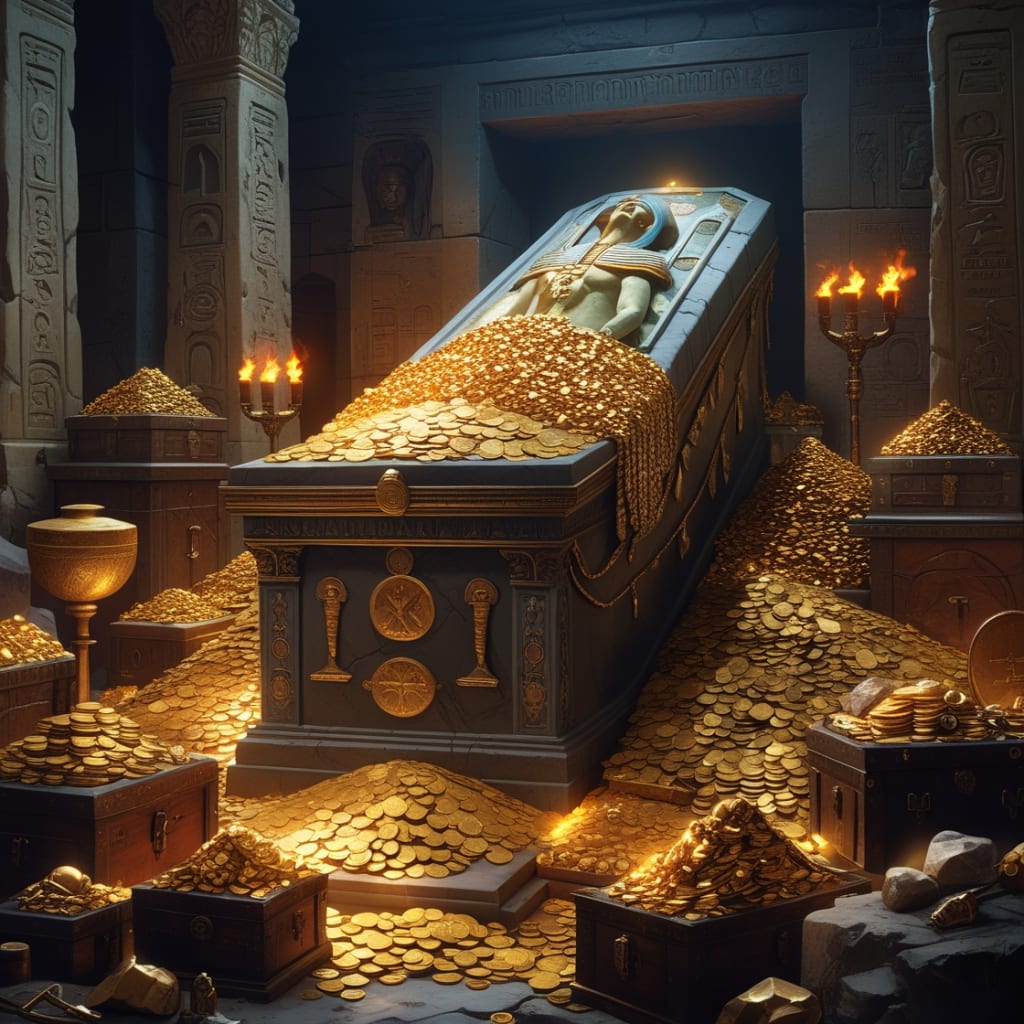
The Legendary Loot of Alexander the Great: Unraveling the Wealth of His Conquests
Throughout history, few figures have left a legacy as far-reaching and influential as Alexander the Great. Born in 356 BCE in Macedonia, Alexander was destined for greatness, and by the time of his death at the age of 32, he had created one of the largest empires the world had ever seen. However, Alexander’s conquests were not just about expanding territory. His campaigns led to the accumulation of vast amounts of wealth, as he looted palaces, temples, and treasuries across Asia, the Middle East, and parts of North Africa. This wealth, comprising gold, silver, jewels, and priceless artifacts, played a crucial role in shaping the economic, cultural, and political landscape of the ancient world.
The Conquests Begin: Wealth from Persia
One of the most defining moments in Alexander’s quest for wealth was his victory over the Persian Empire. Under King Darius III, Persia was one of the richest empires in the ancient world. When Alexander defeated the Persians at the Battle of Issus in 333 BCE and later at Gaugamela in 331 BCE, he gained control of the Persian royal treasury. The wealth stored in Persepolis, Susa, and Ecbatana was staggering. Historians estimate that Alexander seized around 200,000 talents of gold and silver from the Persian treasuries, an amount equivalent to billions of dollars in today’s terms.
The looting of Persepolis, the ceremonial capital of Persia, was particularly infamous. After allowing his troops to plunder the city, Alexander reportedly set fire to the magnificent palaces, possibly as an act of revenge for the Persian invasion of Greece a century earlier. The flames consumed priceless treasures, but not before Alexander and his men had carted away enormous quantities of gold, silver, and other valuables.
Egyptian Riches
Alexander’s conquest of Egypt in 332 BCE was relatively peaceful compared to his battles with Persia, but it also added to his growing wealth. Egypt was a land of immense agricultural riches, and its temples were adorned with gold and precious stones. By establishing the city of Alexandria, which would later become a center of learning and commerce, Alexander ensured that the wealth of Egypt would continue to flow into his empire.
The Loot of India
Alexander’s campaigns did not stop in Persia or Egypt. In 326 BCE, he crossed into the Indian subcontinent, where he faced the powerful King Porus at the Battle of the Hydaspes. Although Porus fought valiantly, he was ultimately defeated, and Alexander gained control of his kingdom. The Indian campaign yielded significant loot, including war elephants, gold, and jewels.
According to some accounts, Alexander’s men were awestruck by the riches they encountered in India. However, the campaign also took a toll on his army, and after years of continuous warfare, his soldiers eventually refused to march further east. Despite this setback, Alexander’s Indian campaign added to the vast treasure hoard he had accumulated.
How Did Alexander Use His Wealth?
Alexander was not merely a conqueror; he was also a visionary leader who used his wealth to fund grand projects, reward his loyal soldiers, and establish cities across his empire. The treasure looted from conquered territories helped finance the construction of new cities, including Alexandria in Egypt and several others in Asia. These cities became hubs of trade, culture, and learning, spreading Greek influence far beyond the borders of Macedonia.
Alexander also used his wealth to reward his soldiers generously, ensuring their loyalty and morale. After the conquest of Persia, he distributed vast sums of gold and silver to his troops, turning many of them into wealthy men.
The Legacy of Alexander’s Looted Wealth
The wealth accumulated by Alexander had a lasting impact on the ancient world. After his death in 323 BCE, his empire was divided among his generals, known as the Diadochi, who fought for control of the treasure and territories. This period of infighting, known as the Wars of the Successors, saw further looting and redistribution of Alexander’s wealth.
The treasures looted by Alexander also played a role in the spread of Hellenistic culture. Greek art, architecture, and ideas were disseminated across the conquered territories, blending with local traditions to create a unique cultural fusion.
The Mystery of Alexander’s Lost Wealth
Despite the vast quantities of treasure accumulated by Alexander, much of it has been lost to history. The exact fate of the Persian gold, the Indian jewels, and the treasures of Egypt remains a mystery. Some believe that portions of Alexander’s treasure may still be hidden in ancient burial sites or sunken ships, waiting to be discovered. Others suggest that the treasure was gradually dispersed over the centuries through wars, trade, and political upheaval.
One of the most enduring mysteries is the location of Alexander’s tomb. After his death in Babylon, his body was reportedly taken to Egypt and buried in Alexandria. The tomb was said to be adorned with gold and other riches, but its exact location has never been found. The search for Alexander’s tomb and the treasures it may contain continues to captivate archaeologists and historians to this day.
Conclusion
Alexander the Great’s legacy is not just one of military conquest; it is also a story of immense wealth and the impact of looted treasure on the ancient world. The gold, silver, and jewels accumulated during his campaigns helped shape the economic and cultural landscape of the Hellenistic era, leaving a legacy that continues to fascinate and inspire. As historians and treasure hunters search for the lost riches of Alexander, the allure of his legendary wealth remains as strong as ever.
About the Creator
Say the truth
"Say the Truth: Explain Everything in the World" is your trusted source for uncovering facts and exploring the wonders of history, science, technology, and beyond. We simplify complex ideas and reveal truths to inspire curiosity .
Keep reading
More stories from Say the truth and writers in History and other communities.
"Vanished Riches: History’s Most Mysterious Lost Treasures"
Vanished Through Time: History’s Most Enigmatic Lost Treasures Throughout the ages, treasures have been fashioned, uncovered, desired, and, at times, inexplicably lost. The fascination with gold, gemstones, invaluable artifacts, and ancient heirlooms has propelled empires into conflict, inspired numerous legends, and motivated treasure seekers to undertake treacherous expeditions. Nonetheless, certain treasures, once noted in historical records, appear to have vanished entirely, leaving behind lingering inquiries and theories enveloped in enigma. This article explores some of history’s most cryptic treasures that have disappeared and remain unaccounted for to this day.
By Say the truth 10 months ago in History
3 Completely Normal Jobs With Disturbing Hidden Histories
Every job has a backstory. Some are boring, some are inspiring, and some are better left buried. While modern versions of certain professions look harmless—sometimes even respectable—their origins tell a much darker story.
By Enoch Sagini5 days ago in History
Albert Einstein: The Mind That Changed the Universe
Albert Einstein was not born a legend. When he entered the world on March 14, 1879, in the quiet German city of Ulm, nothing about his early life suggested that he would one day transform science forever. In fact, his beginnings were remarkably ordinary—and in some ways, difficult. As a child, Einstein spoke slowly, so slowly that his parents worried something might be wrong. Teachers considered him distracted and stubborn, a boy who questioned too much and obeyed too little. Yet hidden beneath that quiet exterior was a restless, powerful curiosity that would later reshape the universe itself.
By The best writer 4 days ago in History




Comments
There are no comments for this story
Be the first to respond and start the conversation.