
The Legal Landscape of Race
Tracing the Impact of Laws and Policies on Race Relations in America
Introduction
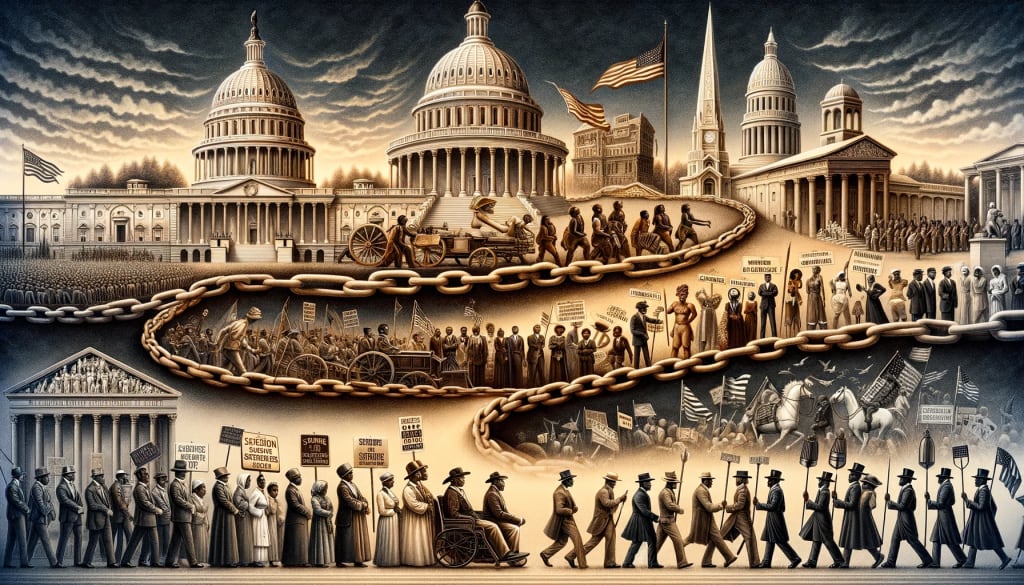
In the intricate tapestry of American history, few threads are as enduring and complex as the history of race relations. From the earliest days of colonial America to the present, the narrative of race has been inextricably linked to the laws and policies enacted by those in power. Understanding this history is not just an academic exercise; it offers vital insights into the present and future of racial dynamics in the United States. This blog post aims to trace the impact of these laws and policies, unraveling how they have shaped, and continue to influence, race relations in America.
The Roots of Racial Laws - Colonial and Early America
The story of race in America cannot be told without addressing its original sin: slavery. Colonial America laid the foundation for racial hierarchies, primarily through laws that codified the brutal practice of chattel slavery. Enslaved Africans were brought to American shores not just as laborers, but as property, deprived of their basic human rights. This period saw the emergence of laws that defined race as a marker of servitude, establishing a system where one's skin color dictated their role in society.
These laws were not static; they evolved to further entrench racial divisions. An example is the Virginia law of 1662, which declared that a child's status as free or enslaved would follow that of their mother, a departure from English common law. This law ensured the perpetuation of slavery, marking the beginning of a long history where race would determine one's destiny in America.
The Era of Jim Crow and Segregation
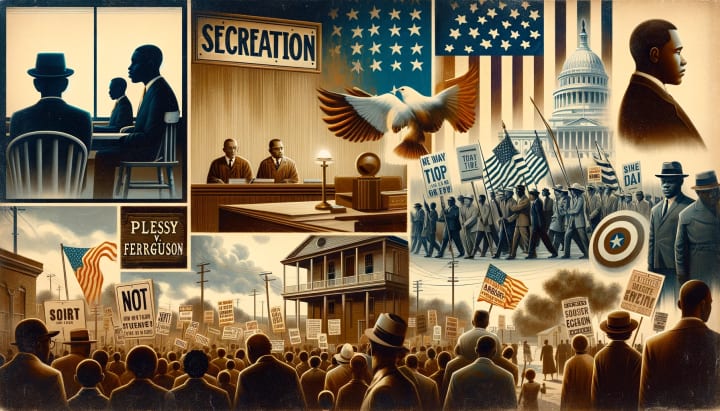
Following the abolition of slavery, America entered a period where new forms of racial oppression emerged, most notably through Jim Crow laws. These laws, which began in the late 19th century and extended well into the 20th, enforced racial segregation in the southern United States. They represented a legal codification of racial discrimination, ensuring that African Americans remained second-class citizens in many aspects of daily life.
The infamous Supreme Court decision in Plessy v. Ferguson (1896) epitomized this era. By upholding the constitutionality of racial segregation under the "separate but equal" doctrine, it provided judicial endorsement for a system that was anything but equal. Schools, public transportation, restrooms, and even drinking fountains were segregated, entrenching a deeply unequal society.
This period was not just defined by laws but also by the resilience of the African American community. Despite living under oppressive conditions, they cultivated a vibrant culture and initiated movements that would later become instrumental in fighting for civil rights. The seeds of resistance planted during the Jim Crow era would grow into a powerful force challenging the status quo.
The Civil Rights Movement and Legal Milestones
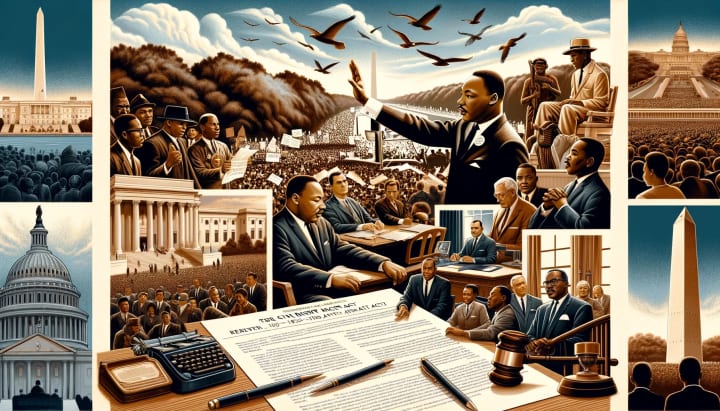
The mid-20th century marked a pivotal period in the history of race relations in America with the advent of the Civil Rights Movement. This movement, driven by a desire for equality and justice, brought about significant legal and social changes. It was a response to the systemic racism and segregation perpetuated by Jim Crow laws, and a fight for the basic human rights denied to African Americans for centuries.
Key legislation during this era played a crucial role in dismantling institutionalized racism. The Civil Rights Act of 1964 and the Voting Rights Act of 1965 were monumental in this regard. The Civil Rights Act outlawed discrimination based on race, color, religion, sex, or national origin, and ended unequal application of voter registration requirements and racial segregation in schools, at the workplace, and by facilities that served the general public. The Voting Rights Act, on the other hand, aimed to overcome legal barriers at the state and local levels that prevented African Americans from exercising their right to vote as guaranteed under the 15th Amendment to the U.S. Constitution.
These laws did not immediately eradicate all forms of racial inequality, but they marked significant steps towards a more equitable society. The Civil Rights Movement also saw the rise of influential leaders like Martin Luther King Jr., whose advocacy for nonviolent protest became a hallmark of the struggle for racial justice.
Modern Challenges and Legal Progress
In contemporary America, the journey toward racial equality continues. Despite the significant strides made in the past, race relations still face numerous challenges. The legacy of historical policies and laws, and the systemic racism they entrenched, continue to affect society in various ways. However, there is also a growing awareness and ongoing efforts to address these issues.
Modern legislative actions and social movements have been pivotal in keeping the conversation on race relations dynamic and progressive. Initiatives to reform criminal justice, address economic disparities, and promote educational equality are some of the ways through which contemporary America is trying to rectify past injustices. The Black Lives Matter movement, for instance, has been instrumental in bringing attention to the issues of police brutality and racial profiling.
While progress is evident, the path to racial equity is ongoing. The fight for racial justice is not just about changing laws but also about transforming societal attitudes and dismantling deeply ingrained prejudices. It's a multifaceted effort requiring commitment from all sectors of society.
Conclusion
The history of race relations in America is a complex and evolving narrative, deeply intertwined with the laws and policies that have shaped the nation. From the early days of slavery to the modern struggle for equality, each period has left an indelible mark on the fabric of American society. Understanding this history is crucial, not only as a reflection of the past but also as a guide for the future. As America continues to grapple with its racial history, it's important to remember that the journey towards true equality is ongoing, requiring the collective effort of every generation.
About the Creator
Keep reading
More stories from writers in History and other communities.
The Blue Ridge Stalker
Tom had left the Ford down the way, its spark plugs finally exhausted and no mechanics for a dozen miles back through the foothills to Strossburg. No matter, he had worn his boots—almost as if he planned for this to happen. The puzzle he sought to solve emanated from the woods clinging to the slopes above; the valley behind held no mysteries.
By Stephen A. Roddewig4 days ago in Fiction




Comments
There are no comments for this story
Be the first to respond and start the conversation.