
The Lanterns of Old New York
A City of Shadows and Lanterns
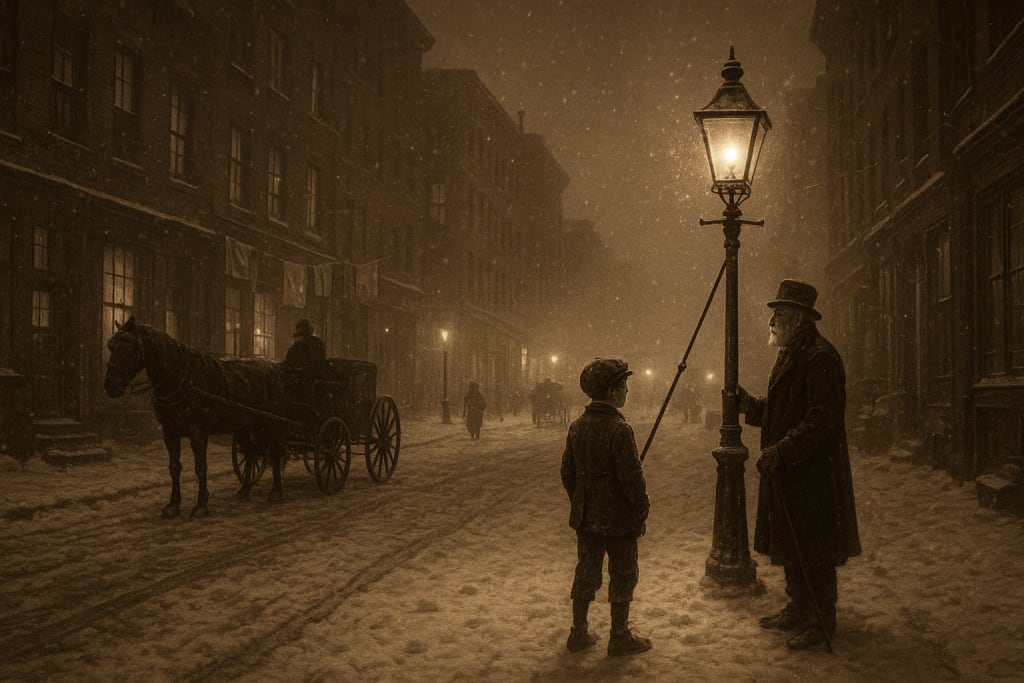
In the late 1800s, long before the glass towers and neon signs, New York was a city of shadows and lanterns. Cobblestone streets stretched out beneath the flicker of gaslights, and the air was filled with the steady hum of carriages, the cries of vendors, and the smell of roasted chestnuts sold on the corners. The city was alive, restless, and brimming with dreams.
Among the narrow streets of the Lower East Side lived a boy named Samuel Levine. His family had crossed the Atlantic from Poland, crammed into the dark belly of a ship, chasing the promise of a better life. They arrived with only a suitcase and a handful of coins, settling into a cramped tenement where laundry hung from windows like flags of survival.
Samuel was barely twelve, but he carried himself with the seriousness of a grown man. Each morning, he woke before the sun, running errands for neighbors, shining shoes, or selling newspapers at the corner of Bowery and Canal. The city, though harsh and unforgiving, gave him a stage upon which to build his future.
One winter’s evening, as snow fell in soft sheets across the city, Samuel wandered toward the docks. He loved the river, the way ships towered above the wooden piers like giants, their sails furled, their bells ringing in the icy wind. There, he met an old lamplighter named Mr. Callahan. The man’s job was simple yet magical: each night, he would walk the streets carrying a long pole, touching flame to the lamps that dotted the city. One by one, the dark corners of New York would glow under his hand.
“Evenin’, lad,” Mr. Callahan greeted, his breath turning white in the air. “Cold night to be wanderin’, eh?”
Samuel shrugged. “I like watching the lights. Makes the city feel less… scary.”
The old man chuckled. “That’s the thing about New York. She’s a wild one, but she shines if you know where to look.”
From that night on, Samuel often walked beside Mr. Callahan, listening as the lamplighter told stories of the city. He spoke of the great fire of 1835, when entire blocks burned to the ground, and of the bridges that now stretched across the East River, stitching boroughs together. He spoke of immigrants arriving each day, their eyes full of hope, their pockets empty, their hearts unbroken.
One story lingered with Samuel more than the rest. Mr. Callahan spoke of the “lantern of promise,” a legend whispered among dockworkers. According to the tale, one of the lamps in the city was enchanted. Those who touched it on the coldest night of winter would be granted the chance to change their fortune. No gold, no magic coin—just an opportunity, a door where none had existed before.
Samuel, curious and hungry for something greater, began to believe in the story. His family was struggling—his father’s health was failing, his mother worked herself to exhaustion sewing shirts, and his younger sister often went to bed hungry. Samuel dreamed of more: of becoming a writer, of telling stories that would outlive him, of rising above the tenement walls that seemed to trap his family.
That winter grew bitterly cold. The East River froze at its edges, and the wind cut through the city like a knife. One night, Samuel followed Mr. Callahan on his rounds, searching every lamp they lit. Finally, on a lonely street near the docks, the lamplighter paused. “Here it is,” he whispered, tapping the iron post of an ordinary-looking lamp. “Some say this one’s the lantern of promise. No harm in hoping, lad.”
Samuel reached out with trembling fingers and touched the cold metal. In that moment, he didn’t expect gold or riches—only a chance, a spark of change.
The days that followed seemed ordinary. But one morning, as Samuel hawked newspapers, a gentleman in a fine coat stopped to buy one. Instead of rushing away, the man glanced at the headlines and then at Samuel.
“You read, boy?” the man asked.
“Yes, sir,” Samuel replied proudly.
The man smiled. “Good. I run a small print shop on Mulberry Street. Come by tomorrow. I could use a boy who can read and deliver proofs.”
It was a small opportunity, but to Samuel, it felt like destiny. He began working at the print shop, learning not only to deliver but to set type, to read proofs, and to handle the press. The smell of ink and paper became his world. Soon, he was scribbling stories of his own on scraps of newsprint, capturing the sounds, sights, and struggles of the city he loved.
Years later, Samuel would become a journalist, then an author, his name printed on the very pages he once sold for a penny. He never forgot Mr. Callahan or the night he touched the lantern of promise. Whether the lamp truly held magic or whether it was hope itself that carried him forward, Samuel never knew.
But as he walked the streets of New York, now lined with electric bulbs instead of gas lamps, he often thought of the boy he had been—the boy who believed the city could change his life. And in truth, it had.
For New York was not only a city of stone and steel, but a city of dreams, of second chances, and of lanterns that glowed against the darkest nights.
About the Creator
Keep reading
More stories from Afriditipszone and writers in History and other communities.
Ludacris and Nelly draw backlash over bookings at MAGA-coded music festival
Ludacris and Nelly headlining a mostly right-wing event is good for them. It’s also great for the genre of hip hop. The two rap veterans have showcased their talents on other stages. Why can’t they perform for mostly MAGA folks and grab that bag?
By Skyler Saunders4 days ago in Beat


Comments
There are no comments for this story
Be the first to respond and start the conversation.