
The Invisible Tech War Between the U.S. and China
While the world scrolls through apps and updates, two nations battle silently for control over tomorrow.
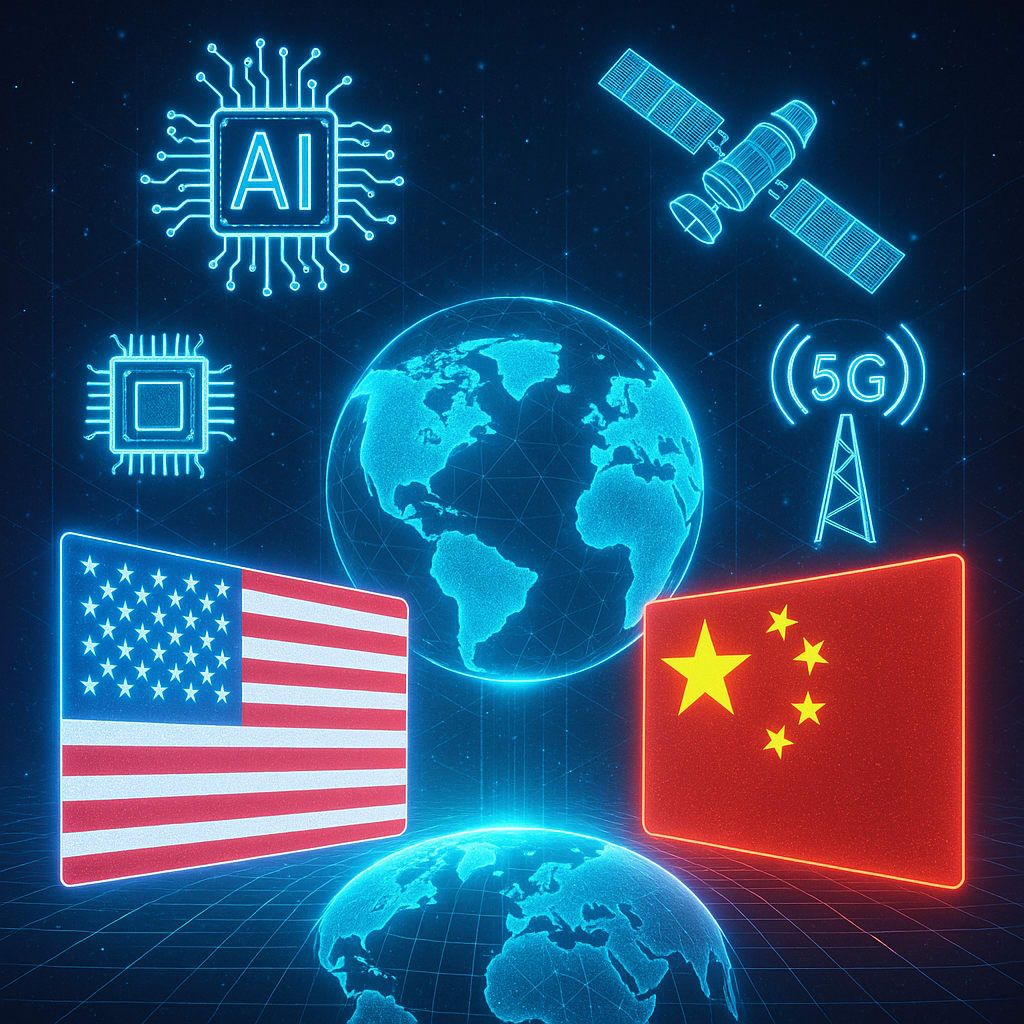
In today’s hyper connected world, the true war isn’t being fought on battlefields — it’s being coded in silence.
The United States and China aren’t just global superpowers; they’re two titans locked in an invisible arms race for control over the future. And that future isn’t made of bombs or bullets. It’s made of algorithms, artificial intelligence, chips, and satellites.
Most people don’t see it. But it’s happening.
We often imagine war with soldiers, tanks, and missiles. But the most dangerous war of our time is being fought silently — not on battlefields, but on circuit boards and servers.
This is the invisible tech war between the United States and China.
And it’s already begun.
---
Chips: The New Weapons
Everything we use — phones, laptops, cars, drones, even military systems — runs on microchips. They are small, but they’re the most critical component of modern power.
The U.S. has historically dominated advanced chip technology. Companies like Intel and Nvidia, along with Taiwan's TSMC (an American ally), produce the most cutting-edge processors in the world.
China, meanwhile, is investing billions to catch up. The Chinese government’s "Made in China 2025" strategy openly declared its goal to lead in AI, robotics, and semiconductors. The result? A desperate global race to control chip design, supply chains, and rare earth materials needed to build them.
When the U.S. banned Chinese tech giant Huawei from accessing American-made chips, it was a move of war — not military, but technological.
---
AI: The Brain of the Future
Artificial Intelligence is more than a Silicon Valley buzzword — it's the brain behind future economies and weapon systems.
The U.S. leads in AI research. OpenAI, Google DeepMind, Meta, and Microsoft are pushing boundaries every month.
But China isn't far behind. With its massive population and state-controlled data systems, China has a treasure chest of information to train AI models. Surveillance technology, facial recognition, and smart city projects are already deeply embedded into Chinese life.
Here, the war isn't just who builds the smartest AI — it's about who uses it first, and for what.
---
The App War: Why TikTok Matters
To some, banning TikTok in the U.S. might seem like politics. But it's deeper than that. The app, owned by Chinese company ByteDance, isn’t just a dance video platform — it's a data-gathering tool.
And data is the new oil.
The more data a nation controls, the more it can predict behavior, influence thought, and train smarter AI. That’s why the U.S. is concerned. And that’s why China blocks American platforms like Facebook, Google, and YouTube inside its own borders.
Each nation is building a digital wall — not just to keep content out, but to control their citizens’ minds and actions.
---
Satellites and Space: The Next Stage
The rivalry isn’t limited to Earth. The U.S. and China are rapidly expanding in space.
China’s Tiangong space station is fully functional, and the U.S. has invested in SpaceX, Starlink, and NASA’s Artemis missions. Satellites are no longer about weather reports — they’re essential for communication, surveillance, military targeting, and even internet control.
Control space, and you control global connectivity.
---
So Who's Winning?
Innovation: The U.S. leads in free-market invention and global collaboration.
Scale & Speed: China excels in rapid deployment and state-backed rollout.
Surveillance: China is already ahead — with more than 500 million facial recognition cameras nationwide.
Cybersecurity & Infrastructure: The U.S. holds advantages in defense, but faces growing threats from Chinese state-backed hackers.
There’s no clear winner. This isn’t a war that ends in surrender or treaties. It’s a race without a finish line — one where every breakthrough by one side triggers a reaction from the other.
---
Why It Matters to You
You may not be a coder or an engineer. You might just be scrolling through your feed, unaware of the algorithms shaping what you see.
But every swipe, every click, every update feeds this silent war. Our future — how we live, work, and even think — will be shaped by who wins this digital battle.
Will the future be one of freedom, creativity, and openness?
Or one of control, surveillance, and silence?
That answer depends on who builds it first.
And they're building it now.
About the Creator
Keep reading
More stories from Ahmad Khan and writers in History and other communities.
The Room That Was Always Locked
Growing up, there was one rule in our house that was never broken: "Don’t open the room at the end of the hall." It was my mother’s rule, and it came with no explanation. The door stayed locked for as long as I could remember — a plain, brown wooden door with a rusted handle. We painted the hallway, cleaned around it, even changed the curtains nearby — but never dared to touch that door.
By Ahmad Khan8 months ago in Families


Comments
There are no comments for this story
Be the first to respond and start the conversation.