
The Iconography of Roman Imperial Coins
Roman Imperial coins

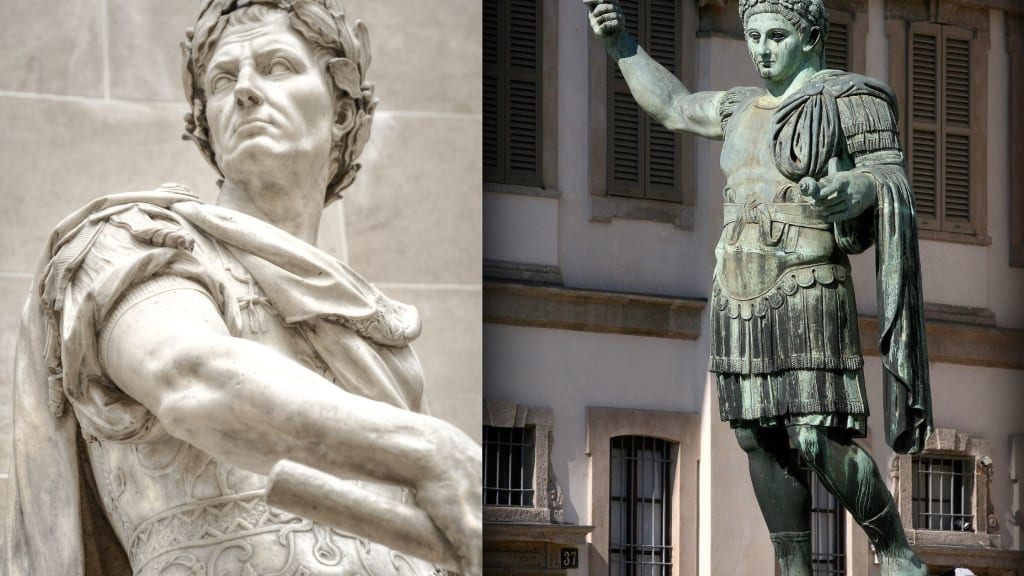
Roman imperial coins are an essential source of information for understanding the history and culture of the Roman Empire. These coins, which were issued during the Roman imperial period (27 BC–AD 476), often featured intricate and detailed iconography that depicted various aspects of Roman society and culture. In this article, we will discuss the iconography of Roman imperial coins, its symbolism, and its significance.
Introduction
Roman imperial coins were issued by the Roman emperors and were used for commerce and propaganda purposes. They often depicted the image of the emperor, historical events, allegorical figures, and mythological creatures. The iconography on these coins provides insight into the political and cultural values of the Roman Empire.
The Iconography on Roman Imperial Coins
The portrait of the emperor was a common feature on Roman imperial coins. These portraits were intended to show the authority and power of the emperor. The portraits depicted the emperor's likeness and were often accompanied by inscriptions that proclaimed the emperor's titles and achievements.
Allegorical Figures
Allegorical figures were a common feature of Roman imperial coins. These figures represented abstract concepts such as victory, peace, and prosperity. The victory was often depicted as a winged figure holding a wreath or a palm branch. Peace was depicted as a figure holding an olive branch, while prosperity was depicted as a figure holding a cornucopia.
Military Symbols
Military symbols such as standards, armor, and weapons were also a common feature on Roman imperial coins. These symbols represented the military might of the Roman Empire and its conquests. Standards were used to represent the legions, while armor and weapons were used to represent the soldiers.
Deities and Mythological Creatures
Deities and mythological creatures were also depicted on Roman imperial coins. These depictions often had political and religious significance. Jupiter, the king of the gods, was often depicted on coins to represent the emperor's divine right to rule. Other mythological creatures such as the eagle and the serpent were also used to represent power and authority.
Historical and Commemorative Events
Historical and commemorative events such as victories, anniversaries, and public works were also depicted on Roman imperial coins. These events were used to reinforce the emperor's legitimacy and authority. For example, coins were minted to celebrate the completion of public works such as aqueducts and temples.
Symbolism on Roman Imperial Coins
The iconography on Roman imperial coins was rich in symbolism. Each element depicted on the coins had a specific meaning.
Portrait Styles
The style of the portrait depicted on Roman imperial coins varied depending on the emperor and the period in which the coin was minted. Some portraits were idealized
Portrait Styles
The style of the portrait depicted on Roman imperial coins varied depending on the emperor and the period in which the coin was minted. Some portraits were idealized
The Iconography of Roman Imperial Coins
Roman imperial coins are an important source of information about the history and culture of the Roman Empire. These coins, which were issued during the Roman Empire (27 BC - 476 AD), often featured complex and detailed iconography that
The Portrait Styles of Roman Imperial Coins
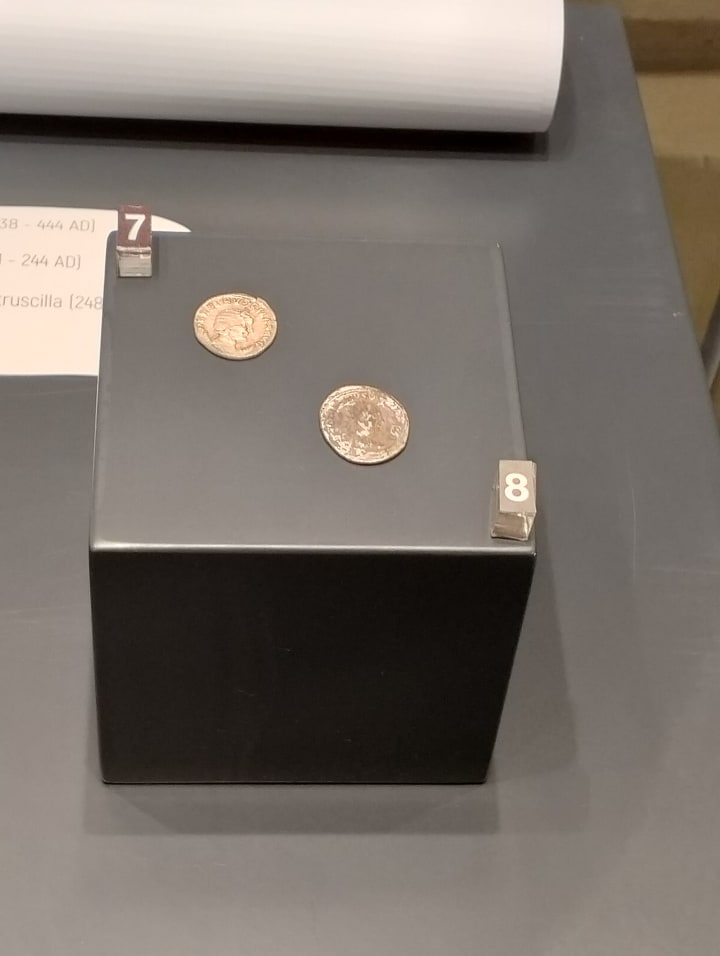
The styles of portraits depicted on Roman imperial coins vary depending on the emperor and the period in which the coin was minted. Some portraits are idealized and stylized, while others are more realistic.
A History of the Portrait Styles of Roman Imperial Coins
The styles of portraits on Roman imperial coins have changed over time. The first Roman coins were minted during the early period of the Roman Republic and usually featured engraved images of gods and symbols.
The first portraits of emperors began to appear during the time of Julius Caesar (100 BC - 44 BC). These portraits were realistic, depicting the emperors in profile, with their facial features clearly distinguishable.
After Julius Caesar, portraits of emperors became increasingly idealized. This was particularly noticeable during the time of Augustus (63 BC - 14 BC) when portraits of the emperor were made with great attention to detail to emphasize his power and majesty.
Over the following centuries, the styles of portraits of emperors continued to change. Some emperors were depicted with realistic portraits, while others were represented with highly idealized portraits.
Images of emperors and symbols of power
Images of Emperors and Symbols of Authority. The symbols of authority of the emperors were also depicted on the coins. The Kuril is a symbol of power and its association with the divine. The eagle, which was the symbol of Jupiter - the highest deity in the Roman religion, was also often depicted on coins. The laureate is a symbol of triumph and success that was awarded to emperors after victory in war. The scepter is a symbol of power and rule. The visual art of the Roman Empire had a great influence on coin iconography. This can be seen in the way the emperors were depicted. For example, during the early Roman Empire, portraits of emperors were depicted in the classical style. Over time, the style of depicting portraits of emperors evolved and became more realistic. The coin iconography of the Roman Empire was extremely important in identifying emperors and establishing their authority. For example, emperors were depicted with titles and symbols of their authority on coins, allowing people to recognize them and respect their authority. The images of emperors and the symbols of their power on Roman imperial coins are a valuable source of information about the history and culture of the Roman Empire.
the iconography of Roman imperial coins represents a rich tradition that allows us to touch the visual art of one of the most powerful empires in human history. From the portraits of the emperors to the symbols of their insignia, each coin tells a story about a period of the Roman Empire. From the earliest coins to the latest, the iconography of Roman imperial coins provides us with valuable information about the culture, economy, and politics of the time. While the portraits of emperors carry with them idealized notions of their ruling qualities, the symbols of power depicted on the coins show us how the emperors presented themselves as leaders of a great empire. Although these symbols have different meanings, they all served to assert the authority of the emperors in the Roman Empire. Roman imperial coins are not only unique works of art but also represent an important source of historical and cultural context. These coins remain an important element of our heritage culture and allow us to enjoy the beauty and significance of a mighty empire.
About the Creator
Stefan Chardakliev
Stefan Chardakliev is an emerging writer and passionate historian with a deep fascination for Ancient Rome and numismatics.
Keep reading
More stories from Stefan Chardakliev and writers in History and other communities.
Treasures from the Past
In the realm of history, few things capture the imagination as much as ancient artifacts. Among these treasures of the past, rare Roman coins stand out as exquisite objects that not only hold immense historical significance but also carry a unique appeal for collectors and enthusiasts alike. In this article, we embark on a journey to explore the fascinating world of rare Roman coins, their historical context, and the joy of discovering these precious relics of antiquity.
By Stefan Chardakliev3 years ago in History


Comments
There are no comments for this story
Be the first to respond and start the conversation.