
The History of Nikola Tesla
Exploring the Life and Legacy of One of the Greatest Inventors of All Time

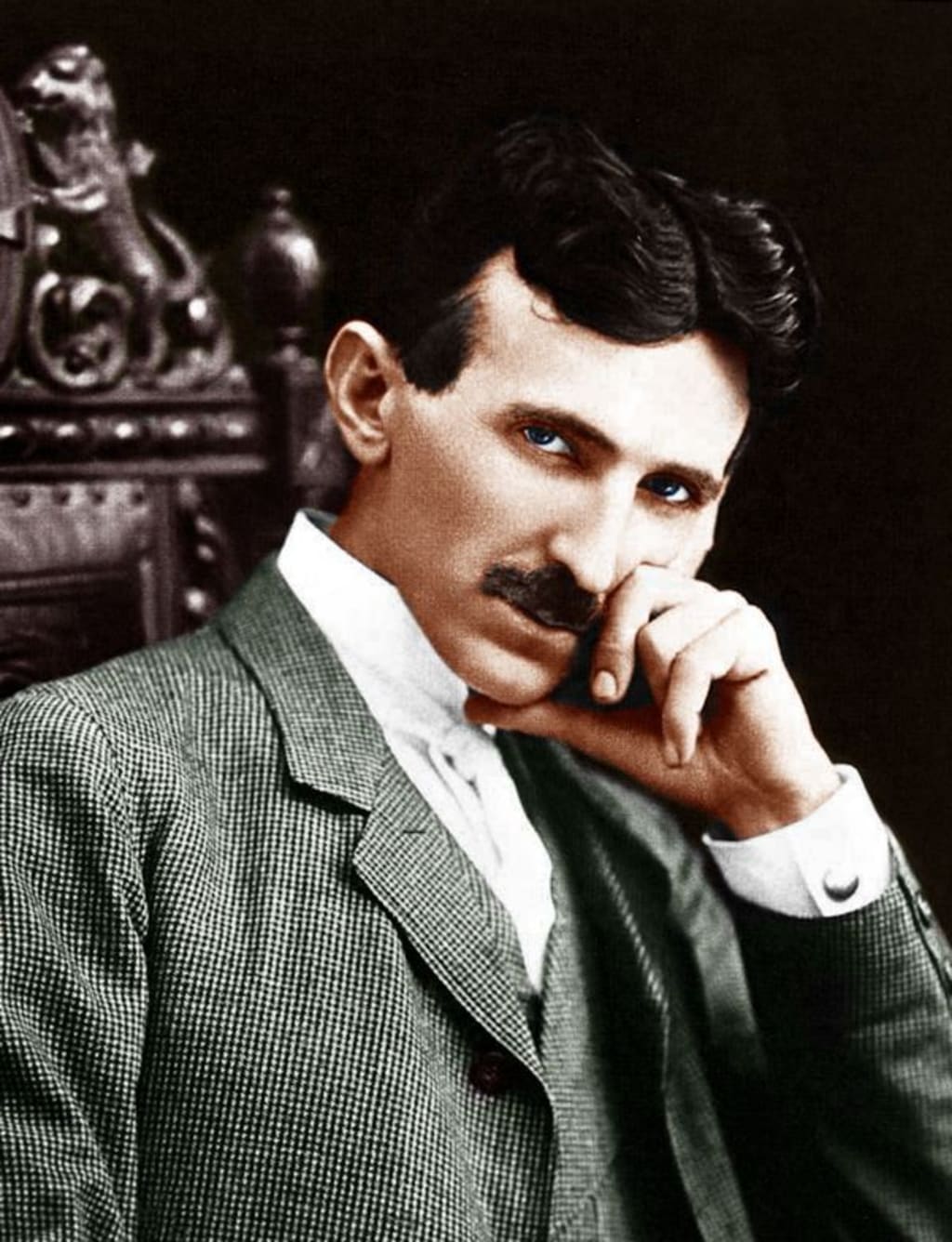
Early Life and Education
Nikola Tesla was born on July 10, 1856, in Smiljan, a village in the Austrian Empire (modern-day Croatia). He was the fourth of five children in a family of Serbian heritage. His father, Milutin Tesla, was an Orthodox priest and a writer, while his mother, Georgina Đuka Tesla, was an inventor of household appliances. Tesla's interest in invention and mechanical devices was influenced heavily by his mother, who had a talent for making tools and mechanical appliances.
Tesla's early education began in Karlovac, where he attended the Higher Real Gymnasium. He excelled in mathematics and physics, demonstrating an extraordinary ability to visualize complex mathematical equations and solve problems without the need for written work. This photographic memory and ability to conceptualize devices in his mind would later become hallmarks of his inventive process.
Move to the United States
After studying engineering at the Technical University of Graz and later at the University of Prague, Tesla moved to Budapest, Hungary, where he worked for the Central Telephone Exchange. It was here that he first conceptualized the rotating magnetic field principle, a fundamental principle in alternating current (AC) systems.
In 1884, Tesla emigrated to the United States, arriving in New York City with little more than a letter of recommendation for Thomas Edison. Tesla began working for Edison, who was then heavily invested in direct current (DC) systems. Although Edison and Tesla had different approaches to electrical engineering, Tesla's innovative ideas quickly made an impact.
The War of Currents
Tesla's most significant contribution to the field of electrical engineering was his development of alternating current (AC) technology. Unlike Edison's direct current (DC) systems, which were limited by their inability to transmit electricity over long distances, Tesla's AC systems could efficiently distribute power over vast areas. This innovation set the stage for what would later be known as the War of Currents.
The War of Currents was a fierce rivalry between Tesla and Edison, who was determined to maintain his DC systems' dominance. Edison launched a campaign to discredit AC technology, even going so far as to demonstrate its dangers by publicly electrocuting animals. However, Tesla's AC system, which he developed with the financial backing of industrialist George Westinghouse, eventually prevailed. The success of Tesla's AC technology was solidified when it was used to power the 1893 World's Columbian Exposition in Chicago and later, the first hydroelectric power plant at Niagara Falls.
Major Inventions and Discoveries
Throughout his career, Tesla made numerous groundbreaking discoveries and inventions that have had a lasting impact on modern technology. Some of his most notable contributions include:
- Induction Motor and Polyphase System: Tesla's invention of the induction motor and the development of the polyphase system of alternating current allowed for the efficient generation and distribution of electrical power. These inventions laid the foundation for modern electrical power systems.
- Tesla Coil: The Tesla coil, invented in 1891, is a resonant transformer circuit that produces high-voltage, low-current, high-frequency alternating current electricity. It has been used in various applications, including radio transmission, wireless power transmission, and medical devices.
- Radio: Although Guglielmo Marconi is often credited with the invention of radio, Tesla's work in the field of wireless communication predated Marconi's. In 1893, Tesla demonstrated the principles of radio transmission, and in 1943, the U.S. Supreme Court ruled that Tesla's patents had priority over Marconi's.
- Wireless Power Transmission: Tesla envisioned a world where electricity could be transmitted wirelessly, eliminating the need for power lines. His experiments with wireless power transmission included the construction of the Wardenclyffe Tower, a massive structure intended to transmit electrical power and communication signals across the globe. Although the project was never completed due to financial difficulties, Tesla's work in this area laid the groundwork for modern wireless communication and power transmission technologies.
- X-rays: Tesla's experiments with high-voltage electricity led to the discovery of X-rays. He independently developed X-ray imaging technology around the same time as Wilhelm Conrad Roentgen, who is often credited with the discovery. Tesla's contributions to the field of X-ray technology were significant, although he did not receive the same recognition as Roentgen.
- Remote Control: In 1898, Tesla demonstrated the world's first remote-controlled boat, showcasing his invention of radio-controlled technology. This innovation paved the way for the development of remote-controlled devices, including drones, robots, and other modern technologies.
Later Years and Legacy
Despite his many contributions to science and technology, Tesla struggled with financial difficulties throughout his life. His relentless pursuit of innovation often came at the expense of business acumen, and he frequently found himself in debt. In his later years, Tesla lived in relative obscurity, residing in a series of New York City hotels.
Tesla's legacy, however, has only grown over time. His visionary ideas and inventions have had a profound impact on modern technology and continue to inspire scientists, engineers, and inventors. Tesla's work in electrical engineering laid the foundation for the widespread use of alternating current, which powers homes and businesses worldwide. His contributions to wireless communication, radio, and remote control have influenced the development of countless technologies that we rely on today.
In recognition of his achievements, Tesla has been honored with numerous awards and accolades. The Tesla unit, used to measure magnetic flux density, is named in his honor. In 1960, the General Conference on Weights and Measures officially recognized the tesla as the unit of magnetic induction. Additionally, Tesla's name has become synonymous with innovation and creativity, inspiring the naming of the electric car company Tesla, Inc., founded by Elon Musk.
Conclusion
Nikola Tesla's life and work are a testament to the power of imagination and perseverance. Despite facing numerous challenges and setbacks, Tesla's unwavering dedication to his vision of a better, more technologically advanced world has left an indelible mark on history. His inventions and discoveries have not only transformed the field of electrical engineering but have also paved the way for countless technological advancements that continue to shape our world. Tesla's legacy serves as a reminder of the potential for innovation to drive progress and change, and his story continues to inspire future generations of inventors and scientists.
About the Creator
JUHAID VOCAL TIME
By creators, for creators.
Keep reading
More stories from JUHAID VOCAL TIME and writers in History and other communities.
The Enigmatic Sigiriya: Unraveling the History of Sri Lanka's Majestic Rock Fortress
Introduction Sigiriya, often referred to as the Eighth Wonder of the World, is a significant historical and archaeological landmark located in the Matale District of Sri Lanka's Central Province. This ancient rock fortress, also known as Lion Rock, rises majestically about 200 meters (660 feet) above the surrounding plain and attracts thousands of tourists and scholars each year. Its unique geological formation, combined with its rich historical, cultural, and architectural significance, makes Sigiriya one of the most remarkable monuments in Sri Lanka. This article delves into the fascinating history of Sigiriya, from its geological origins to its transformation into a royal citadel and its current status as a UNESCO World Heritage Site.
By JUHAID VOCAL TIME2 years ago in History
Israel: A Land of Struggle, Faith, and Transformation
The land that is today Israel has been at the crossroads of civilizations for thousands of years. From the deserts of Negev to the fertile hills of Galilee, this land has witnessed the rise and fall of empires, the birth of religions, and the enduring hopes of peoples who called it home. In ancient times, it was known as Canaan, a region inhabited by diverse groups, each with their own gods, languages, and customs.
By The best writer 7 days ago in History
A Jealous God
My boyfriend and I had a conversation about religion the other day that sparked my thoughts on something that has long confused me. My God is from the Bible and jealousy is often deemed a "bad" emotion, so... why does the Bible say that God is a jealous God?
By The Schizophrenic Mom3 days ago in History



Comments
There are no comments for this story
Be the first to respond and start the conversation.