
The Hidden Story of Lahore’s Forgotten Fort
Not every treasure is guarded by walls; some are buried beneath memory.
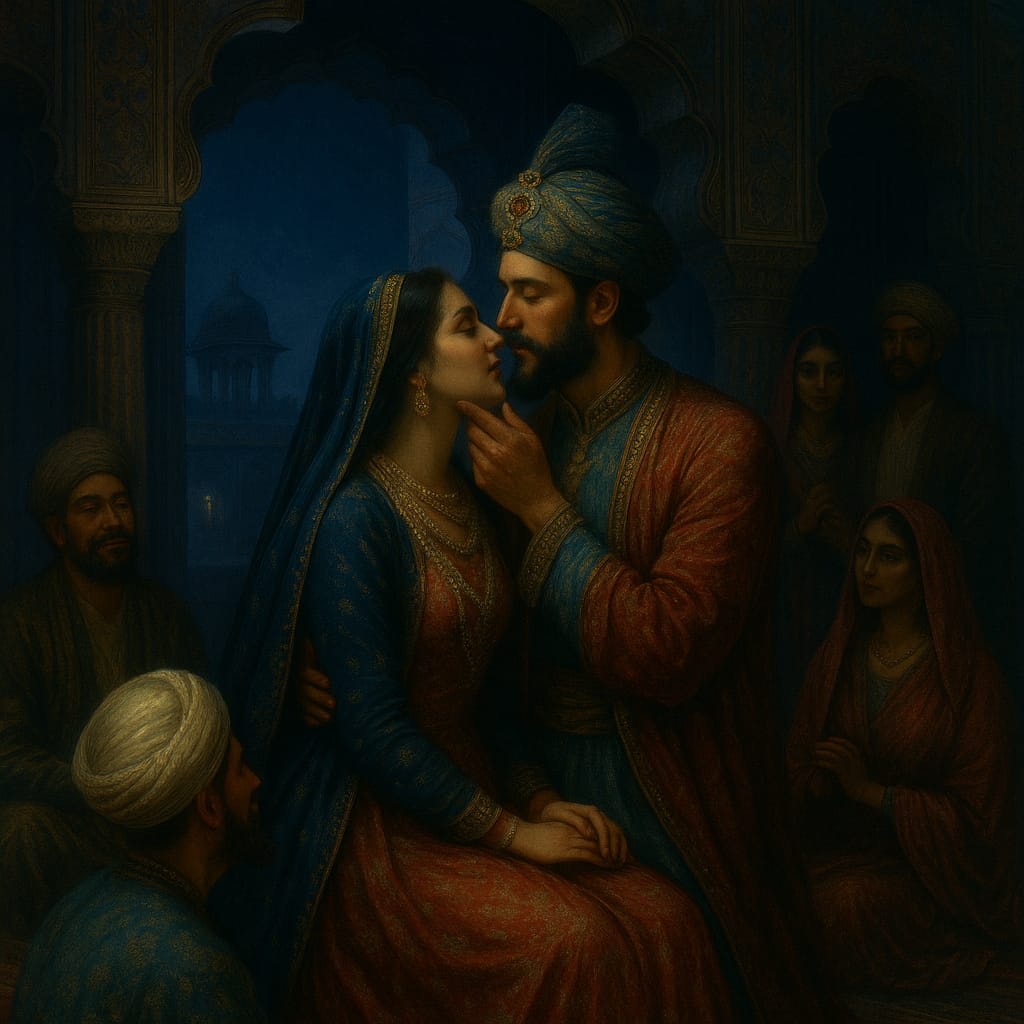
In the heart of Lahore, where rickshaws rush past colonial buildings and the scent of chai hangs in the air, stands a monument that is both majestic and mysterious — the Lahore Fort, or Shahi Qila. It’s easy to admire its grand arches, intricate frescoes, and towering gates. Tourists pose with its stone lions. Students scribble notes on its Mughal architecture. And yet, very few know that much of the fort’s history is still hidden beneath the surface — quite literally.
Most people associate the Lahore Fort with the Mughals — especially Emperor Akbar, who rebuilt much of it in the 16th century using red sandstone. But the Fort’s story doesn’t begin there. In fact, historical evidence suggests that the site has been occupied for over a thousand years, dating back to the era of Mahmud of Ghazni, and possibly even earlier. Before the Mughals, there were Hindu Rajputs, Ghaznavids, Ghurids, and other dynasties — each leaving behind a layer of history buried in the soil. That makes the Fort not just a Mughal relic, but a multi-era archaeological site, rich with forgotten legacies.
Beneath its foundation, archaeologists have uncovered buried chambers, forgotten passageways, and stone remnants that may belong to ancient forts that predate the Mughals. Some researchers even believe the Fort once connected to the River Ravi through underground tunnels — used to fetch water, escape sieges, or move between parts of the walled city unnoticed. There is no official map of these structures — only guesses, folklore, and mystery. Even today, many of these underground areas remain unexplored, raising more questions than answers.
During the British colonial period, parts of the Fort were modified for military use. Barracks were added. Gates were reinforced. The elegant Sheesh Mahal (Palace of Mirrors) remained a symbol of Mughal luxury, but many sections were damaged, stripped of their beauty, or repurposed without care. Walls were plastered with whitewash. Frescoes were painted over. Mosaic tiles disappeared. And the lesser-known corners — such as prayer rooms, servant quarters, and older courtyards — faded from public memory. Colonial authorities were not interested in preserving indigenous history; they were focused on control and utility.
After Pakistan’s independence, restoration efforts began — but slowly, and not always consistently. While some spaces have been beautifully preserved and opened to the public, many others remain sealed off or dangerously neglected. Entire wings are off-limits — not just because of structural damage, but due to a lack of funding, political will, or academic interest. Talk to local guides, and you’ll hear whispers of sealed doorways, secret staircases, and murals that once lit up in candlelight but are now lost to time. These stories, passed down through generations, keep alive a history that official tours often overlook.
Why does this matter?
Because the Lahore Fort isn’t just a monument for selfies — it is a living archive of civilization, a palimpsest of power, art, rebellion, and memory. Within these walls, emperors once debated, prisoners wept, lovers met, and artists painted under starlight. Ignoring the Fort’s forgotten chambers is like skipping the beginning of a great novel and pretending to know the ending.
To protect this legacy, we need more than scaffolding and tourist tickets. We need storytellers, students, local researchers, historians, journalists, artists, and curious minds. The past cannot survive without those who ask, "Who lived here? Who was silenced? And why is this room closed?" We must care enough to ask the hard questions, to dig deeper — figuratively and literally.
In a city sprinting toward concrete towers and glass malls, we risk losing not just our architecture — but our cultural soul. The forgotten parts of the Fort are not just bricks. They are memories. Clues. Warnings. A mirror to who we were — and a whisper of what we might become.
Because every wall has a story. Every shadow holds a secret.
And even in silence, Lahore remembers.
About the Creator
IHTISHAM UL HAQ
"I write to spark thought, challenge comfort, and give quiet voices a louder echo. Stories matter — and I’m here to tell the ones that often go unheard."
Keep reading
More stories from IHTISHAM UL HAQ and writers in History and other communities.
The Second First Time
The taxi slowed as the road narrowed, and even before the car came to a stop, he knew: this place remembered him. A dusty breeze swirled through the cracked window, carrying the scent of earth, rain, and something else he couldn’t name. Was it wheat? Firewood? Maybe time itself had a smell in this part of the world — warm, worn, and unchanged. He stepped out, one foot on familiar ground, the other still unsure.
By IHTISHAM UL HAQ6 months ago in Fiction
A Crisis of Power, Politics, and the People
The relationship between Venezuela and the United States remains one of the most complicated political dynamics in the Western Hemisphere. Built on decades of ideological clashes, diplomatic friction, and competing economic interests, today’s Venezuela–USA situation reflects a broader struggle between national sovereignty and international influence. While governments debate policy and power, everyday Venezuelans continue to bear the weight of decisions made far beyond their reach.
By Muhammad Islam khan swati7 days ago in History
Stanislav Kondrashov Oligarch Series: Echoes of Influence in Southern Italy
Oligarchy isn’t always written into the laws of a country. Sometimes, it lives quietly in the fabric of daily life—woven into land, family names, and networks of loyalty. Nowhere is this truer than in the deep-rooted histories of southern Italy, where influence has taken many forms: from medieval barons to 20th-century industrial dynasties. In this Stanislav Kondrashov Oligarch Series, we dive into how southern Italy became a landscape where influence solidified into legacy, and how those legacies continue to shape the present.
By Stanislav Kondrashov3 days ago in History
Ludacris and Nelly draw backlash over bookings at MAGA-coded music festival
Ludacris and Nelly headlining a mostly right-wing event is good for them. It’s also great for the genre of hip hop. The two rap veterans have showcased their talents on other stages. Why can’t they perform for mostly MAGA folks and grab that bag?
By Skyler Saunders4 days ago in Beat




Comments
There are no comments for this story
Be the first to respond and start the conversation.