
The Harsh Truths on Hygiene During the Middle Ages
History
it's normal to assume that people in the Middle Ages had poor hygiene because of the lack of running water and modern amenities. In reality, people in the Middle Ages had their standards of hygiene, some of which might just surprise you. Taking a bath in the Middle Ages required much more work despite this people in the Middle Ages still took their hygiene seriously contrary to popular belief. Health manuals from the period note that it was essential to eliminate dirt and grime, however, they did have strange beliefs when it came to baths.
01. Treatise the Secreta Secretorum warns that excessively long baths lead to fatness and feebleness. Another Treatise the Mino De Mineri offers over 57 bathing prescriptions for specific conditions like pregnancy and traveling with Rules running 1500 words long can you imagine baths being so complicated for most people. Having a private bath was not an option it was simply too costly and time consuming to have their baths instead they had public baths some famous bathing sites also had their own strange rules.
In 1336 Pietro de Tucsonano formulated 12 laws for those is coming to the Italian town of burmi near Switzerland to get the healing effects of its bath. They include that the person should beforehand not have too much intercourse and that he should also enter the bath with an empty stomach. If they had to have food It could only be two spoons of raisins with a bit of wine. You could only pour the water over your head if you were clean shaven otherwise your hair might hinder the effects of the water. The person should take the baths for 15 days spending up to an hour a day getting washed but if all goes well the bather will benefit for over six months with improved Health. Some bath houses were also just fronts for brothels, however, local authorities usually overlooked these practices as they believed it best to allow some level of sexual outlets for young men. Medieval people made early soaps for bathing with grease Ash and beef or mutton fats soap. Production techniques slowly improved over the next 200 years but cakes of soap from remained relatively soft. During the Middle Ages Aleppo soaps containing lye were harsher and black but worked well even if they didn't smell luxurious. By the 12th century hard soap came into use which was said to be an Arab development that they later imported into Europe. The best soaps were known as Castile soap originating in Castile Spain and made using olive oil instead of fats.
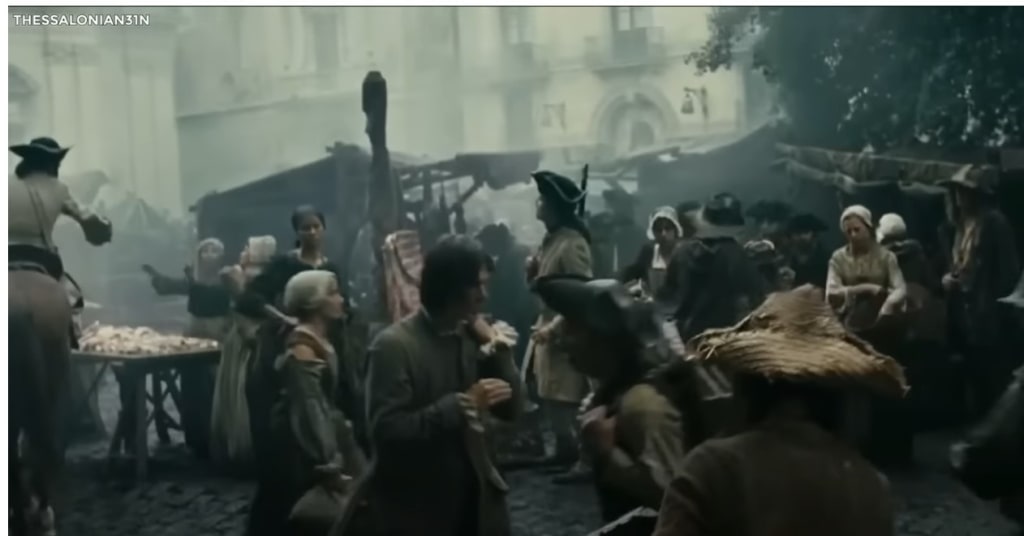
Number 2, bathroom etiquette before the wonders of modern plumbing. People had to use cesspits to do their business. The medieval toilet consisted of a small Hut for privacy and a wooden bench with a hole in it for comfort. The wooden bench also helped reduce the chances of falling into the cesspit. At night, chamber pots were used and then emptied into the cesspit. Before the invention of toilet paper, people had to make do with a handful of hay grass straw or moss. In well-off towns or castles people had their own outdoor toilet also known as a privy in their backyard or even in the house with a Channel or shoot to drain waste into the yard. The entire process was so unpleasant that royalty would hire servants to clear their waste. Gong farmers who were waste collectors would show up at night to clean out gutters and cesspits when they got too full in poorer households. They usually shared a single privy with their waist leading to a communal cesspit. The cesspits also received other household rubbish and were regularly emptied by a professional laborer dedicated to that specific and unenviable job. There were regulations prohibiting The Tipping of waste into the street. Still people often ignored these Heavy Rain or floods also contaminated the water supply with towns also packed with horses and donkeys and farm animals transported elsewhere or to the Butchers. The streets were usually filthy, on top of that, there were Vermin in the streets, the filthy streets became breeding grounds for disease imagine the smell. Number three, nose bags the pandemic familiarized us with wearing masks in the streets but they covered their noses in the Middle Ages for a different reason. As we previously mentioned how filthy medieval streets were stepping outside would mean you came face to face with human waste, rotting food and trash as did the live animals in the markets horses and donkeys regularly relieve themselves on the street. Yes the smell was that bad especially in the summer heat. Some people wore nose bags face masks filled with roses to combat the smell. This wonderful invention in the Middle Ages helped to prevent people from gagging while walking down the street.
Number 3. Feminine hygiene as a woman. Going through your monthly cycle is not a pleasant experience, however, we understand that it's a package deal when it comes to being a woman. Back in the Middle Ages people had no idea why this happened to women, the natural assumption back then was that it must be a curse from God because of Eve's sin in the Garden of Eden. Because of this, Physicians never gave women any medicine to alleviate cramps because they believed it was a punishment that women deserved, however, women devised their herbal plant medicines to help one another. Many nuns stopped menstruating which they took as proof that if a woman devoted her life to God, she would break the curse of Eve. In reality, these nuns had a strict monastic diet and lack of proper nutrition causing them not to menstruate. A general lack of awareness about menstruation probably caused these strange beliefs. Another popular belief was that intercourse with a menstruating woman would produce deformed Offspring or children with red hair or leprosy. Medieval people also believed the Gaze of a menstruating woman to be poisonous. of approval and was responsible for making sure the king's decisions were executed. The groom of the stool position was one of the most powerful in the Middle Ages.
Medieval women had fewer periods than we did today as women reached menopause much earlier often in their late 30s. Poor nutrition and hard labor also meant that many women had low body fat and thus did not get their periods as often women could free bleed or use a makeshift pad or tampon made of scrap Fabric or Rags when they got their periods. Number five, surgery, there were three types of medical practitioners in the Middle Ages, Physicians, apothecaries and barber surgeons. Barber surgeons were the ones who performed most surgeries although they were looked down upon by physicians. Barber surgeons were very skilled especially in surgery some had a better knowledge of anatomy and the human body than most physicians in the Middle Ages. Anesthesia did not exist yet the absence of anesthesia meant that surgery would be excruciating for the patient, therefore, surgeons tried to perform operations as quickly as possible to minimize pain surgeons recognized they needed some way to relieve a patient's pain and they had several methods back then. The patient would either drink a mixture of alcohol and herbs or consume opiates which were supposed to relieve pain due to the lack of knowledge about germs. Medieval doctors performed surgery without clean sterilized equipment. It was also rare for surgeons to wash their hands before and after surgery. Therefore, wounds and surgical Cuts infected quickly leading to a patient's death the appearance of pus meant that the body was ridding itself of toxins. Even after some developments in the Middle Ages, surgery was still an excruciatingly painful experience. Thankfully we'll never have to experience that due to the wonders of modern medicine.
Number 4. Medicine in the Middle Ages. Doctors believe the body had four humors yellow bile, phlegm, black bile and blood. The four elements fire, water, Earth and air controlled these humors. Doctors believed an imbalance of these humors caused disease and the body would be treated by bleeding, cupping and leaching. Doctors commonly used these medical practices in the Middle Ages. Medieval people used herbs, spices and resins as medicine. Doctors treated common illnesses like headaches and aching joints with sweet smelling herbs such as Rose, lavender, sage and hay coriander was used to reduce fever. Medieval people treated stomach pains and sickness with wormwood, mint and balm. They would clean wounds with vinegar as they believed it would kill diseases.
Number 5. Body odor. Yes even body odor existed back in the Middle Ages. They bathed less frequently back then as it was time consuming to fetch and heat water for a bath although people were just as concerned with personal hygiene and cleanliness. They still had to deal with body odor, however, people in the Middle Ages had their deodorant to combat this. In addition to bathing fragrances and scented oil massages were considered the best way to smell good and an essential part of daily life. People made thick perfume pastes from natural items mixed with oil or animal fat following a bath, they typically anointed the body with scented oils and sometimes carried these salves in small bottles tied around the wrist. Early fragrance concoctions incorporated floral scents like Jasmine, Rose, Iris, lavender Violet, chamomile and spices from natural materials such as yellow Amber camphor and cloves. Perfumes derived from animals included civets musk or ambergris. They carried scented powders made from talc and fabric sachets and sewed garments from fabrics steeped in perfume. It wasn't until the Bubonic plague that wiped out 60% of Europe's population in the 14th century and an outbreak of syphilis from the unregulated bath houses that the church insisted that bathing was an act of vanity these all resulted in an aversion to bathing that lasted for several hundred rather smelly years and many people turned to douching themselves in perfume instead. It also became the fashion to have a highly personalized custom-made palmander. For one's use it was a small metal container that maximized airflow and distributed Fragrance.
Number 6. Questionable Dentistry back in the Middle Ages. Dentistry was not a profession along with many other skills. Barber surgeons took on the role due to their expertise in sharp instruments and talent primarily those suffering from toothaches at the time had extractions performed. Methods for treating toothaches included fillings but the process was painful. Anesthesia had not been invented at the time yet so extractions were usually more common several fundamental tools were used back then including an odd device called The Dental Pelican which resembled a pelican's beak hence its term. Barber surgeons also applied herbal remedies for toothaches. Surprisingly, analysis of the Middle Ages skeletons suggests that people had relatively healthy teeth rough linen clothes were used to clean their teeth. Usually with various pastes and powders to whiten and freshen their breath, however, these ingredients were far from the fluoride we know today. Medieval people used age Rosemary pepper, cinnamon mint and salt as toothpaste. Even a form of mouthwash existed with medieval people using mixtures containing vinegar to freshen their breath. The lack of refined sugars that we know today meant less tooth decay in , which gave him the power to sign official documents.the Middle Ages, however, poor nutrition back then caused dental problems.
Number 7. Toilet paper. if you didn't already know by now Joseph C Gaiety invented the first toilet paper in 1857. So what did people use in the Middle Ages. In Europe, wealthier people used wool rags and fabric scraps to wipe themselves off. The Ordinary People knew how to clean themselves with leaves Moss straw hay or simply by hand and water these probably contributed to why many cultures consider the left hand unclean. Medieval people used the left hand to improve body hygiene while the right was for eating. A sponge stick was the equivalent of toilet paper in the Middle Ages, however, in medieval China, they had a different invention by the early 14th century. The Chinese were manufacturing toilet paper at the rate of 10 million packages of 1,000 to 10,000 sheets annually. In 1393, the Chinese produced thousands of perfumed paper sheets for the Hong Woo Emperor's Imperial family.
Number 8. Skin Care, in the Middle Ages, apothecaries dispensed cosmetics and skin care products they used fat-based creams and ointments to soften and preserve the skin. Smooth white skin was considered the beauty standard in the Middle Ages. Paleness was an indication of wealth and Superior breeding clear skin. Like today, was also held in high esteem as smallpox epidemics usually left scars on the face. Women use gemstones to achieve fair skin and remove blemishes. Amethyst was usually dampened with saliva and rubbed over spots. The medieval face wash involved holding an amethyst over heated water until it sweats and once mixed, women would use it to wash their face. The Treatise Liber de diversis medicineis from The 14th Century. Also contains strange herbal remedies to banish freckles.
One remedy was to anoint the face with Bulls blood or hair's blood. Drinking willow tree water was thought to clear the face and skin of spots and discoloration. They also used Herbal Remedies in skin care. One remedy was pulverizing Ginger with twice as much gallon and half of zedawari. The ginger concoction would then be placed in a cloth with vinegar and wine and rubbed on the face
Number 9. Grooming. Believe It or Not hair removal Is Not A New Concept even in the Middle Ages. If you thought shaving today was a tedious process imagine shaving in the Middle Ages. Lice were common in the Middle Ages and removing hair on the head helped combat the problem recipes for hair removing creams remained common. One such cream in the Middle Ages advised the individual to mix one pint of arsenic with a 1 8 pint of quick lime to apply to the hair. It advised the individual to wash it off when it became hot before the mixture took off your skin. Imagine that there were even different Trends back in the Middle Ages Queen Elizabeth started the norm for hair removal amongst women during her Reign around the 1500s. She believed that hair on the face must be groomed at all times for women to shape their eyebrows and remove hair on the forehead and upper lip. Long foreheads were in fashion and women would remove all hair from the forehead and be even encouraged to raise their hairlines by one inch. Mothers from wealthy families would rub walnut oil to remove hair from the forehead at the same time, the average individual would use bandages soaked in ammonia usually obtained from their feline pet feces on their daughter's foreheads to prevent hair growth. Even though plucking the eyebrows and hairline at the top of the forehead was extremely common for many women, the church was extremely unhappy about it. Removing body hair to arouse sexual desire was considered a mortal sin and women were encouraged to confess their sins if they did it as for tools that women used. They used small tweezers made from copper alloy or silver
Number 10. Hair care. Maintaining a healthy scalp and hair through good hygiene can help to prevent or control diseases. People from the Middle Ages understood this and already had several tools for hair care and even remedies for the dreaded lice. Combs in the Middle Ages were elaborately carved or painted with scenes of courting lovers birds or animals. Men frequently used Combs as a gift to their ladies a 1320 Ivory comb that archaeologists discovered highlighted the fine quality of hair tools back then. Medieval people also suffered from hair loss and had different remedies for this aloe vera when mixed with wine. Was said to assist with hair loss they would rub onion juice on the head and lay in the sun medieval texts state that white Maiden hair causes hair to grow thick which would be boiled in wine and mixed with some oil. Herbal head lice remedies were the most popular in the Middle Ages. Due to how frequently people would get them, the juice of the young branches of broom rape was made into an ointment with Hogs grease and heated as oil to kill both body and head lice parsley also repelled head lice and oil from the seeds of garden spurge
Number 11. Laundry. When we think of fresh laundry we think of the smell of fresh Linens not in the Middle Ages, however, medieval laundry involved intense physical labor making your laundry soap. Some pretty frightening cleaning products and beating the dirt out of your clothes, hence, people back then cared way more about removing dirt grease and stains than making clothes look or smell good. Many poor people would go days or weeks without washing their clothes or would merely rinse them in lakes and rivers. The upper class could afford to hire the services of a laundry woman to give their clothing a deeper clean. Instead of detergent, they used lye, a mixture of White Ash and strangely enough urine as gross as it sounds urine contains ammonia which removes clothing stains women would soak clothes for hours in lie to eliminate grease sweat and stains. Once done, they would bring the clothes to the river to be rinsed. Once women rinsed the clothes, they would be beaten with a paddle and rinsed again. According to records the urine acted like bleach Terror moving tanes and turning the yellowed fabric white again. We'll probably just have to trust the records for this one instead of trying it ourselves because of how time-consuming laundry was back then. Most people wore linen undergarments that covered their whole bodies to keep their outer layers cleaner and only laundered their Linens.
Number 12. Human waste had many uses. Earlier on this list, we mentioned women used urine to do laundry, unfortunately, many physicians in the Middle Ages also recommended urine as an antiseptic In today's world, most of us view urine as waste, however, during the reign of King Henry VII, the Royal Physician Thomas Vickery recommended that all the men in the Kingdom have their battle wounds washed with urine. Other doctors recommended it as a treatment for the Bubonic plague. There was even a bottled version essence of urine on the upside. While using urine sounds somewhat nasty, it was probably safer than cleaning the wounds with water at the time bloodletting was a popular remedy for all kinds of illnesses. In the Middle Ages, doctors also turned urine into a paste after bloodletting, probably leading to a more significant infection, however, doctors believed clean urine had medicinal properties so people would bathe in it or drink it and doctors paid urine collectors well for a clean product.
Number 13. Groom of the stool. Yes you heard it right the groom of the stool was in fact an actual occupation in the Middle Ages and it was highly coveted. The groom of the stool was responsible for tending to a Royal's bathroom needs at first the role of the groom of the stool was to assist the queen or King with their toileting needs whenever the king or queen had to go to the bathroom, they would do it on a plush velvet box called the clothes stool. Once the queen or King finished, the groom of the stool would come in and dispose of the waste. Later on, the role involved ensuring the king or queen was well dressed and bathed. Their bed was made and even their personal finances were in order. The many hours of one-on-one time between the groom and the queen or King meant they formed an intimate Bond. Grooms often received Gifts of hand-me-down clothes and were given control of the royal household finances. Their intimate bond with royalty made them feared by other Court members as they held highly confidential knowledge about political and personal affairs. Sir Anthony Denny was a famous groom of the stool and had a unique key of gold laced with a blue ribbon that could lock and unlock King Henry VII's Chambers. He even had control over the king's stamp
About the Creator
Yam Ck
"An introvert with keen observation and boundless compassion. I delve into the depths, unveiling hidden stories. Join me on a journey of insight and empathy. #IntrovertObserver #CompassionUnveiled"
The Wicked Wife or the Secret Spy?
In the shadows of war, truth is often the first casualty. Few stories prove this more powerfully than that of Mata Hari — a woman who was branded a traitor, condemned as a seductress, and executed as a spy. To some, she was a wicked wife who betrayed loyalties for wealth and desire. To others, she was a secret agent who played a dangerous game among powerful men. Yet, more than a century later, historians still debate whether she was truly guilty — or simply a convenient scapegoat.
By Irshad Abbasi 3 days ago in History
Guard Your Battery
Why are some people so attractive just by standing there? It’s not because they are "likable," but because they don’t need everyone to like them. I realized later that truly charismatic people allow themselves to be criticized, but they never criticize themselves. They never try to please the world; instead, the world stops to watch them.
By Emily Chan - Life and love sharing2 days ago in Poets


Comments (3)
Please visit my youtube channel on motivations, ancient quotes, quotes for life https://youtu.be/Hya1LNq0Sok https://youtu.be/HPAowEnUwsU https://youtu.be/n7Jx84Hrafo https://youtu.be/lP82s9pz4z0 https://youtu.be/o_zZuQRLQNA https://youtu.be/5iW6zeBCKXc https://youtu.be/jXXr6cHsNLE thanks a lot
Ma shaa Allah this is great article body studies
Many thanks for reading! If you enjoyed this, you can subscribe, tip, leave a heart, write a comment, or add your insights. Any encouragement you have shown for my work is greatly appreciated.