
The Gruesome History of Infamous Punishments
Worse Than Death

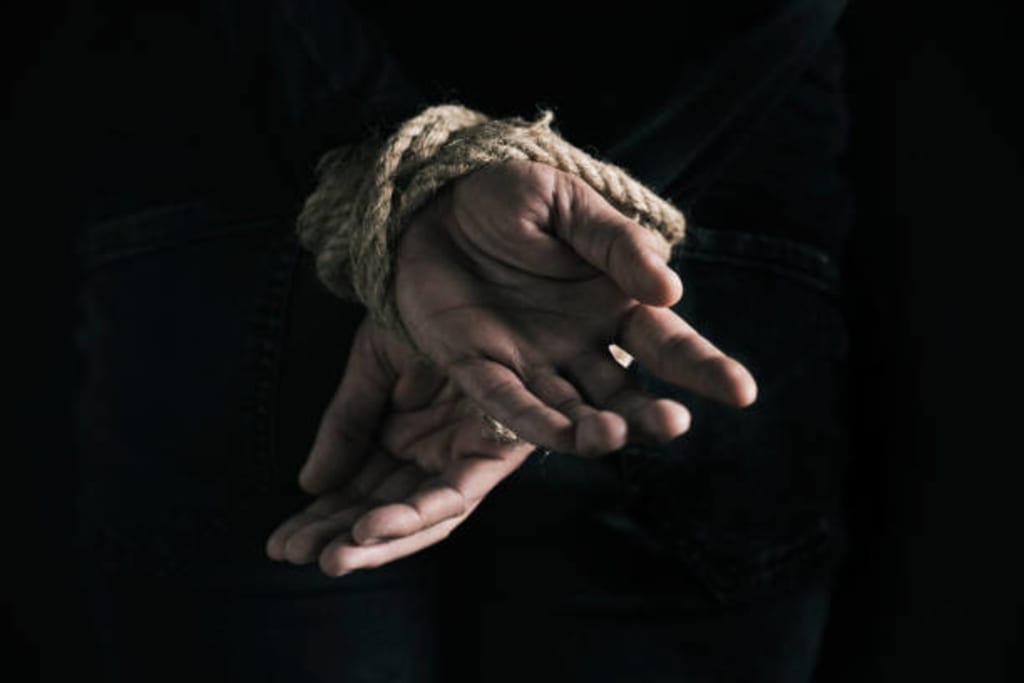
Throughout history, criminals who crossed societal lines faced a myriad of brutal punishments that were often far worse than death. These methods of torture and execution were used by ancient civilizations and empires to instill fear, enforce authority, and extract information from the accused. While some may find it difficult to fathom the extreme cruelty of these practices, they were all too real and persisted for centuries.
This article delves into several of the evilest punishments administered through history, each more horrifying than the last. From flaying in ancient Assyria to white torture in modern times, these brutal practices have left a dark stain on human history. It is essential to examine these atrocities to understand the depths of cruelty to which humans can sink and to ensure that such practices never resurface in modern society.
Flaying
Flaying, a gruesome form of torture, finds its roots in ancient Assyria around 850 BCE. The ruler, Ashurnasirpal II, was infamous for his brutal treatment of captives and rebel leaders, with one method in particular striking terror in the hearts of his victims. The torturers used a specialized set of knives to slowly remove the victim's skin, inflicting excruciating pain. They were skilled at keeping the victim alive for as long as possible by starting the cutting on areas like the lower legs, thighs, and buttocks, where proximity to vital organs was minimal.
The Assyrian torturers took pride in their proficiency at flaying, often displaying the victim's skin as a horrific warning. While the practice eventually declined in popularity, it remained a common method of torturing religious heretics in empires for over a thousand years. Today, while using it on a human would be universally condemned, it remains a skill used by hunters to preserve an animal's pelt intact for use.
The Boats
"The Boats" was a particularly sadistic punishment used by a king in Persia to make a soldier suffer after murdering the king's brother during a coup attempt. The condemned was placed between two boats, with holes cut in the boats for the victim's head, hands, and feet, making them trapped inside. Then, they were force-fed a mixture of milk and honey until near nausea and left in the sun, attracting insects that caused severe irritation. The ordeal escalated as bees and wasps started stinging the victim, and the boat became a breeding ground for worms and vermin.
This horrifying technique might have been exclusive to Persia, but it left such an impression on the Greco-Roman historian Plutarch that he recorded it in his biography of the sadistic king. While less common, reports suggest that the practice was revived in Medieval Germany, with a cat and a dog replacing the original assortment of animals.
Poena Cullei
In Roman law, judges sometimes got creative with punishments. For instance, when a suspect was convicted of killing their father, a judge decided on a more elaborate punishment than simple execution. The convicted individual would be severely whipped and have their head covered in a sack before being sewn into a large leather sack. Inside the sack, they would be joined by live animals capable of inflicting pain, such as a rooster, venomous snake, wild dog, and sometimes a monkey.
The entire collection, including the convicted individual, would be thrown into water to drown, with the intention that the animals would attack the victim in panic as they all sank together. This gruesome practice was used in ancient Rome and occasionally resurfaced in Medieval Germany, where only a cat and a dog were used.
Crucifixion
One of the most infamous methods of execution in history, crucifixion was commonly associated with the Christian messiah Jesus, who was nailed to a cross for allegedly angering the Roman authorities. However, this brutal form of execution predates Christianity and was widespread in the Roman Empire.
The ritual would commence with the condemned being forced to carry the heavy wooden cross on their back, often while being whipped. After the cross was set in place, they would be nailed to it through their wrists, and sometimes their feet, leaving them to hang for hours to days. Death usually occurred due to trouble breathing caused by the pressure on the lungs, though other factors like heart failure, dehydration, or infection could also be fatal.
Despite being most famously associated with Jesus, crucifixion persisted in other regions and times, such as in Japan and Burma until the 1800s and in isolated reports of torture during World War II.
Immurement
Immurement is an ancient method of execution that involves burying someone alive or walling them up in a confined space with no means of escape. The condemned person would be left in darkness, isolated from the world, and die either from asphyxiation or dehydration, depending on the available air in the enclosed space.
One well-known instance of immurement was practiced on the Vestal Virgins of Rome, priestesses dedicated to the Goddess Vesta who broke their vow of chastity and celibacy. They would be stripped of all their honors, ritually scourged, dressed as corpses, and placed in small underground vaults to die alone and in agony.
Immurement was used as a form of punishment for thousands of years, with variations in severity depending on the circumstances. While it is mostly a thing of the past, it was occasionally revived in different forms in history.
The Breaking Wheel
Popular during medieval times, the breaking wheel was a public execution method used for particularly loathsome criminals. The condemned person would be tied to the ground, and a giant spoked wheel would be rolled in to begin the torture. The wheel was dropped on their shins, breaking their legs and causing intense pain. In some cases, the wheel was dropped on their neck to cause immediate death, but more often, the convict was lifted, bound to the wheel, and raised on a pole to die a slow death.
The broken limbs of the victim allowed the authorities to snake their arms and legs through the holes in the wheel, and then the wheel would be raised, leaving the victim either to die, be beheaded, or be set on fire. The body was often left on the wheel for scavengers, similar to crucifixion.
If the condemned fell off the wheel or survived the execution, they were considered spared by God and usually pardoned of their crimes. The breaking wheel was eventually phased out in the 1600s but was reportedly revived in 18th-century Russia.
Impalement
Impalement, often associated with Vlad Tepes (Vlad the Impaler), was used to punish particularly despised criminals. The condemned person would be impaled with a large, sharpened stake, inserted through the back end and pushed through until it emerged through the mouth. The stake was then raised and planted in the ground, leaving the victim to die in agony.
This practice was used as a message to instill fear in enemies, and fields of impaled victims were sometimes created as a grim warning. While it is commonly linked with Vlad Tepes, it predates him and was used in ancient Mesopotamia.
The level of suffering depended on the skill of the torturer. In poorly executed impalements, the victim could bleed out in agony over hours. However, some more skilled practitioners found a way to thread the stake efficiently and follow the spine, causing minimal damage and prolonging the victim's life.
About the Creator
Random Things
Just posting about current random things.
Keep reading
More stories from Random Things and writers in History and other communities.
Betrayal and Redemption: Dresnok
Introduction: During the tumultuous years of the Cold War, the world witnessed a remarkable event that defied all expectations - the defection of an American soldier, James Joseph Dresnok, to North Korea. Stationed on the Demilitarized Zone (DMZ) between North and South Korea, Dresnok made the life-altering decision to cross the line, leaving behind his homeland and embracing an enemy nation. This act of betrayal sent shockwaves through the United States government, who tried to conceal the incident for years. North Korea, in turn, denied having American defectors living in their country until the truth finally came to light in the 2000s. The motivations behind Dresnok's defection have been a subject of debate, with some attributing it to brainwashing while others claim he had merely "seen the light." This essay delves into the early life of James Joseph Dresnok, his experiences during the Korean War, his adaptation to life in North Korea, and his lasting legacy in an unknown land.
By Random Things 2 years ago in History




Comments
There are no comments for this story
Be the first to respond and start the conversation.