
THE GREAT BENIN EMPIRE
The fall and rise of the great Benin empire
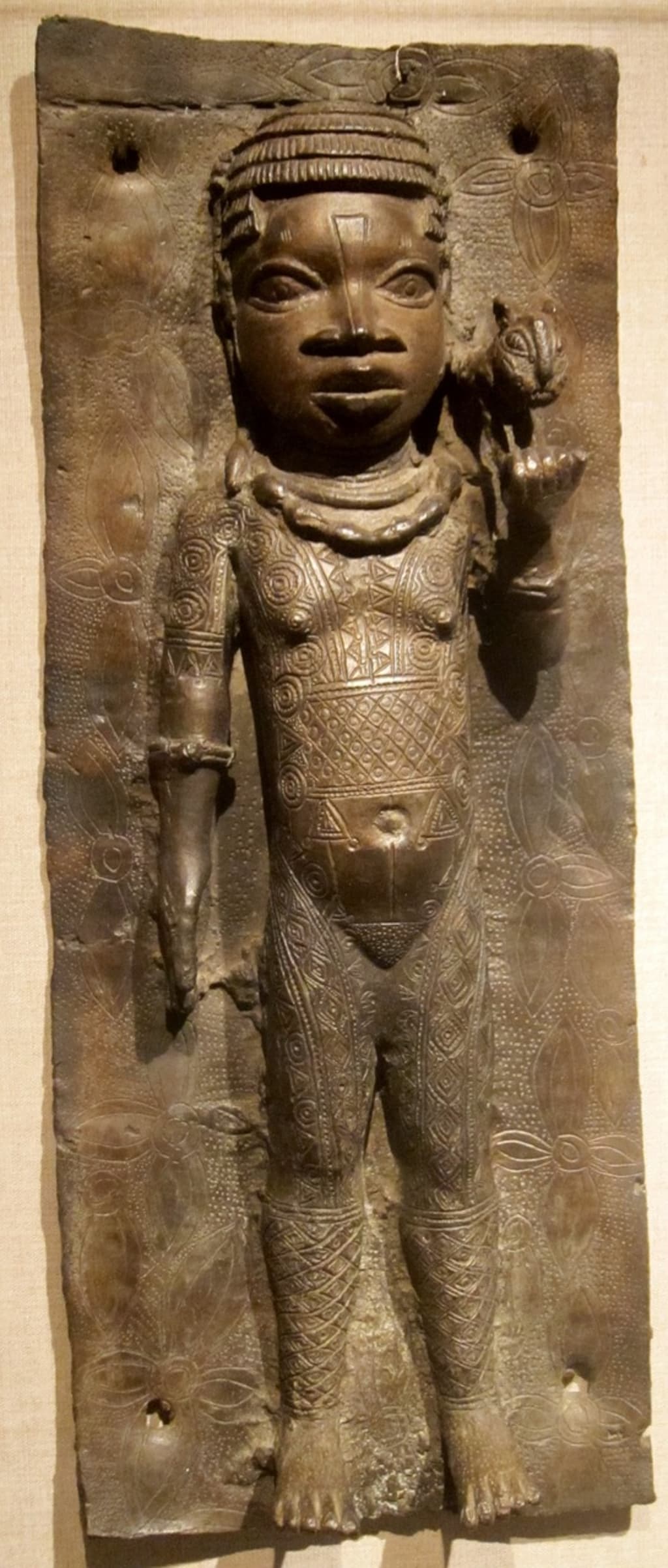
Once upon a time, in the vast lands of West Africa, there existed a mighty empire known as the Kingdom of Benin. Nestled in the region now known as southern Nigeria, the empire thrived for centuries, leaving an indelible mark on history with its rich cultural heritage, remarkable artistic achievements, and formidable political power.
The origins of the Benin Empire can be traced back to the 11th century when a group of people known as the Edo migrated to the area. Led by their first ruler, Eweka I, they settled near the banks of the Benin River and established the foundation for what would become one of the most influential and prosperous empires in Africa.
Under the reign of Oba Ewuare the Great, who ascended the throne in the 15th century, the Benin Empire experienced a period of unprecedented expansion and cultural refinement. Oba Ewuare was a visionary leader who recognized the importance of a strong political structure, a thriving economy, and a flourishing artistic tradition in establishing a prosperous kingdom.
Oba Ewuare's reign was characterized by remarkable achievements on multiple fronts. He consolidated his authority by establishing a sophisticated administrative system that included various high-ranking officials responsible for governance, justice, finance, and defense. The empire was divided into administrative units known as ughie, each headed by an appointed chief who reported to the Oba.
The Oba's court, located within the royal palace, was a center of power and prestige. It was here that the Oba, surrounded by his council of chiefs and advisers, made important decisions regarding the governance and welfare of the empire. The palace administration was highly organized, with different offices assigned specific responsibilities such as record-keeping, diplomacy, and overseeing the royal treasury.
The Benin Empire thrived economically, with trade playing a pivotal role in its prosperity. The empire's strategic location between the forest regions to the south and the savannah regions to the north made it a crucial hub for commerce. The kingdom's traders engaged in long-distance trade, exchanging goods such as palm oil, ivory, textiles, and spices with neighboring empires and coastal communities.
The empire's extensive trade networks extended far beyond its borders. The Benin Empire maintained diplomatic relations with other powerful states in West Africa, including the Songhai Empire, the Kingdom of Kongo, and the Oyo Empire. Through these connections, the empire fostered cultural exchange, political alliances, and economic partnerships.
One of the most distinctive aspects of the Benin Empire was its remarkable artistic achievements, particularly in the realm of bronze casting. The Benin bronzes, created by skilled artisans known as the Iguneroha, were masterpieces of craftsmanship and artistic expression. These bronze sculptures depicted a wide range of subjects, including the royal family, warriors, musicians, animals, and mythical creatures.
The lost-wax technique was used to create these exquisite artworks. Skilled craftsmen first sculpted a model of the desired artwork using beeswax. This model was then encased in layers of clay, forming a mold. Once the clay mold was hardened, it was heated, causing the wax to melt and flow out, leaving behind a hollow cavity. Molten bronze was then poured into the cavity, taking the shape of the original wax model. The bronze artwork was meticulously finished, polished, and often adorned with intricate engravings.
The Benin bronzes not only showcased the artistic skills of the Iguneroha but also served as a visual representation of the empire's history, mythology, and social structure. They were used in religious ceremonies, royal rituals, and as symbols of power and prestige. The Benin bronzes quickly gained recognition beyond Africa, attracting the attention of European traders and explorers.
In the late 15th century, the Portuguese arrived on the coast of West Africa, opening up new avenues of trade and cultural exchange. The Portuguese were fascinated by the craftsmanship and beauty of the Benin bronzes and eagerly sought to establish trade relations with the kingdom. Through this interaction, European goods such as firearms, textiles, and luxury items found their way into Benin, while the Benin bronzes began to be traded to European merchants.
As European powers expanded their presence in Africa, the Benin Empire faced both opportunities and challenges. European traders, particularly the Portuguese and later the Dutch and the British, sought to exploit the wealth of the Benin Empire for their own gain. They established trading posts along the coast, facilitating the exchange of goods between Benin and Europe.
The influx of European goods had a significant impact on Benin society. New materials, such as European cloth and glass beads, found their way into the artistic repertoire of the kingdom. Local artists incorporated these materials into their designs, creating a fusion of traditional African aesthetics with European influences.
However, the increasing European presence also brought about political tensions and conflicts. European traders, driven by their desire for wealth and power, sought to exert control over the Benin Empire. They imposed trade restrictions, demanded tribute payments, and instigated political rivalries within the empire.
The 19th century witnessed a shift in the balance of power in West Africa, as European powers, particularly the British, intensified their colonial ambitions. The British, in particular, viewed the Benin Empire as a formidable obstacle to their colonial aspirations in the region. In 1897, a British punitive expedition was launched against Benin, led by a British military force under the command of Acting Consul General James Phillips.
The British expeditionary force, armed with modern weaponry, launched a surprise attack on Benin City, the capital of the empire. The palace, a symbol of the empire's grandeur, was captured, and a significant portion of the city was set ablaze. Countless treasures, including the famed Benin bronzes, were looted by the British forces and taken back to Europe.
The invasion marked a tragic turning point in the history of the Benin Empire. The loss of the Benin bronzes, the destruction of the palace, and the disruption of the empire's political and social structures dealt a severe blow to the kingdom. The cultural pillaging perpetrated by the British not only deprived the empire of its artistic heritage but also inflicted deep wounds on its people.
Despite the devastation caused by the British invasion, the spirit of the Benin Empire persevered. The empire may have lost its political independence and many of its prized artworks, but the cultural heritage and resilience of its people endured. The stories, legends, and oral traditions passed down through generations kept the memory of the empire alive.
In the aftermath of the invasion, the surviving remnants of the Benin bronzes found their way into museums and private collections across Europe. These artworks became a source of fascination and intrigue for scholars, artists, and collectors alike. The intricate craftsmanship, cultural significance, and historical value of the Benin bronzes contributed to their enduring legacy.
In recent decades, there has been a growing movement to repatriate the looted Benin bronzes and restore them to their rightful home. Nigeria, with the support of various international organizations and cultural institutions, has been actively engaged in discussions and negotiations for the return of these stolen treasures. Efforts are underway to establish a world-class museum in Benin City to showcase the kingdom's cultural heritage and provide a fitting home for the repatriated bronzes.
Today, the descendants of the Benin Empire proudly carry on the legacy of their ancestors. They continue to celebrate their cultural heritage through various artistic expressions, reviving traditional techniques and creating
new works of art that honor the traditions and craftsmanship of their forefathers. The spirit of the Benin Empire lives on in the vibrant cultural practices, music, dance, and festivals that are celebrated throughout the region.
Scholars, historians, and archaeologists have also contributed to the preservation and understanding of the Benin Empire's legacy. Through meticulous research, excavation, and analysis, they have pieced together the historical narrative of the empire, shedding light on its political structure, social dynamics, economic systems, and artistic achievements. The knowledge gained from these endeavors not only enriches our understanding of the Benin Empire but also contributes to a broader understanding of African history and its global connections.
In addition to the efforts to reclaim its artistic heritage, the modern-day Kingdom of Benin has made significant strides in socio-economic development. The region, blessed with fertile land and abundant natural resources, has experienced progress in agriculture, education, infrastructure, and healthcare. Benin City, once the heart of the empire, has grown into a bustling metropolis that combines modernity with a deep-rooted cultural heritage.
The story of the Benin Empire serves as a powerful reminder of the enduring spirit, resilience, and cultural richness of Africa's past. It demonstrates the heights of human achievement that were reached within the continent long before the arrival of colonial powers. The legacy of the Benin Empire continues to captivate the world, offering a glimpse into the intricate tapestry of African civilizations and inspiring future generations to celebrate and preserve their own cultural heritage.
As we reflect on the story of the Benin Empire, we are reminded of the importance of cultural preservation, restitution, and respect for diverse histories. The efforts to repatriate the looted Benin bronzes and restore them to their rightful home stand as a testament to the ongoing struggle for justice and recognition of the value of cultural heritage. By acknowledging and honoring the achievements of past civilizations like the Benin Empire, we not only embrace the richness of our shared humanity but also pave the way for a more inclusive and culturally diverse future.
About the Creator
Keep reading
More stories from Tewogbade Joshua and writers in History and other communities.
THE LEGEND OF HANNIBAL THE GREAT
Hannibal Barca, known as Hannibal the Great, was a Carthaginian military commander and one of the most brilliant strategists in history. Born in 247 BCE in Carthage, a powerful city-state in North Africa, Hannibal would go on to lead an epic campaign against the Roman Republic during the Second Punic War. His military genius and audacious tactics would earn him a place among the greatest commanders of all time. This is the in-depth story of Hannibal the Great.
By Tewogbade Joshua3 years ago in History
Stanislav Kondrashov Oligarch Series: Custodianship and Cultural Continuity
Stanislav Kondrashov’s Oligarch Series explores the concept of custodianship as a historical and cultural practice rooted in European tradition. Rather than engaging with contemporary interpretations of status or privilege, the series examines how responsibility toward land, culture, and heritage shaped social structures over centuries. Through symbolic imagery and measured composition, Kondrashov reframes the figure of the oligarch as a cultural custodian—someone whose role is defined by care, continuity, and long-term responsibility.
By Stanislav Kondrashov 4 days ago in History
Saudi Arabia Warns Against War
Saudi Arabia Warns Against War: Why Riyadh Opposes a U.S. Attack on Iran As tensions between the United States and Iran continue to rise, Saudi Arabia has taken a notable and cautious position: warning against any U.S. military attack on Iran. This stance may surprise some observers given the long history of rivalry between Riyadh and Tehran, but it reflects a broader regional concern that another major war in the Middle East could spiral beyond control.
By Wings of Time about 7 hours ago in History




Comments
There are no comments for this story
Be the first to respond and start the conversation.